• Skip to main content
  • Skip to after header navigation
  • Skip to site footer
  • About
    • Events
  • Contact
Fish Travel Eat

Fish Travel Eat

Stories about Fishing and Other Relative Truths

  • (Mis)ADVENTURE
  • FISHING
    • KIDS & FISHING
  • BEFORE YOU DIE
  • FOOD & DRINK
  • THE BOOK ON TRAVEL FISHING
  • (Mis)ADVENTURE
  • Fishing
  • BEFORE YOU DIE
  • KIDS & FISHING
  • FOOD & DRINK
  • The Book on Travel Fishing
  • About
    • Events
  • Contact
  • Content Services

MONGO

February 18, 2025 by Elliott Stark

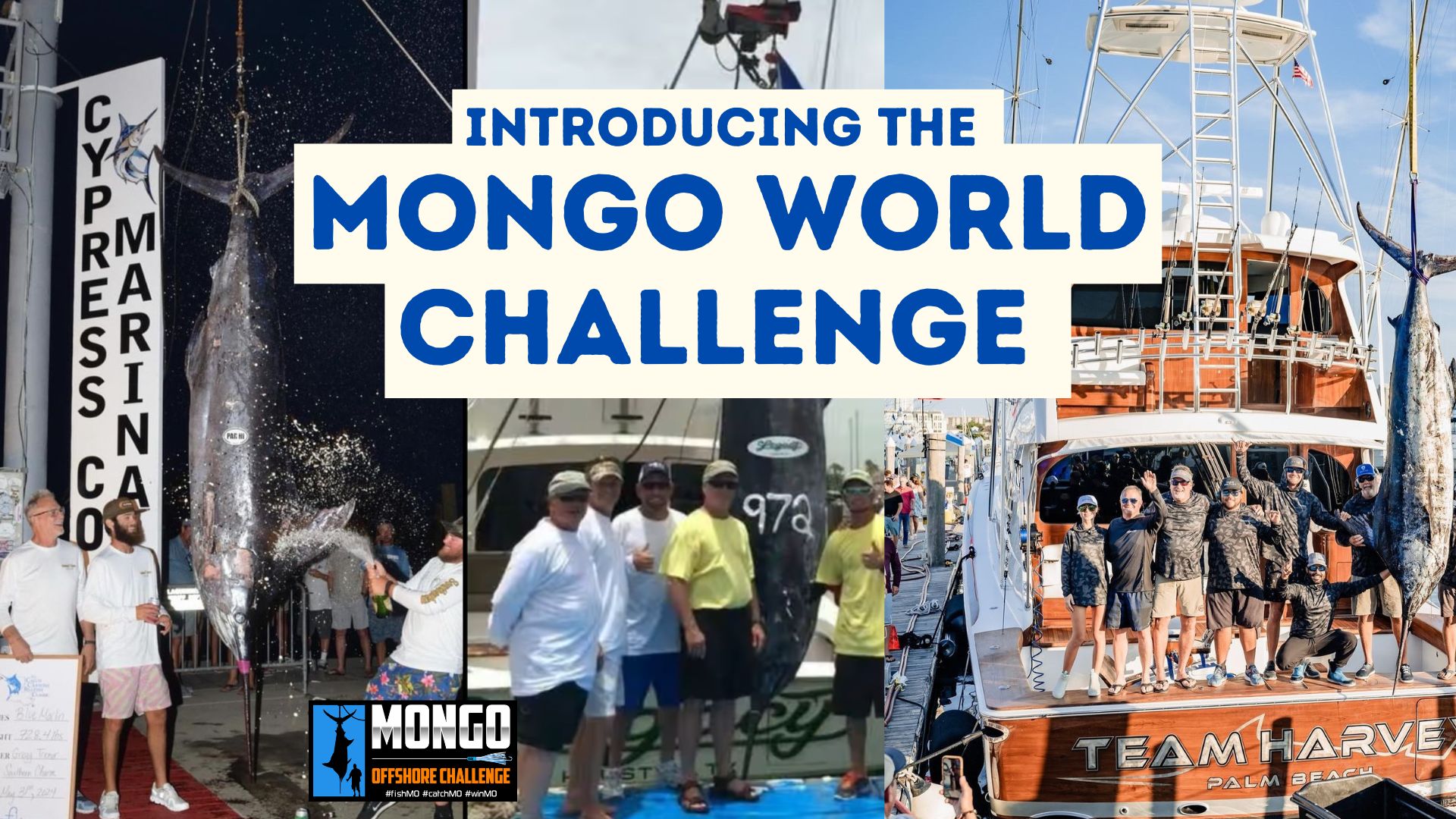
Introducing the MONGO World Challenge

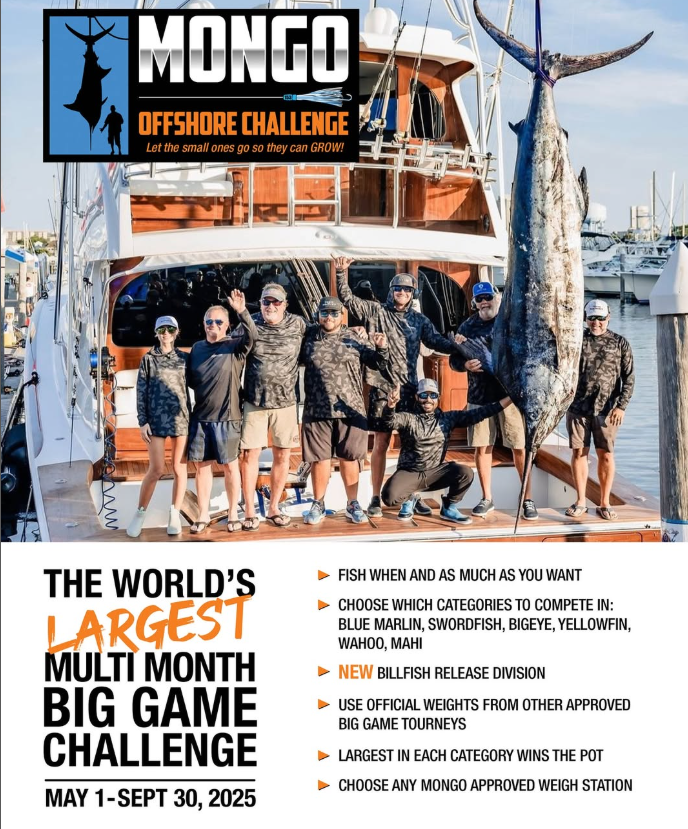
The MONGO World Challenge is paying big money for the largest tournament-caught blue marlin in 2025...

Introducing the MONGO World Challenge: Tournament Edition. This new take on an incredible idea started with a simple question. Fundamental and direct, this is a thought process that is perhaps not exercised quite often enough.

Just because something is awesome, why can’t you make it even more awesome? It was this question that resonated with MONGO co-founders Captain Jeremy Cox, J.D. Cox and Brian Johnson. It was this question that led to the MONGO World Challenge.

You see the MONGO is making moves. The new World Challenge does more than just add some increased competition the tournament’s inclusive, accessible biggest-fish-wins lots of money approach to fishing contests. It takes the MONGO global—providing boats from around the world and teams fishing the world’s best blue marlin tournaments the opportunity to win quite a bit of money and gain even more recognition for their success.  And, if you hadn’t gathered as much by now, we’re pretty excited about what is to come.
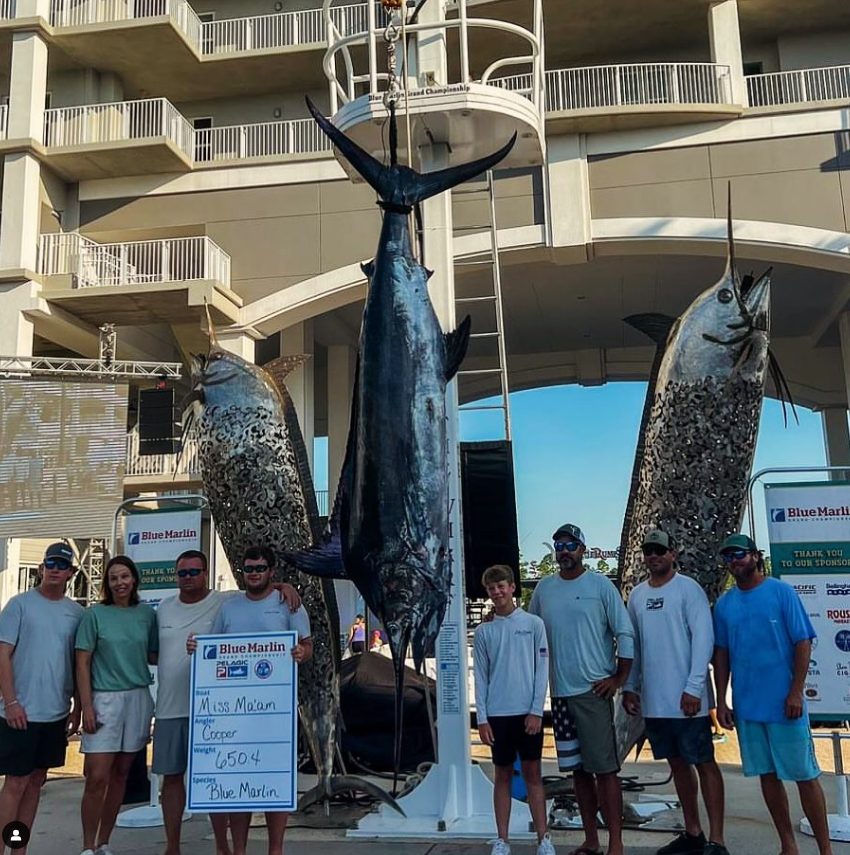
The Concept

The MONGO World Challenge is simple. The participation team that lands the largest tournament-caught blue marlin—anywhere in the world—wins. To be elegible, you just need to register for the event and catch your fish in a sanctioned blue marlin tournament.

This does a couple of things that are particularly interesting:

  1. It takes the MONGO Global– registration is open to boats anywhere in the world. Sanctioned tournamernts span the Gulf coast, the East Coast, the Caribbean, Hawaii, and when you factor in the World Cup, and a few others, the world.
  2. It provides a direct opportunity to win even more money and glory—all while catching the fish that you are already after.
  3. It provides the potential for an incredible payout-to-entry ratio– Somebody will take home a pile of money, all for an entry of $3,500—that’s less than the price of a weekend’s dockage and tournament grocery bill.
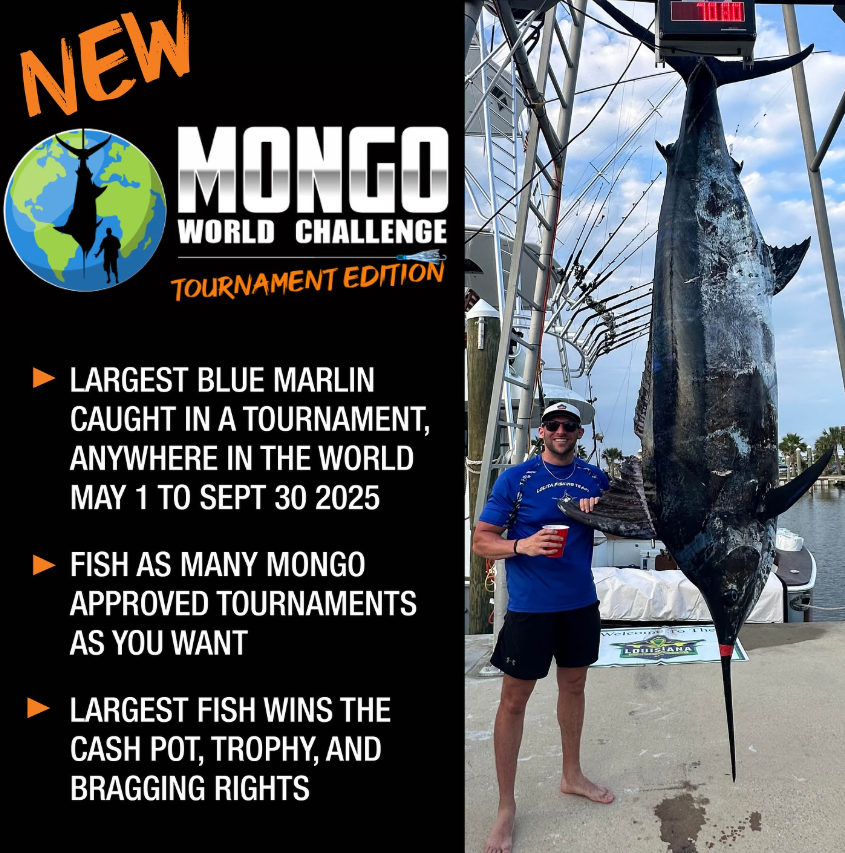
How It Works

To win the MONGO World Challenge, you first need to enter. Entry is simple and straightforward. It costs $3,500. Entry is open to any boat in the world.

The competition is limited to blue marlin caught in eligible tournaments. To win, all you’ve got to do is catch a bigger blue marlin than any other participating team.

The list of tournaments included in the MONGO World Challenge is expansive. It includes the bulk of the  East Coast, Gulf Coast, Caribbean, and Hawaii. When you include the Blue Marlin World Cup, the competition goes global. What will it take to win and where will the fish come from.

A stud from the Azores? A grander in Madeira. A giant from Bermuda? A 1,200 from Kona? All of these locations will be competing against the 800s that come from the Gulf or the potential grander from Ocean City or Hatteras. This is exciting stuff.

The rules of the contest are simple. If your blue marlin qualifies in the tournament you’re fishing it, it qualifies for the MONGO World Challenge.
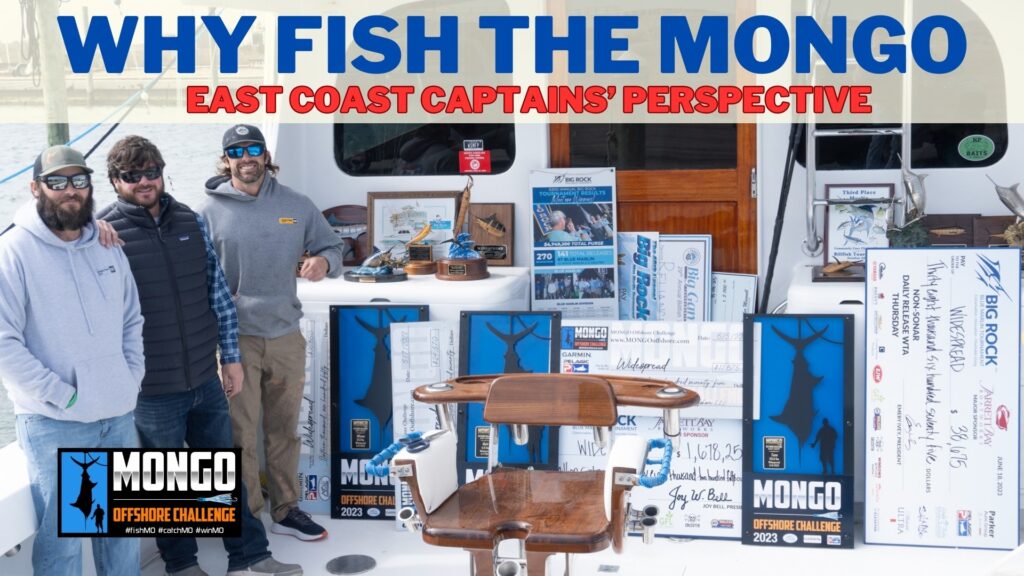
For more context on how awesome the MONGO is, check this out.

There are a couple of interesting scenarios:

  1. You could catch a blue marlin that doesn’t win the tournament you’re fishing in, but does win the MONGO Offshore Challenge (after all, you’re only competing against boats who have entered the MONGO).
  2. You could also catch a stud blue marlin in a Gulf tournament that wins you three giant checks—the tournament you’re fishing in, the MONGO Gulf Blue Marlin Division, and the MONGO World Challenge.

When thinking about these scenarios, entry into the World Challenge becomes something of an insurance policy. At $3,500 some operations won’t even notice the charge. Everyone would notice the giant cardboard check, the trophies and their pictures across fishing media if they won. The worst scenario of all comes to the person who catches a stud in a tournament and leaves a pile of money on the table because they didn’t enter to fish the MONGO. 

The Payout

One of the great things about the World Challenge, and about the MONGO generally, is how simple and easy it is. It’s designed for fishing and how people fish.

There is just one entry. That entry covers your boat in all of the tournaments that fish—whether you fish two events or 20. $3,500 once, no strings, no gimmicks. Entry covers your boat and all of the anglers that fish with you.
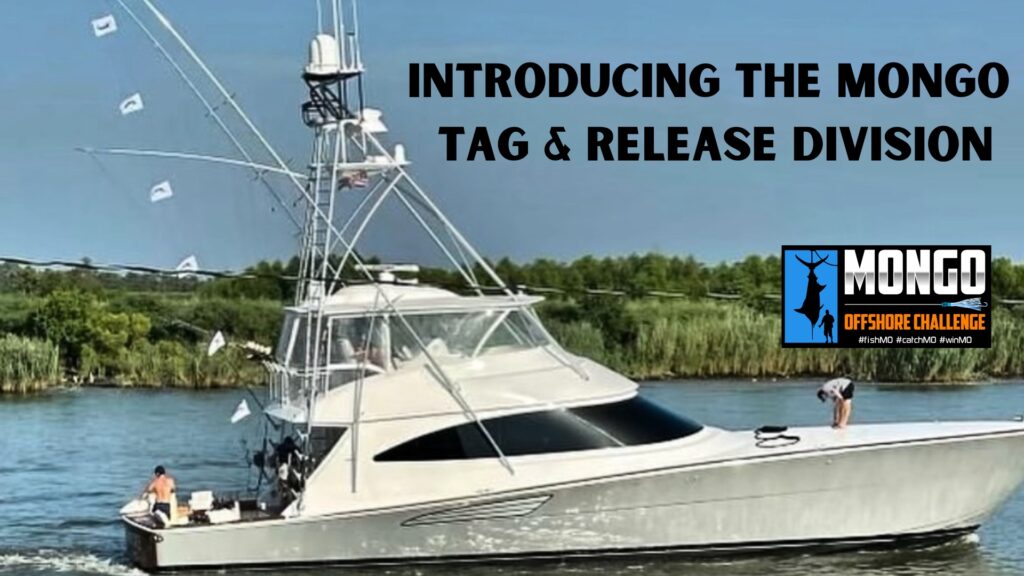
Also new for 2025, the MONGO Tag and Release Division in the Gulf.

Once you’ve entered, its winner take all. The biggest tournament-caught blue marlin wins. That means 85% of all of the entry fees. The MONGO keeps 15% for administration and execution of the tournament, the winner takes all of the rest.

There are no side pots, no optionals. Just a big check for the team that greases the world’s biggest-tournament-caught blue marlin in the summer of 2025.

That’s right. The MONGO is taking its big fish, big money party to the world. After all, why not make some that is awesome even more awesome?

Eligible Tournaments

  • Louisiana Gulf Coast Billfish Classic
  • Hurricane hole Louisiana open
  • Orange Beach Billfish Classic
  • MBGFC Gulf Coast Masters
  • Cajun Canyons Billfish Classic
  • Mississippi Gulf Coast Billfish Classic
  • Emerald Coast Blue Marlin Classic
  • Pensacola International Billfish Tournament
  • The Gulf Cup
  • Bay Point Billfish Open
  • Blue Marlin Grand Championship
  • Houston Big Game Fishing Club’s Lonestar Shootout
  • Texas International Fishing Tournament
  • Texas Legends Billfish Tournament
  • New Orleans Invitational Billfish
  • MBGFC Ladies Tournament
  • MBGFC Invitational Labor Day Tournament
  • Charleston Billfish Invitational
  • Hatteras Village Offshore Open
  • Georgetown Blue Marlin Tournament
  • Swansboro Rotary Memorial Day Tournament
  • The Big Rock Blue Marlin Tournament
  • Cape Fear Blue Marlin Tournament
  • Carolina Billfish Classic
  • HMY Lowcountry Cup
  • Edisto Marina Billfish Tournament
  • South Carolina Blue Marlin Invitational
  • Jimmy Johnson’s Quest for the Ring, Atlantic City
  • HUK Big Fish Classic
  • Pirate’s Cove Billfish Tournament
  • Beach Haven White Marlin Invitational
  • White Marlin Open
  • The MidAtlantic
  • Virginia Beach Billfish Tournament
  • Rock ‘n Reel Hawaiian Open
  • Kona Kick Off
  • Firecracker Open
  • Skins Marlin Derby
  • The Kona Throw Down
  • Hawaii Luremaker Tournament
  • Pelagic Marlin Magic Lure Tournament
  • Big Island Marlin Tournament
  • It’s a Wrap Tourney
  • Walker’s Cay Invitational
  • Bermuda Billfish Blast
  • Bermuda Big Game Classic
  • Sea Horse Angler’s Billfish Tournament
  • The Blue Marlin World Cup
  • Bisbee’s Black and Blue
January 30, 2025 by Elliott Stark

Introducing the MONGO Tag and Release Division

How do you make the coolest, most geographically expansive billfish tournament in the world even better? Add a release division, of course!

How do you make the Gulf’s coolest, longest-running and most geographically expensive bluewater tournament even better? Add a MONGO tag and release division, of course.

Brothers Captain Jeremy and J.D. Cox and Brian Johnson, co-founders of the MONGO Offshore Challenge, have done just that. New for 2025, with an entry of just $3,500 teams across the Gulf Coast can now win money releasing billfish in the same wide open, incredibly accessible manner they fish the MONGO’s big fish competition. 

The excitement is building. It is palpable across the Gulf Coast. Here’s a breakdown of what to expect and how it works.

The Gulf Coast Tag and Release Landscape: Why It’s Such a Good Fit 

The Gulf Coast is home to some of the finest crews in sportfishing. In recent years, with all of the big blue marlin caught on live bait, the billfish numbers have been overshadowed. 

What many people, in other parts of the US, might not realize is just how good the billfishing can be. Recent years have seen daily and trip release records fall from the lower coast of South Texas to the Panhandle of Florida. These records are set every year. 

It is into this environment, with Gulf Coast tournaments producing Costa Rica-like billfish numbers, that MONGO launches its tag and release competition. The excitement is building across the Gulf. It stems from several factors. 

Format

A yearly entry to the Tag and Release Division is $3,500. This covers the boat and all of the anglers for the year. There is no additional fee for anglers, whether you fish the same three or you have a different group each day you fish. 

Each team is allocated three tag and release days per month. Only fish released during these days count toward the competition. 

To register your day as a tag and release day, you just sign up before you leave the dock. You do it all through the MONGO app. 

Your entry qualifies you for two ways to win. 

Monthly Winners

There is a monthly Tag and Release winner each month from May through September. Each winner takes home 10% of the total pot. 

Season Long Winner

The cumulative, season-long winner, the boat with the most release points accrued during its release days over the course of the entire tournament, will take home 50% of the total purse. 

This format is designed for fishing and for strategy. It allows teams to line up release days during tournaments, when they’ll be fishing anyway, or while fun fishing.

If you plan to bet heavy in a tournament and focus on release numbers, you can use these same days as your monthly MONGO release days. Alternatively, if you find numbers of fish and dial in a hot bite, you can set your MONGO release day as soon as the next day. If the bite continues, you register the next two days as more release days.

The important part about all of this is the flexibility. You can set your release days for a time you will be fishing anyway or you can use them as an excuse to get offshore (and try to win some money) anytime you find a good bite. 

In this way, the Release Division offers the same accessibility, ease, and broad ability to win as the MONGO’s big fish categories. 

How It Works

Once you’ve registered for the Release Division, you get to dedicate three days of each month to release fishing. For the days to count, you’ll have to register them through the app when you’re leaving the dock. You need to register the days before you fish… You can’t release four blue marlin and then decide to make the day a release day. The registration is easy—you’ll do it the same way you register a normal trip—in the MONGO app.

The points structure works like this:

  • Blue Marlin –  650 points
  • White Marlin – 200 points 
  • Spearfish – 200 points
  • Sailfish – 100 points
  • Unidentified billfish – 100 points
  • Boats that catch a grand slam in a single day receive 500 bonus points.

For the release to count, you’ll need to provide an unbroken clip of video that identifies the billfish, shows the release and pans the boat’s GPS to show location, time and date. It works just like it does in every other billfish release tournament that you fish.

Here’s a recap of the EPIC 2024 MONGO offshore Challenge. 

When you get back to the dock, just upload the videos. You can do this through the app or via email. The MONGO has retained the services of an experienced, independent, professional video reviewer to judge and evaluate all of the release submissions. We’ll then keep tallies of the score for the monthly and season-long competitions. 

The best part of all of this (well, maybe the best part… there are lots of awesome things about it)? If, while you’re trying to stack up releases, you happen upon a MONGO, you can stroke it and it will count for the MONGO big fish competition (though that fish will not count for release points). Not only might you happen upon a giant, qualifying blue marlin, but the winning mahi-mahi or wahoo might well be caught by a boat trolling dink baits while release fishing for billfish.

Go Fishing, Win Money

The MONGO turns every day into a tournament. It’s accessible and it’s awesome. 

The MONGO was built for fishing and for winning money. It now includes a release division.  Registration opens February 15.

November 1, 2024 by Elliott Stark

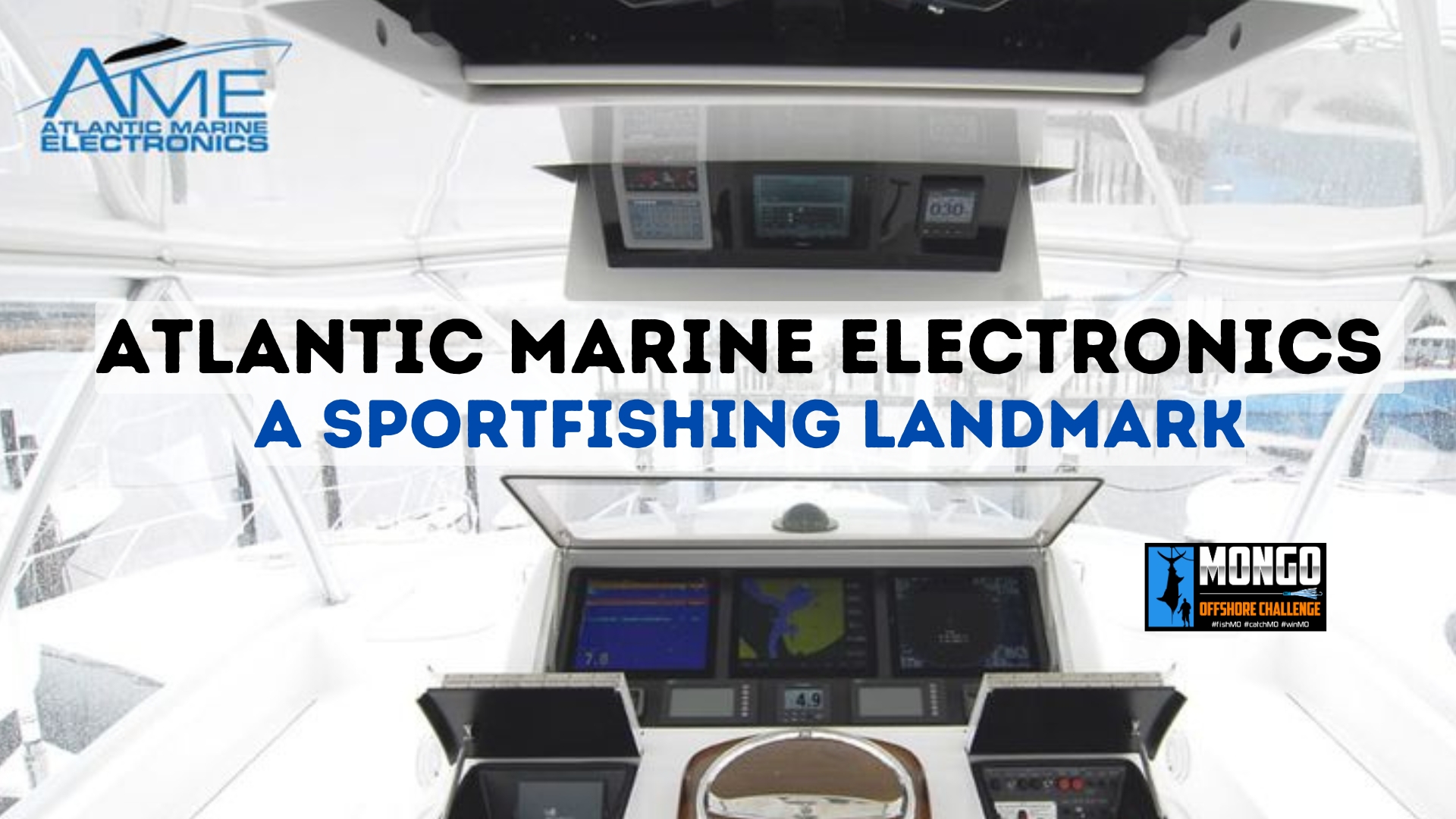
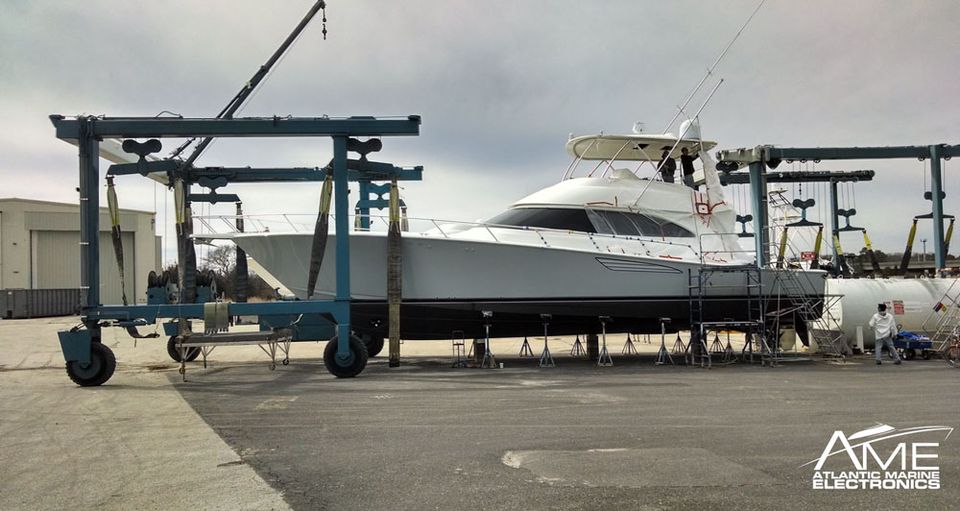
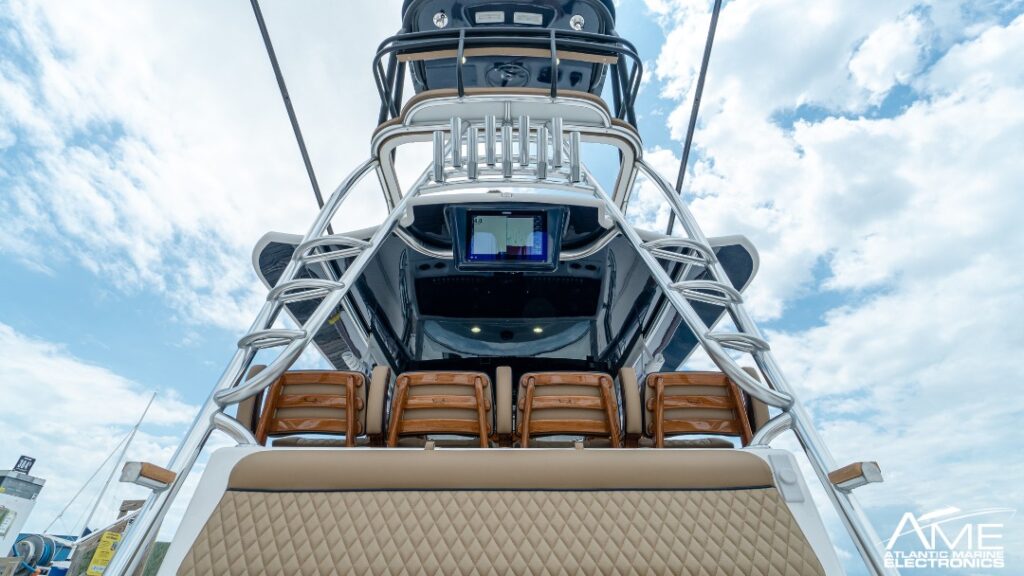
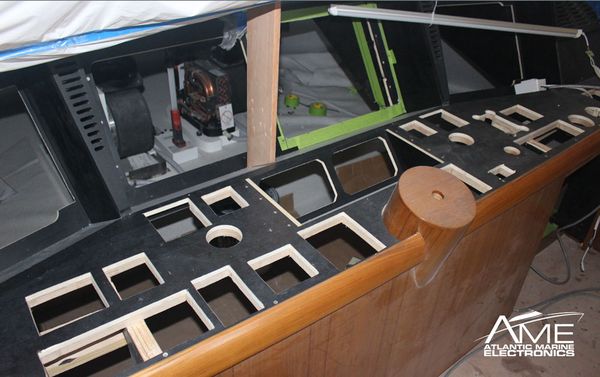
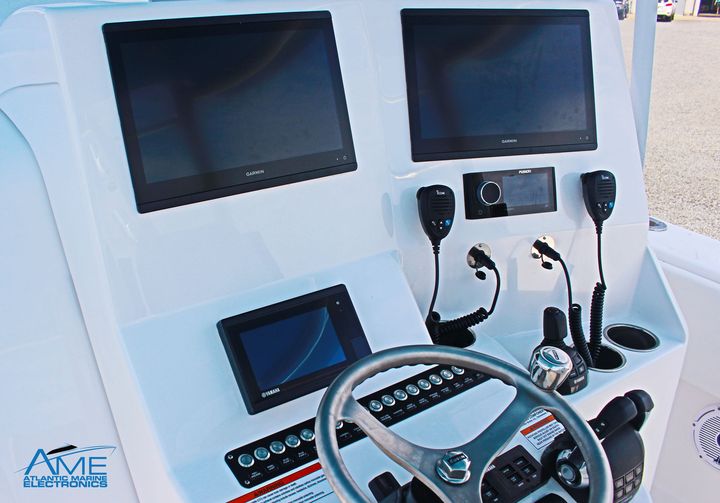
Atlantic Marine Electronics: A Sportfishing Landmark

Atlantic Marine Electronics is something of a landmark in sportfishing. Beyond keeping its finger squarely on the pulse of marine electronics, more than setting the standard for quality and craftsmanship, AME is an advocate for fishermen, boat owners and the industry at large. Providing context for these claims involves a fair bit of nuance. After …

Atlantic Marine Electronics is something of a landmark in sportfishing. Beyond keeping its finger squarely on the pulse of marine electronics, more than setting the standard for quality and craftsmanship, AME is an advocate for fishermen, boat owners and the industry at large.

Providing context for these claims involves a fair bit of nuance. After all, few companies that are as proficient in providing full-service sales, installation, and global customer support as Atlantic Marine Electronics describe their work in many other terms.

What follows is a profile of AME. More than a description of the company’s approach, it is a testament to the confidence and ease that the company imparts to a customer base that spans the United States (and beyond).

History and Commitment

AME was founded in 2003. What began with a concentration in New Jersey and the MidAtlantic has in the past two decades grown to become a national leader in sportfishing navigation, communication and safety equipment.

These days, AME has locations in New Jersey, Connecticut, Wanchese, North Carolina, Destin/ Orange Beach, Bradenton, Florida, Palm Beach, Florida and Texas. A wholly owned subsidiary of Viking Yachts, much of its focus in New Jersey lies in support of the Viking and Valhalla factories. Along the Gulf Coast, Florida and North Carolina, it performs quite a few refits and installation projects.

“We fish tournaments all year long from New Jersey, to the Carolinas, to Florida, in the Gulf, Mexico, the Bahamas and Cabo and we need good systems that work wherever we go. AME delivers excellent installations that excel in the marine environment like communication equipment to keep in touch with the factory, or when guests aboard need to contact home.”
– Captain Ryan Higgins, Viking 72

Wherever and whatever the company touches comes to the same standard of quality and consistency. And the company works with nearly all things sportfishing, with a focus on vessels from 25’ center consoles to sportfishers to 125’ or so.

A Force for Sportfishing

In a day in time when it’s all too common for people and companies to fight with one another (to the detriment of customers, products and the market), it is Atlantic Marine Electronics’ role as industry advocate that is perhaps most remarkable. Through its history, AME has focused on forging relationships that benefit sportfishing generally.

Working through a national dealer network, the company is often in the middle of expanding technologies and fishing opportunity. When real-time, multi-directional sonars transitioned from the secret of a few into a must-have for tournament competition, Atlantic Marine Electronics broke ground on installation of real time sonars from many brands and many models at scale.

AME’s approach involves creating relationships that forge opportunity, rather than creating adversarial situations (you know, the whole “You’re fishing too close to my dock!” type of thing.) By working with many brands and many products, Atlantic Marine Electronics provides opportunity for new technologies. This approach results in more choices for the market, with customers able to choose from a broader variety of price points, brands, and products.

This approach has not only been good for the company, but it benefits boat owners and the companies whose products service them. It also paves the way for new products to enter the market. Market expansion further benefits choice, price and ultimately the boating experience.

Just as was the case in the early days of real-time sonar installation, AME’s expertise and approach continue to benefit sportfishing. Currently, there is perhaps no better example than Dinnteco.

A Lightning Strike Solution for Sportfishing

Given its cost and frequency of occurrence, you can hardly blame insurance companies for being leery of covering lightning strikes. A lightning strike to a boat not only fries electronics and computer systems, but it often sets off a months-long quest to chase and resolve gremlins.

For many insurance companies, the cost and damage associated with lightning striking boats was fast becoming an epidemic. It posed enough risk that some left the sportfishing market altogether. Others considered whether the liability of covering sportfishers was worth it.

It was with this backdrop—and the risk of boatowners being left with multi-million dollar assets without adequate protection—that Atlantic Marine Electronics set out to find a lightning strike solution for sportfishing. After a global search and research that lasted two years, Atlantic Marine Electronics came upon Dinnteco.

Unlike traditional lightning rods (that attempt to induce lightning to strike the rod instead of the boat), Dinnteco’s technology helps prevent the strike by deionizing the atmosphere around the vessel. This effectively decreases the probability of a strike in the first place.

Dinnteco’s technology has long been used in other parts of the world and in other sectors. Traditionally, its products protect such infrastructure as server farms, communications companies, and oil and gas infrastructure. Atlantic Marine Electronics is Dinnteco’s official distributor for the Americas. It is making the technology, and lighting strike protection, available to sportfishing.

A complete system for a typical sportfisher can cost quite a bit less than repairing the damage from a lightning strike. It provides total boat protection, but can also be configured to protect entire marinas or homes and docks.

Give AME A Call

If you’re in the market for electronics or in search of the right setup for your operation, give Atlantic Marine Electronics a call. You can count on their experience, knowledge and skill.  Across the country they outfit many of the best in sportfishing, they can do the same for you.

AME is a proud sponsor of the MONGO Offshore Challenge.

October 10, 2024 by Elliott Stark

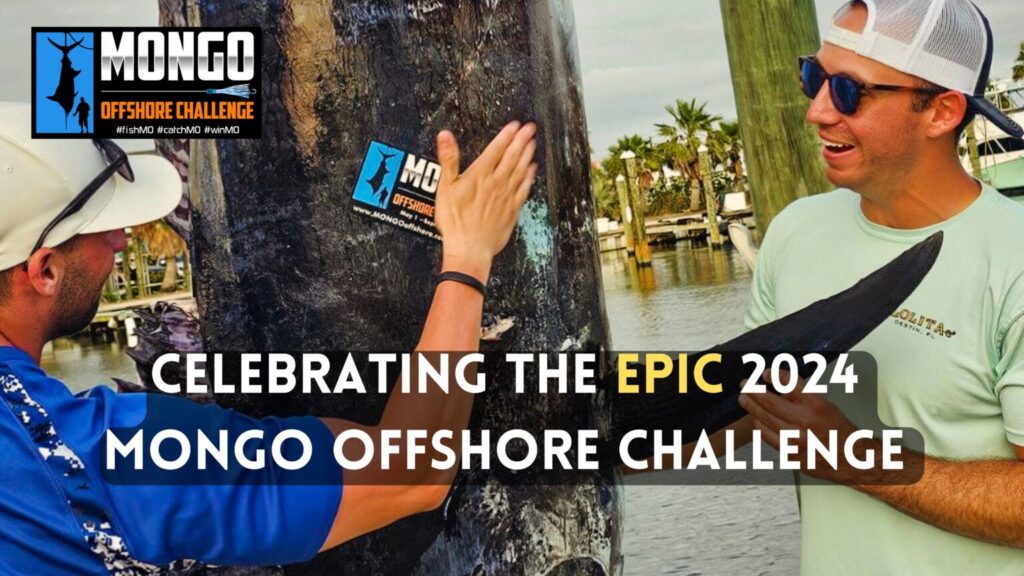
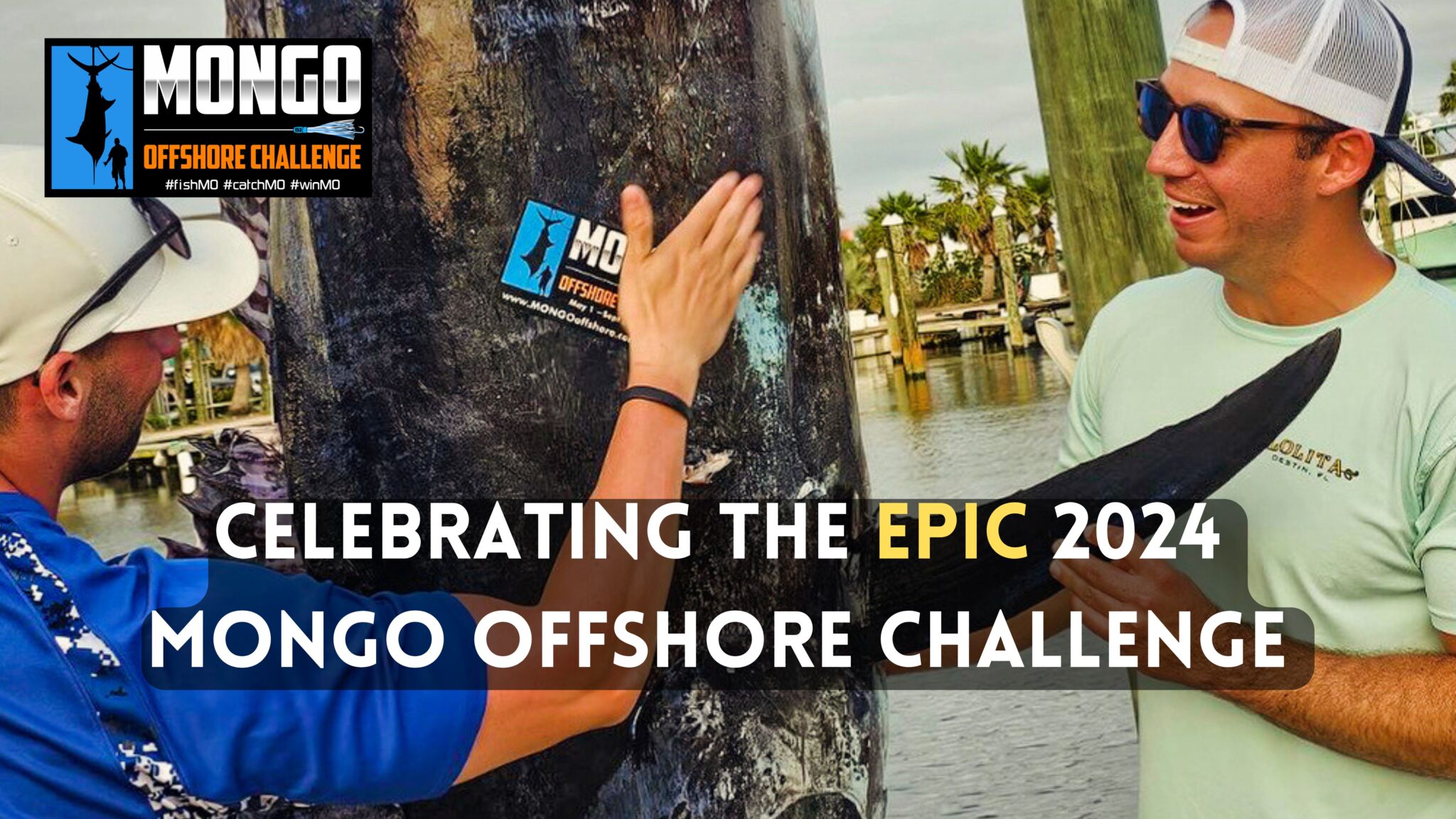
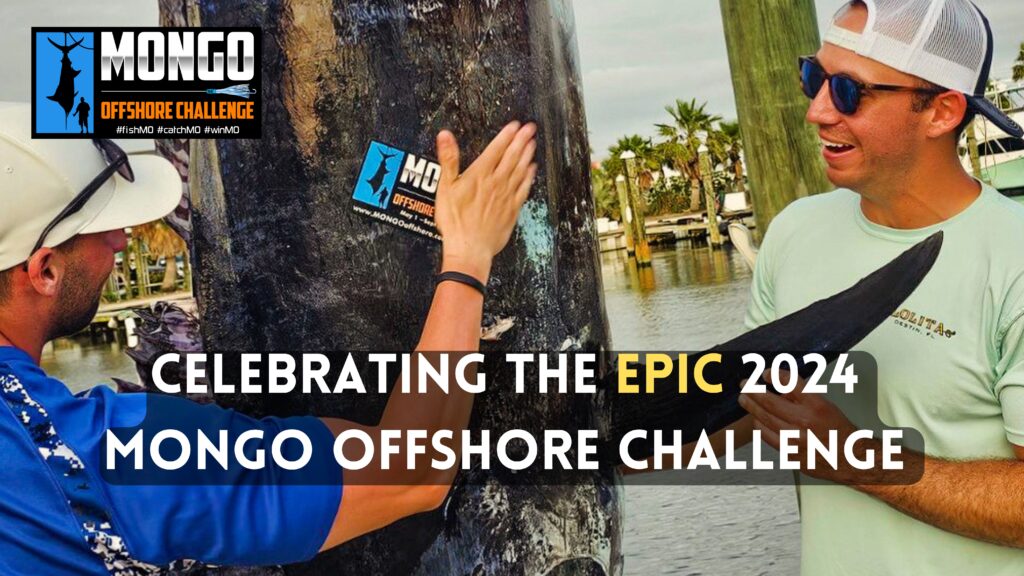
Celebrating the Epic 2024 MONGO Offshore Challenge

Most fundamentally, the MONGO Offshore Challenge celebrates fishing. The MONGO celebrates the act of catching big fish and the fisheries that make it possible. It showcases the boats and crews whose skill and dedication provide the foundation of the activity. The MONGO is this way by design.

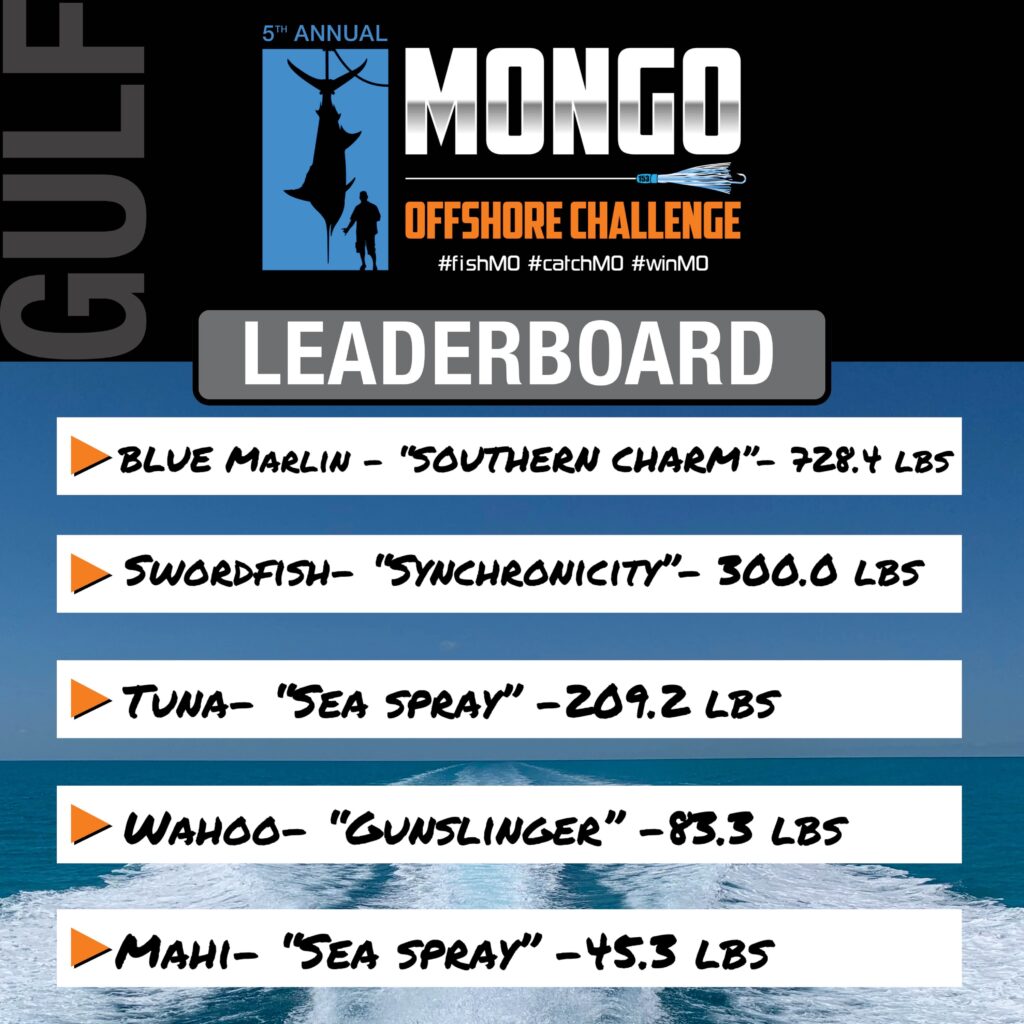
In 2024 The MONGO Offshore Challenge celebrated its fifth anniversary. Sportfishing’s most broadly distributed bluewater tournament did so in grand fashion—awarding nearly $700,000 in prizes while hosting two divisions with a total of 173 boats. After 153 days of fishing, and boats ranging from Massachusetts to Texas, the results are in.

The 2024 Gulf Division: 150 Teams Fishing for More Than $500,000

Blue Marlin: 86 Teams
Winner: Southern Charm. $182,750


Tuna: 71 Teams
Mahi: 71 Teams
Winner: Sea Spray. Combined $120,275


Swordfish: 42 Teams 
Winner: Synchronicity. $66,300


Wahoo: 74 Teams
Winner: Gunnslinger. $44,225

The MONGO Offshore Challenge was born of the Gulf Coast sportfishing industry. Since its first year in 2019, it has grown to become an institution. Not only has the MONGO set participation Gulf Coast participation records—in terms of participating boats and anglers- MONGO winning fish have also set state records and cashed checks in other, non-MONGO tournaments as well. The 2024 edition was no exception.

In terms of volume of participation, the MONGO is the Gulf’s largest and most widely distributed bluewater tournament. From south Texas to Florida, the field was composed of boats representing all five Gulf states. Boats ranged from 29 feet to 80.

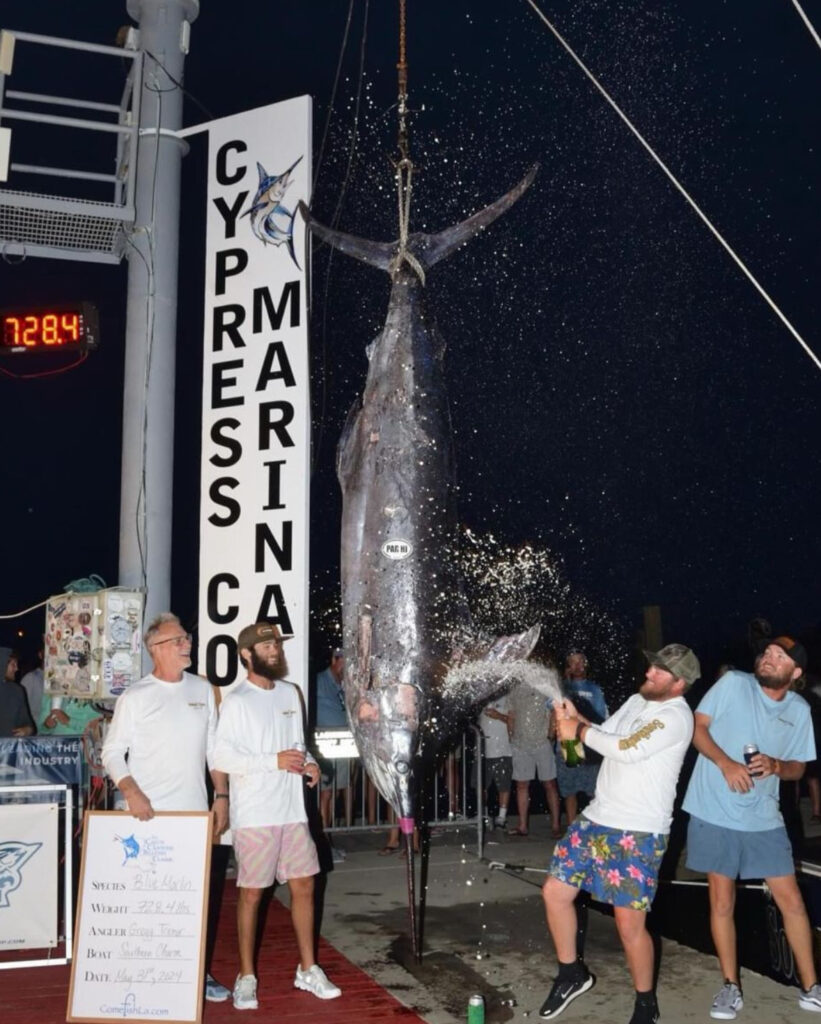
The Southern Charm’s M ONGO-winning blue marlin also cashed a check at Cajun Canyons.

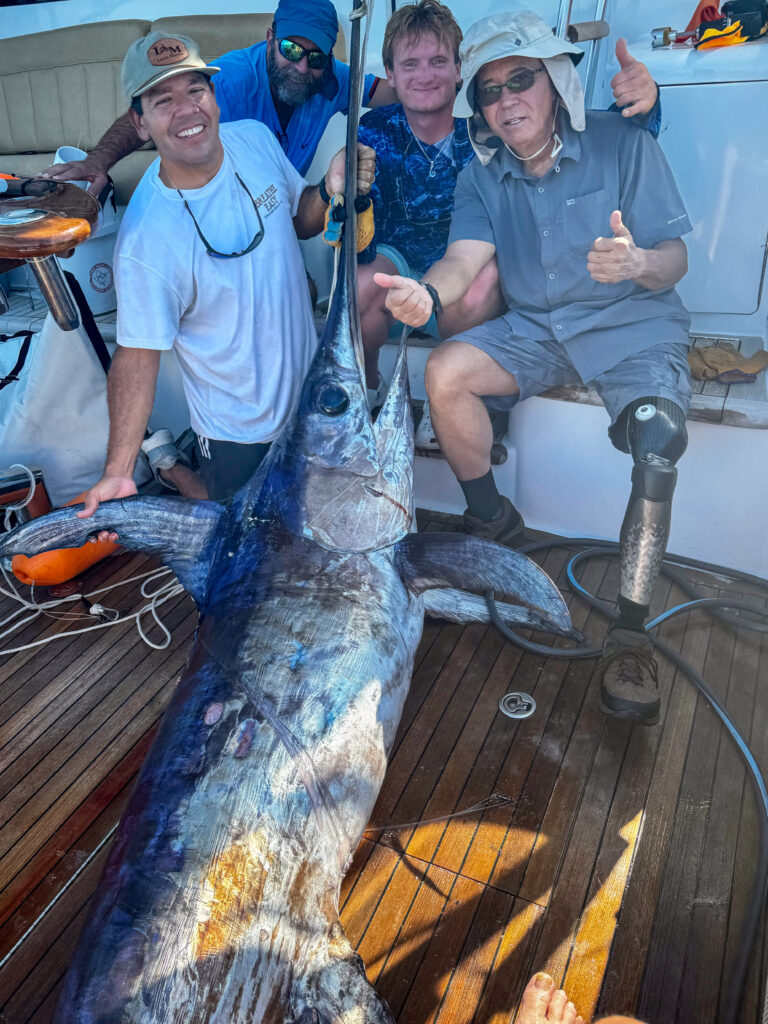
Captain Anthony Lopez and owner Larry Matthews won the Gulf swordfish division. The crew of the Synchronicity caught their 300-pounder on the second to last day of the MONGO. An accomplished, veteran swordfish captain, Lopez shares his perspective on the MONGO.

“Winning it means a lot. It was not only a great way to wrap up our year, but winning it had been a goal of mine since the first year of the MONGO,” Lopez says. “It’s a full circle deal to get it done. It’s also an honor to show that I learned a thing or two from my time fishing with Captain Jeff Wilson.”

The East Coast Division: The Most Broadly Distributed Bluewater Tournament in North America

In the East Coast Division, the tournament boundaries stretch from Florida all the way to Massachusetts. Like the fishable area, participating boats in the 2024 East Coast Division hail from Palm Beach, Florida in the south to Cape Cod, Massachusetts in the north.

To make this distribution possible, the MONGO partners with a network of East Coast marinas that provide a weigh station network that spans the coast. These include weigh stations in Florida (Oasis Marinas at Fernandina Harbor, Sunrise Marina in Port Canaveral, New Smyrna Marina, and Cape Marina), Georgia (Jekyll Harbor Marina), South Carolina (The Marina at Edisto Beach and Tolers Cove Marina), North Carolina (Town Creek Marina in Beaufort, Hatteras Harbor Marina, Pirate’s Cove, Bridge Tender Marina in Wrightsville Beach, EJW Outdoors in Morehead City, and Oregon Inlet Fishing Center), Virginia (Virginia Beach Fishing Center and Fisherman’s Wharf Marina), Maryland (M.R. Ducks and Sunset Marina in Ocean City), New Jersey (Hoffman’s Marina, Brielle Marina, Canyon Club, and South Jersey Marina), New York (Montauk Angler’s Club), and Massachusetts (Hyannis Marina and Falmouth Marina).

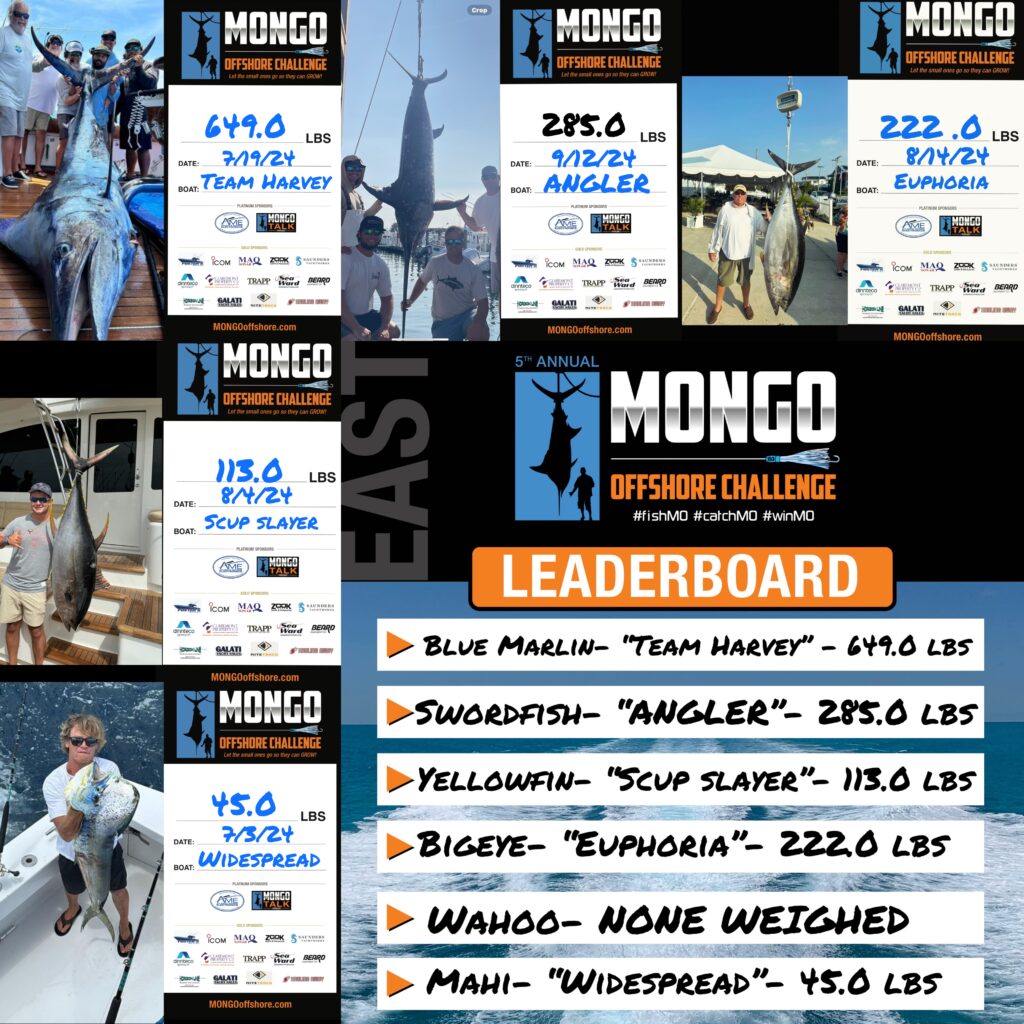
Blue Marlin: Winner Team Harvey. $106,075
Swordfish: Angler. $9,350
Bigeye: Euphoria. $8,500
Yellowfin: Scup Slayer. $5,950
Mahi: Widespread. $5,100

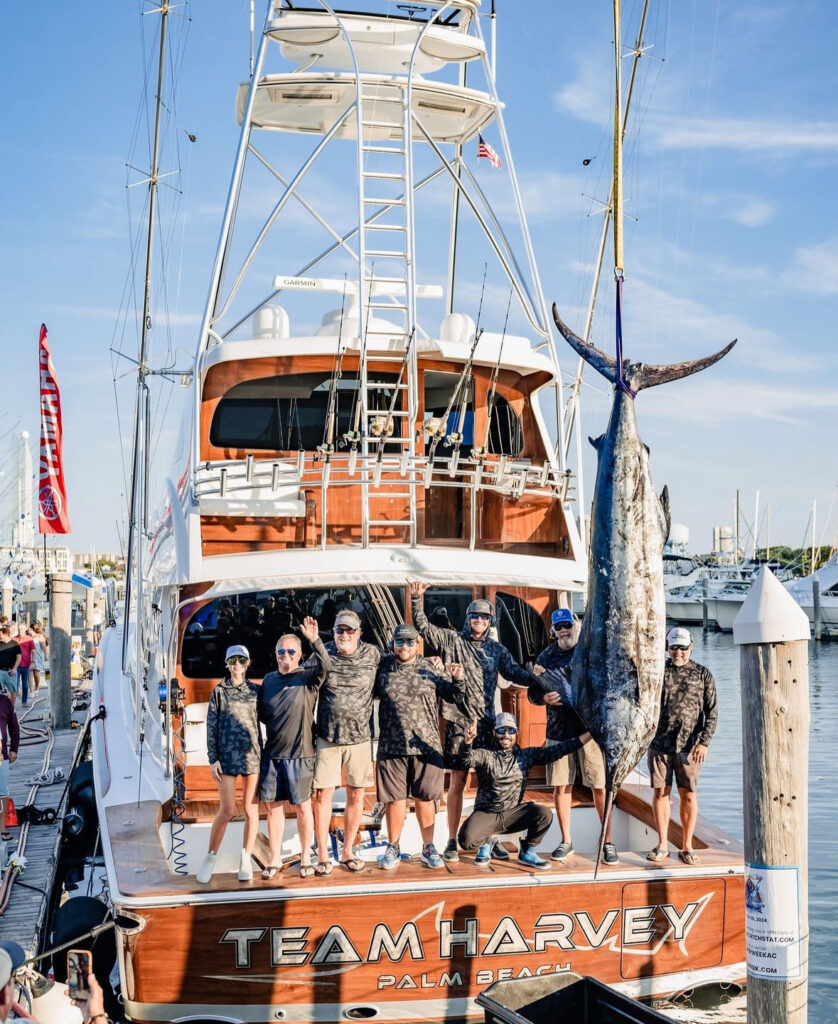
Perhaps the headliner of the East Coast division is Team Harvey’s 649-pound blue marlin. For winning the MONGO, Shane Guidry and his Palm Beach-based crew took home a check worth $106,075.

Guidry, whose Team Harvey hails from the Gulf, shared his perspective on what makes fishing the MONGO such a good deal.  “For us, coming from the Gulf Coast, in our first year of fishing the Atlantic, winning the MONGO is a big deal. There’s a lot of great competition,” Guidry explains. “Coming from the Gulf we enjoy chasing big fish. Crews enjoy points, but we like for the public to be involved.”

“The MONGO is a great idea. It’s great competition. The Gulf Coast has really embraced it. It’s time to get the East Coast more involved to make it a high-dollar competition. We’re going to fish the MONGO next year. We’ll have two boats, one in the Gulf and one on the East Coast,” Shane says. “If you’re going to fish tournaments on the East Coast, you might as well fish the MONGO. It’s a great opportunity to win a big check and it allows more fishing.”

Captain Ricky Wheeler is the owner-operator of the Euphoria. He won the bigeye division this year. Wheeler, an industry veteran, shares a similar passion for the MONGO.

“I love this tournament. In a time where fishing tournaments are getting more and more skewed due to numerous modern advancements, the MONGO tournament format allows anyone a chance to catch a mongo for the win,” Wheeler explains. “It keeps every day of fishing even more interesting.”

Captain Jay Watson runs the WideSpread out of Oregon Inlet. He won the Mahi division with a 45-pounder. This was Watson’s fourth MONGO win. He enjoys the tournament—and with good reason.

“The MONGO also coincides with all of our East Coast tournaments. This gives us another angle for success with a lower buy-in. For fish that qualify for the MONGO and another tournament, the MONGO often pays more than the other event.  That’s very appealing to my tournament clientele and my ownership as well,” Watson describes.

So if your boat plans to fish the East Coast next year, whether as a charter operation or a tournament program, why not consider fishing the MONGO. It’s fun and it pays.

A Celebration of Fishing and the Industry that Makes it Possible

Most fundamentally, the MONGO Offshore Challenge celebrates fishing. The MONGO celebrates the act of catching big fish and the fisheries that make it possible. It showcases the boats and crews whose skill and dedication provide the foundation of the activity. The MONGO is this way by design.

“As a sportfish captain, tackle salesman, yacht broker, and tournament fisherman, I’ve worked in the fishing industry for almost 25 years. It was a dream to create a tournament that helps attract professional, charter, and novice fishermen to all compete on a level playing field to see who can catch the largest fish of the season. Our in creating the MONGO was to promote fishing, celebrate the fish and reward the teams that do it each year,” explains MONGO co-founder Jeremy Cox. “With a Co-founder Team made up of my brother JD Cox, and best friend Brian Johnson– and support from the Gulf and East Coast sportfishing communities, we have done it! We hope to continue to grow it !”

The MONGO partners with many of the best companies in sportfishing industry. When doing business with these companies you can feel good in knowing that each is an expert in what it does and that each are passionate about fishing and the people who do it.

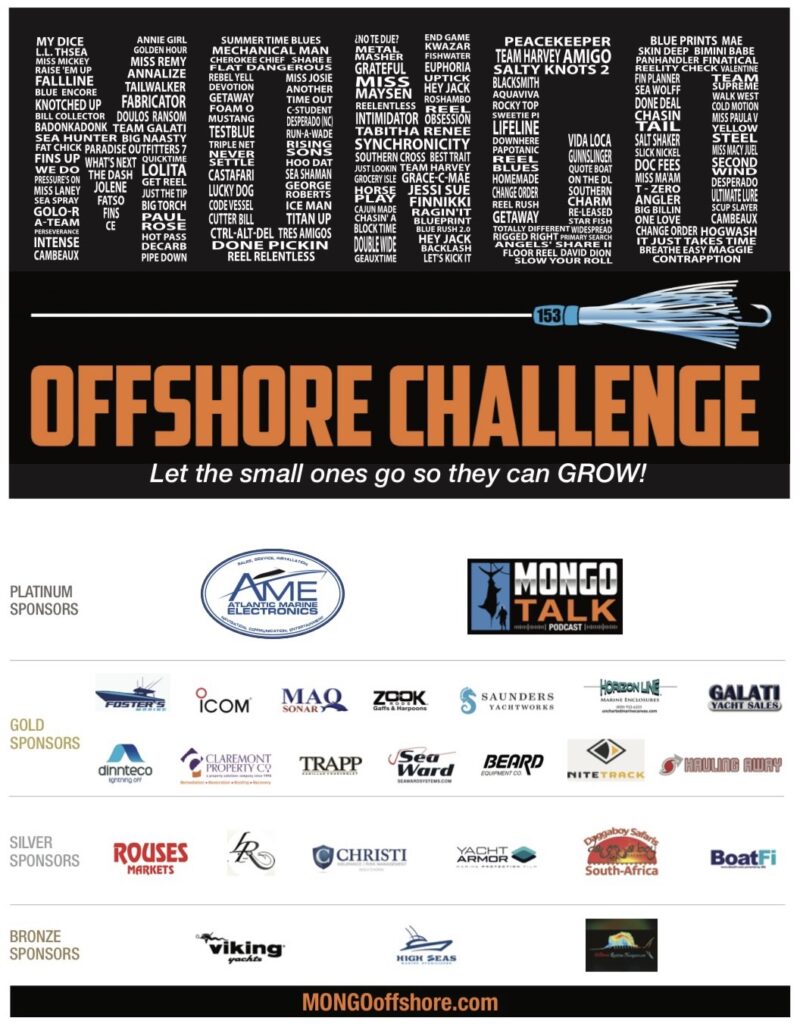
  • Platinum Sponsors– Atlantic Marine Electronics and the MONGO Talk Podcast
  • Gold Sponsors– Hauling Away, Galati Yacht Sales, Horizon Line Marine Enclosures, NiteTrack, Foster’s Marine, ICOM, MAQ Sonar, Zook Rods, Saunders Yachtworks, Dinnteco, Claremont Property Co., Trapp Cadillac / Chevrolet, SeaWard, and Beard Equipment Co.
  • Silver Sponsors– Rouses Markets, Larry Rackley Art, Christi Insurance, Yacht Armor, Daggaboy Safaris, and BoatFi
  • Bronze Sponsors– Viking Yachts, High Seas Marine Stabilizers, and Hilton’s Realtime Navigator

In addition to the cash payouts, the 2024 MONGO also awarded a $10,000 African Safari from Daggaboy Safaris to the largest blue marlin, a custom trophy from renowned marine artist Larry Rackley, MONGO trophies and other prizes. Be sure to register to fish the 2025 MONGO next year. Registration will open in early 2025.

For more information, visit MongoOffshore.com.

September 10, 2024 by Elliott Stark

Icom and the Story of Boat to Boat Communication

Icom has been keeping boaters connected for decades. Here is the story of a brand whose contributions are central to the sportfishing experience.

“We just released a blue one. Nice fish. 400,” you say into your VHF radio transceiver that’s mounted in the helm.

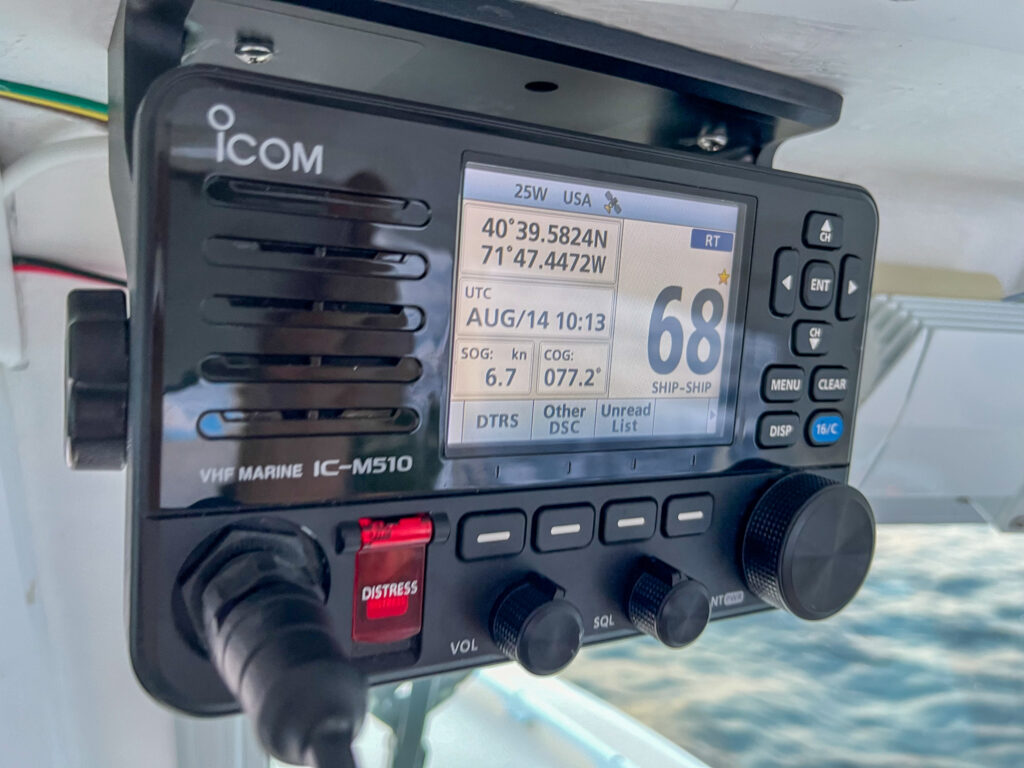
The bite was not random. It wasn’t a sonar fish. You found it the old-fashioned way. The way that captains and boat owners have been communicating with each other for more than 100 years. Your buddy called you over, hailing you on Channel 68 on the VHF.

Talking on the VHF you perhaps haven’t given this piece of equipment much thought.

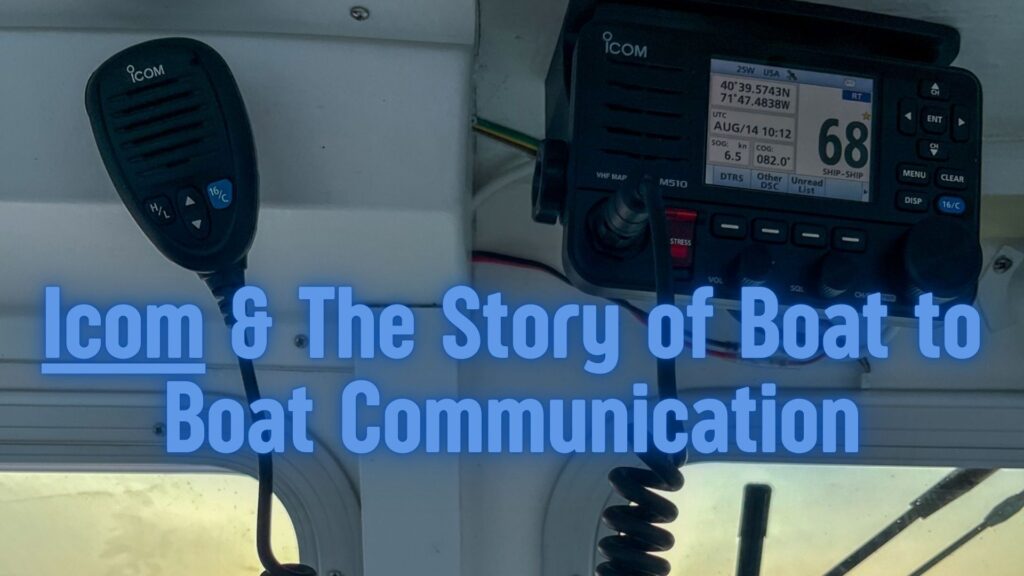
The Icom that’s mounted on the helm of this boat is much like the Icom VHF setup you’ve had on just about every boat you’ve ever run. If you really think about it, Icom VHFs are as central a part of the offshore fishing experience as rigged ballyhoo and pitch baits.

Icom VHFs are universal—used in sportfishing and commercial boating around the world. They are prepared, always ready, as prepared for run-of-the-mill fishing talk as they are for emergency communications. The company’s packages include a full suite of fixed mount and removable VHF radio options.

In the age of digital this and digital that, when disruptive technologies have transformed the landscapes of products, services, and entire industries, VHF radios remain as universal and widely relied upon as ever. Whether you’re running a center console or sportfisher or crewing a workboat or freighter, it is the VHF radio that connects you and your boat with the world.

What follows is a brand story of a company whose products are durable and ubiquitous enough that you might not notice them. They are so reliable and so widely used that many don’t give them a second thought. This is the story of a company that has been connecting fishermen, boaters and people for more than 60 years.

It is the story of a company that is continually evolving, investing in technology, service and capacity. It is the story of Icom and the story of VHF radio’s continued dominance of marine communication.

The Origins and Benefits of VHF Radio

VHF (very high frequency) radios are perhaps the benchmark in marine communications around the world. There are several reasons for its widespread use:

  • They allow communication with boats, marinas, bridges and the Coast Guard—all via established channels that are open and available to anyone and any facility with the proper equipment.
  • VHF waves are weather-resistant. You can count on being able to use your VHF even in very rough weather.
  • VHF allows location tracking of vessels that are using it for communication. This allows emergency response and vessel location even at night or in fog.
  • VHF communications are portable, you can communicate from fixed, mounted systems or handheld, stand-alone units.

These benefits tell part of the story as to why VHF radios are so widely used.

The other part of the technology’s global dominance in marine communication relates to its history and the network that has grown over the past 80 years.

VHF communication is central to shipping all over the world– from sportfishers and center consoles to freighters, tankers and commercial enterprise.

While the origins of ship-to-ship and ship-to-shore communications began in the early 1900s—these were largely precursors to modern VHF radio. Among the most famous were Morse Code transmissions and the Marconi Company’s radio operators who sent the distress calls from the Titanic. An early version of VHF was used for ship-to-ship communication during World War II. The technology’s modern variant, however, emerged in the 1950s, with the first FM radio broadcast taking place in 1955.

The result, some 70 years after VHF’s widespread adoption, is a global communication network that touches every corner of recreational and commercial boating. The technology is still used today for the same reasons it was so widely adopted in the first place.

Icom: A Full-Service Communication Company

Icom offers a full line of fixed-mount and removable VHF radios. In the VHF space, the company’s offerings include everything from feature-rich packages (with CommandMics tm and a network of linked devices), to compact helm-mounted VHF packages made for center consoles and portable, hand-held units.

The company’s products are known not only by durability and quality, but by the commitment to service. Icom’s website is an incredible resource of technical information about not just its products, but about the compatibility of boat systems and how to integrate VHF and other technologies into your operation.

The IC-M510 EVO is perhaps the flagship feature-rich VHF platforms. It is an all-in-one command center that is NMEA 2000 compliant and includes WLAN capacity. This means that it integrates with other systems that are also NMEA 2000 compliant.

The IC-M510 EVO can be hooked up to CommandMics that can be distributed around the boat. CommandMics, such as the HM-195GB, open an incredible array of capabilities.

This capacity allows the captain (at the helm) to communicate with people in the engine room, galley, cockpit, tower, or other parts of the boat. This integration with CommandMics and smartphones allows the users to control the boat’s radio and intercom from anywhere on the boat.

The 510 EVO is smartphone-compatible, features noise-canceling technology (speaking of the engine room), and can be connected to Icom’s MA-510TR transponder (a capacity that provides real-time AIS data such as vessel speed, position, and course). It allows you to control radar and other systems through its clear, digital screen.

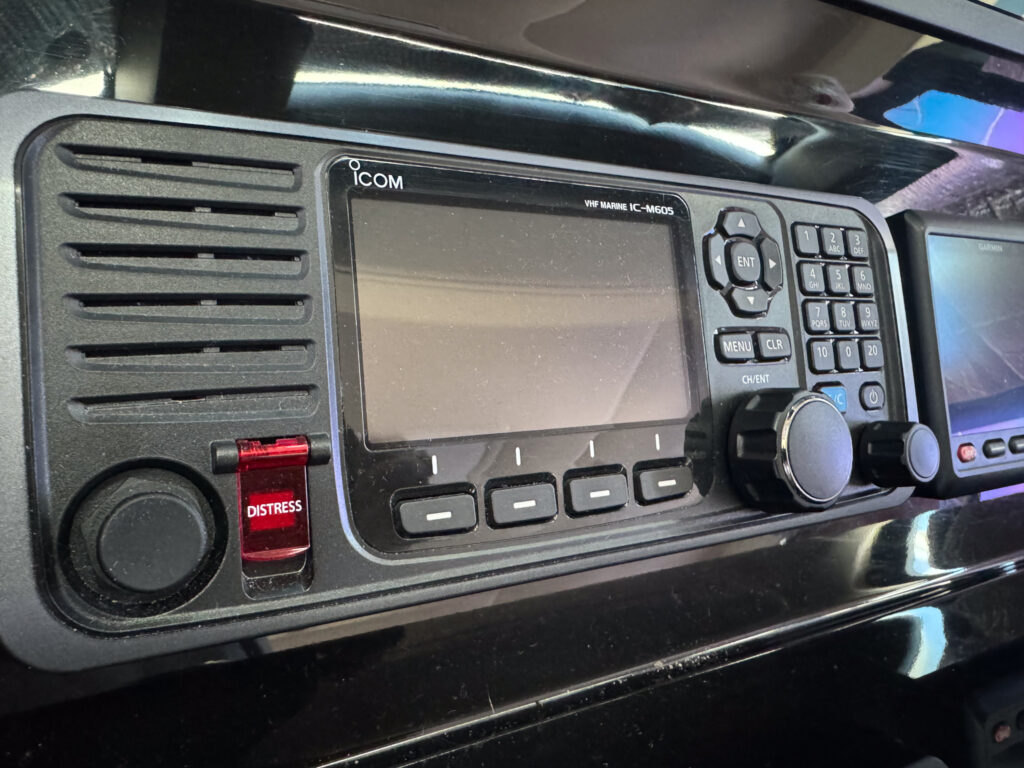
As a command center, the IC-M510 EVO also features a “Distress” button that can be triggered in emergency situations. Its design is sleek and award-winning and the unit can be mounted on the helm within a glass case.

VHF Packages for Center Consoles

Icom’s VHF center console offerings are equally impressive. The IC-M510BB is a VHF Marine Transceiver that is ideal for vessels with less helm space.

It features a multi-piece, CommandMic and black box configuration. The unit allows you to set up three stations on board, each with VHF compatibility. All of this comes with NMEA 2000 and NMEA 0183 compliance. This supports the ability to plug and play with compatible multifunction displays and other pre-existing hardware and boat systems.

Other features include noise-canceling technology, digital select calling and integrated AIS receiver monitors to track the movement of other vessels. The IC-M510BB also provides an intercom feature, voice recording and playback functionality, RX hailer and foghorn and more.

This option is tailor-made for the modern high-performance center console landscape.

Handhelds and Portable VHFs

Icom handheld VHF units open a world of possibility. For traveling operations, they allow visitors and crews to keep in contact with the boat while provisioning, cruising around in the tender, or fishing the flats. Beyond the safety benefits of this capacity, it also removes the availability (or lack thereof) of cell service from the equation.

For decades Icom has been a leader in portable, handheld VHF technology. The company’s modern leader in the market is the IC-M94D.

Not only is IC-M94D perfect for traveling operations, but it’s ideal for small boats looking to stay connected. It is also the first handheld VHF to feature an AIS receiver and digital select calling capacity in the same package. Its full-service ability provides peace of mind for life rafts and ditch bags as well.

Beyond clear, reliable communication the IC-M94D is waterproof (it also floats). Additional features include class-leading audio output, boasts 10 hours of operating time, and even includes a simplified navigation function. All of these capacities are packed into a handheld unit that can be packed and stowed and taken with you.

Connecting the Sportfishing World

It would be tempting to pigeonhole Icom as a VHF company. That, however, would bypass the company’s offerings in single side bands, radars, AIS units and many other products that span the boat-to-boat and boat-to-shore communication universe. A complete lineup of products and areas of operation is available on the company’s detailed, meticulous, resource-rich website.

Icom is also a proud sponsor of the MONGO Offshore Challenge.

V

June 17, 2024 by Elliott Stark

MONGO East Coast: Time to Roll

With more than $100,000 in the pot, the 2024 East Coast Blue Marlin Division is a big money competition.

As the 302 boats that fished the 2024 Big Rock Tournament disperse from marinas around Morehead City, North Carolina, the East Coast’s offshore season is officially here. Early summer has greeted East Coast boats with promise.

In May the Viking boat broke the daily blue marlin release record in Charleston. Captain Ben Brownlee and the Game Time took home top honors in the Big Rock with a 516 pound blue marlin.

Boats in Ocean City are getting ready for the season, greeted by a wide open bigeye bite. The Canyon fishing in New England will start in earnest in a matter of days.

REGISTER for the MONGO

The anticipation that comes with every year’s fishing season is all the more palpable with the prospect of winning some MONGO cash. What follows are three reasons why you might consider fishing the MONGO this summer.

$100,000-plus in the Blue Marlin Division

As it stands (June 17), there is more than $100,000 in the East Coast blue marlin division. This total includes $62,000 in rollover cash in the East Coast blue marlin division. Currently there are 18 teams in the division.

The entry is $2,500. As it stands now, the payout is more than 40-times the investment. Who wouldn’t wager $2,500 for a chance to win $100,000? Especially when fishing against a field that is currently less than 20 boats.

This is where the contest gets interesting. If more boats register to fish, the competition gets more crowded but the pot grows larger. If the number of boats fishing the blue marlin division remains the same, there is less competition for the money.

This scenario makes the 2024 East Coast Blue Marlin division uniquely interesting. The money is up for grabs. If the early season is any indication, there are plenty of MONGO blue marlin on the east coast. Plenty of boats will catch qualifying fish. That said, you can’t win it unless you are in it.

If You Are Fishing, Why Not Enter the MONGO

The bulk of the East coast’s tournament and charter season is yet to come. Boats fishing in Ocean City, Maryland are six weeks out from the White Marlin Open.

Ocean City is the setting for lots of fishing. It is also perfectly positioned to win MONGO cash.

New England’s canyon fishing will be firing off by early July. The inshore bluefin bite in many places is starting in earnest.

This is one of the most interesting things about the MONGO. It just takes one fish… and you never know when that bite will happen.

The winning mahi might come while trolling for marlin. The biggest wahoo could well be a blind strike on a the shotgun.

MONGO’s entry fees are set to promote fishing, not to break the bank.

And you never know when the biggest blue marlin will be caught. It could well cash a tournament check in The White Marlin Open, the Mid-Atlantic, Pirate’s Cove or Virginia Beach. It could also happen on any one of the hundreds of charter fishing days booked out of Oregon Inlet, Ocean City, Cape May, Montauk, Cape Cod or any number of other East Coast sportfishing ports.

If you will be fishing offshore this summer—whether in tournaments, running charters, or just fun fishing with your buddies—why not enter the MONGO. The price tag is reasonable and the format leaves it open to boats of all sizes.

The MONGO Is a First Class Event

The MONGO Offshore Challenge is something of an institution on the Gulf Coast. In its fifth year, the MONGO hosts a fleet of 150 boats in the Gulf Coast division.

The MONGO brought its innovative, accessible brand of tournament to the East Coast. In it’s third year, the MONGO’s East Coast winners have set state records (the Ro-Sham-Bo’s 2023 MONGO-winning swordfish set the Maryland state record) and represented some of the most storied fisheries on the eastern seaboard.

The fishing is ramping up. The entry fees are set to promote fishing—rather than break the bank. The best fishing is yet to come and registration for the East Coast Division runs through June 30. 

June 10, 2024 by Elliott Stark

The 2024 MONGO Gulf Division: A Celebration of Fishing

More than a season-long tournament, the MONGO is a 150-boat fishing party. With the Gulf’s tournament 2024 tournament season in full swing, here is a breakdown of the 2024 MONGO Gulf Coast Division.

The 2024 MONGO Offshore Challenge is a celebration of the Gulf Coast’s incredible bluewater fishing and the community of boats that so thoroughly enjoy it. More than a season-long tournament, the MONGO is a 150-boat fishing party. With the Gulf’s tournament 2024 tournament season in full swing, here is a breakdown of the 2024 MONGO Gulf Coast Division: the teams, the current leaders and the industry-leading lineup of sponsors who support it. Thanks to all the teams who have entered and all of the partners who have sponsored the event. The 5th annual MONGO is rolling and we’re excited.

150 Teams Fishing for More Than $500,000

In terms of volume of participation, the MONGO is the Gulf’s largest and most widely distributed bluewater tournament. From south Texas to Florida, the field is composed of boats representing all five Gulf states. Boats range from 29 feet to 80.

The MONGO is designed for fishing and for how people fish. A boat-based tournament, everyone who fishes aboard the vessel is a tournament angler. Not only that, but when the boat fishes tournaments those fish qualify for the MONGO as well.

It is with this backdrop—widespread, participatory and inclusive—that the MONGO 2024 Gulf Coast division is best understood. Here’s a breakdown of where we stand through the first six weeks of the action.

Blue Marlin: 86 Teams

Captain Jeremy Cox and the Lolita jumped out to an early lead with a 704 on the 3rd day of the 153 day tournament.

Through the first third of the MONGO, perhaps no division showcases the quality of the fishing in the Gulf quite like the blue marlin division. In just over a month of fishing MONGO teams have hung two fish north of 700.

It was Captain Jeremy Cox and team Lolita that kicked off the action on May 3 (just three days into the action). After five hours in the chair, Cox and company boated a 122 inch blue marlin with a 65 inch girth. At 704, the fish not only took top honors in the Hurricane Hole Louisiana Open, but stamped an imposing mark for the remainder of the MONGO field.

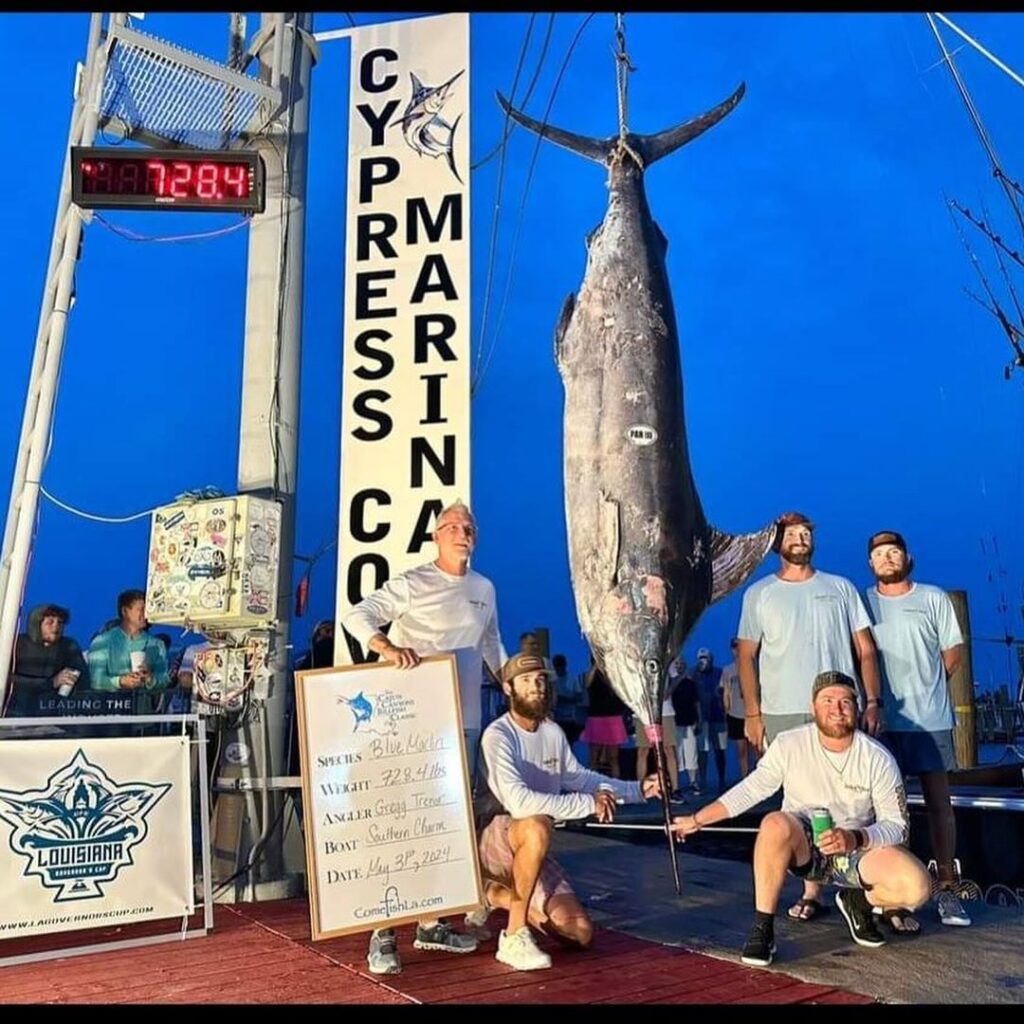
The Southern Charm’s 728 pound blue is currently leading the MONGO in the Gulf.

Lolita’s fish led the MONGO until the Cajun Canyons Billfish Tournament. The Southern Charm cashed a tournament check with 728 that currently leads the Gulf Coast Division. Connor, the first mate on the boat, was gracious enough to share the experience of catching the fish on the dock after the fishing.

In many parts of the world, a 728 pound blue marlin would be a lock. On the Gulf Coast, with three months of fishing remaining, however, there’s quite a bit of fishing remaining. 

What will it take to win the Gulf Blue Marlin Division? Veteran Gulf Captain Patrick Ivey of the Breathe Easy provides his best guess… 

Tuna: 71 Teams

The MONGO wonderfully showcases the Gulf’s incredible tuna fishing. The 71 teams competing to catch the biggest yellowfin in the Gulf face stiff competition. Between boats fishing tournaments and club competitions and charter operations, there are lots of big tuna caught in the Gulf.

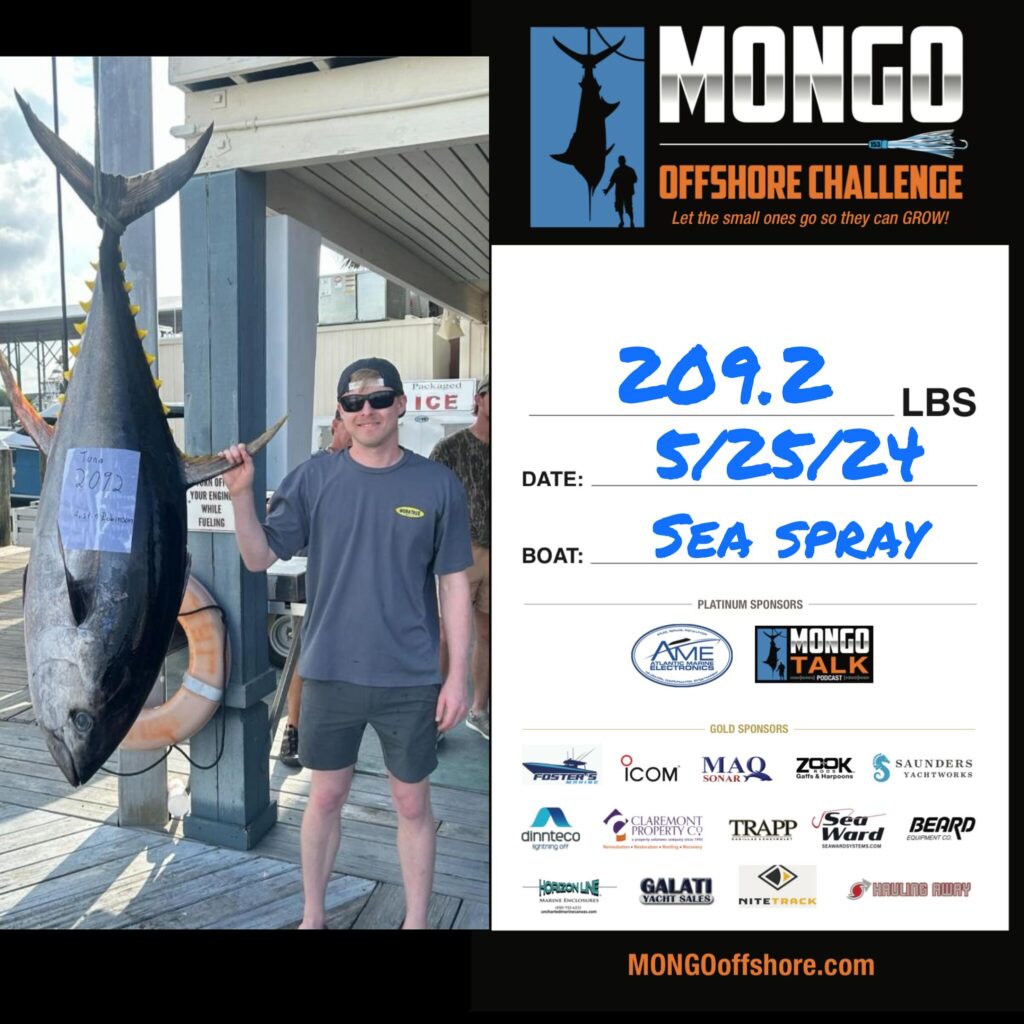
Sea Spray’s stud yellowfin hanging at Orange Beach Marina.

In its first month the 2024 MONGO has posted two yellowfin north of 200. Rene Cross and the Miss Remy jumped out to an early lead with a 200.6 that cashed a check in the Louisiana Gulf Coast Billfish Classic. The current leader is the Sea Spray who hung a 209.6 pound yellowfin at Orange Beach Marina on May 25.

Mahi: 71 Teams

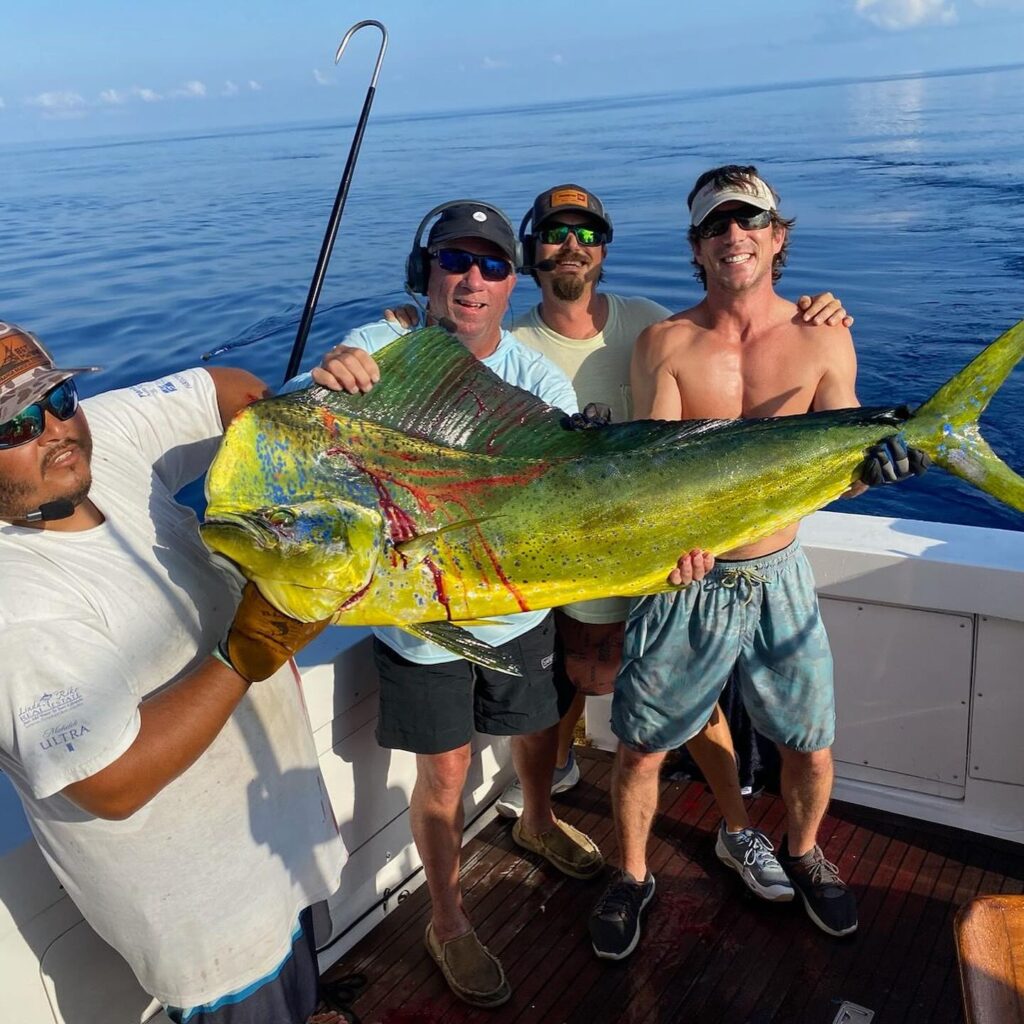
Fins Up with the current leader in the Gulf mahi division.

The Mississippi Gulf Coast Billfish Classic set the stage for the current leader in the Gulf’s mahi division. The Fins Up, a 54’ Bertram, caught a 42.1 pound dolphin.

Swordfish: 42 Teams  

The Gulf is home to one of the best swordfish fisheries in the world. It is also home to some really good, really innovative swordfish crews. More than any other event, the MONGO showcases the quality of this fishery and the skill of the boats who do it.

The current leader is the Ransom, a 38’ Empire boatworks. They weighed their 245-pound sword at Cypress Cove Marina in Venice, Louisiana.

Wahoo: 74 Teams

Some 74 teams across the Gulf are in search of the largest blue torpedo. No qualifying wahoo has yet been weighed. The minimum wahoo weight is 60 pounds. A MONGO wahoo is likely to make an appearance between now and September.

A Celebration of Fishing and the Industry that Makes it Possible

The MONGO Offshore Challenge celebrates fishing. The MONGO celebrates the act of catching big fish and the fisheries that make it possible. It showcases the boats and crews whose skill and dedication provide the foundation of the activity.

The MONGO also partners with many of the best companies in sportfishing industry. When doing business with these companies you can feel good in knowing that each is an expert in what it does and that each are passionate about fishing and the people who do it.

The MONGO East Coast: Registration Open Through June 30

The MONGO’s East Coast division remains open through June 30. With the season kicking off, boats from Florida to New England compete for the biggest blue marlin, swordfish, yellowfin, bigeye, wahoo and swordfish.

$62,000 – 1

Were this not exciting enough, the Blue Marlin Division has $62,000 in rollover cash from last year. Plenty of boats will catch big blue marlin this year. If they’re entered in the MONGO, one will win a pile of money. 

April 30, 2024 by Elliott Stark

Ocean City: Perfectly Positioned

Ocean City’s location and the attributes that define its offshore fishery make this a prime location for boats vying for MONGO. Ocean City is home to one of the finest marinas on the east coast, the largest tournament in fishing, and an incredible sportfishing culture.

Ocean City, Maryland is something of a fisherman’s paradise. The offshore fishing in this part of the world is marked by diversity and size. The fleet that fishes here—both resident boats and those that visit during the summer—is one of the most remarkable aspects of this wonderful corner of the world.

Ocean City’s location and the attributes that define its offshore fishery make this a prime location for boats vying for MONGO cash this summer. Ocean City is home to one of the most famous and most well-equipped marinas on the East Coast. It’s also home to the White Marlin Open– the largest billfish tournament in the world– and one of sportfishing’s most influential fishing clubs. OCMD’s sportfishing tradition and the amenities that draw boats to this part of the world are, however, only part of the equation.

What follows is a breakdown of why and how boats fishing out of this part of the world are so well positioned to win the 2024 MONGO East Coast division. All that said, you can’t win it unless you’re in it.

If you fish out of Ocean City, Maryland, there is a strong case to make for joining the many other Mid-Atlantic boats fishing the 2024 MONGO.

OCMD: The Fishery

Ocean City sits at the southern extent of the East Coast canyon fisheries. This network of seafloor topography pockmarks the continental shelf—a residual effect of glacial movement in the last ice age.

Where their boundaries intersect with warm waters from the Gulf Stream, these canyons host some of the best tuna and swordfish fishing on the East Coast. From north to south, there are five major canyons within range of Ocean City boats—the Wilmington, Baltimore, Poorman’s, Washington, and Norfolk.

When deep water currents deflect off of bottom topography they flow toward the surface. When these nutrient and oxygen-rich waters encounter sunlight, they support phytoplankton growth. This sets the stage for an offshore buffet for pelagic predators of all manner.

Boats troll might troll for blue and white marlin in the daytime, perhaps putting out spreader bars for bigeye as the sun begins to set. When darkness falls, boats will set up around the rim or edge of a canyon for a night of chunking for tuna while deploying a swordfish bait or two.

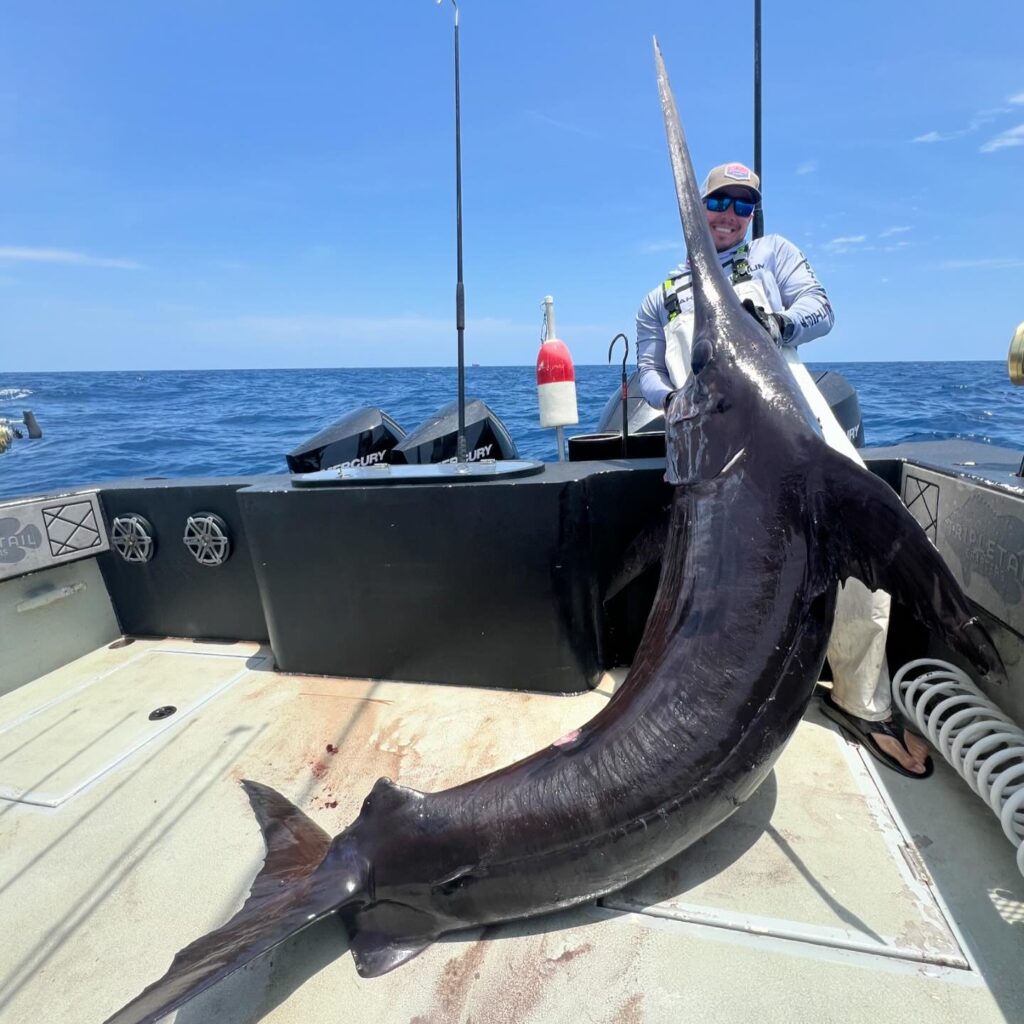
Giant swordfish. Maryland state record. MONGO winner.

From June through September, this part of the world is a hotbed of sportfishing activity. The Gulf Stream passes about 125 miles offshore of Ocean City. Warm water eddies spin off the main current, sending bodies of warm water within range of the fleet. When marlin fishing, boats will target these warmer waters and temperature breaks.

For a week or two in August or September, it will likely host some of the best white marlin fishing in the world. Giant blue marlin haunt these waters.

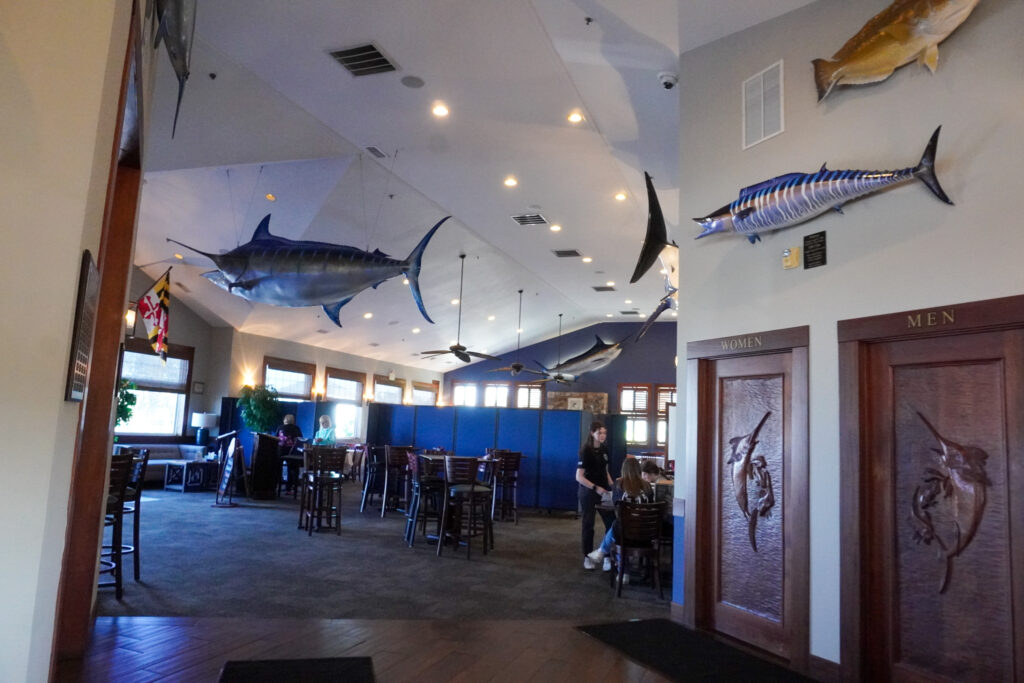
Just how giant? A mount of the Billfisher’s Maryland state record adorns the ceiling of the Ocean City Marlin Club. The submarine of a blue marlin weighed an incredible 1,135 pounds. Captain Jon Duffie and company caught this fish in the Mid-Atlantic 500, no less. 

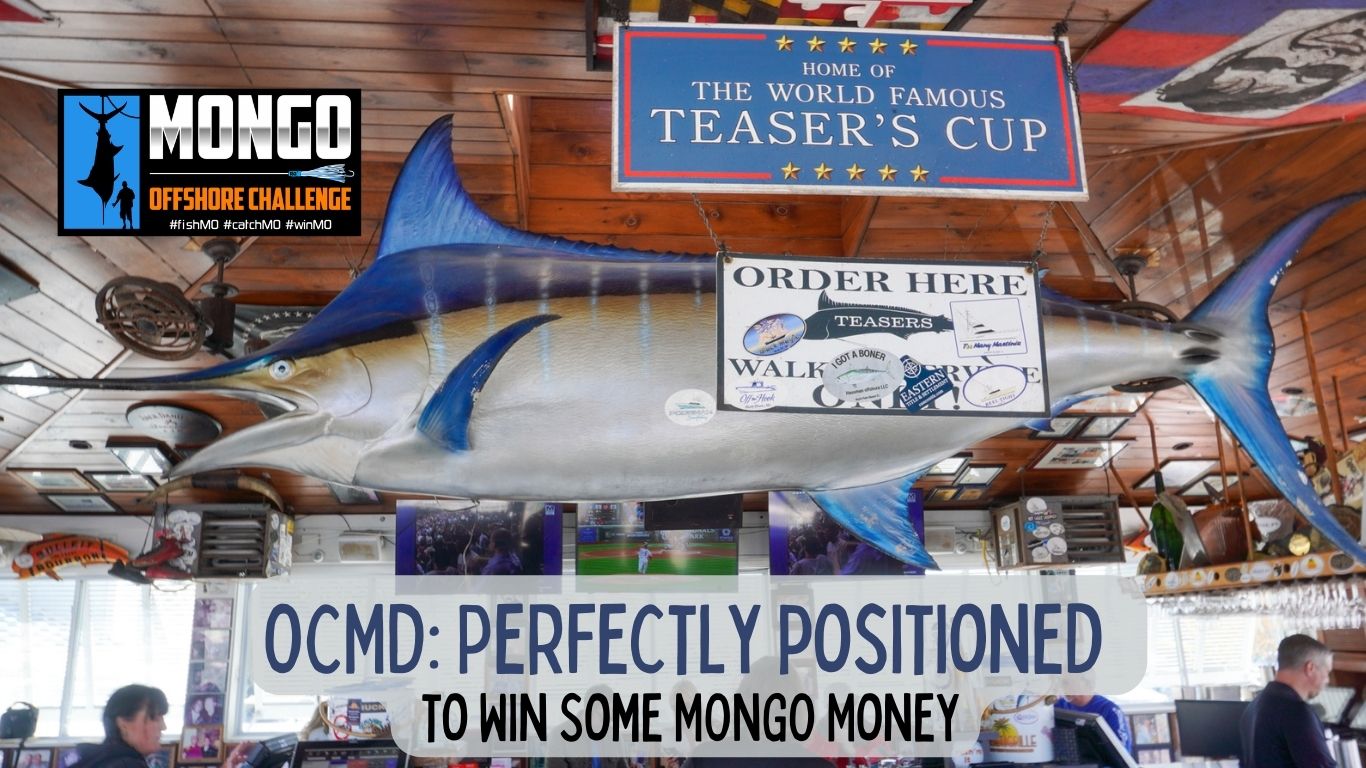
The Ocean City Marlin Club’s dining room. How do you make an 800-pound blue marlin look small? Hang it in the same room as an 1,125-pound blue marlin.

Ocean City is also home to a great swordfish fishery. In fact, Captain Willie Zimmerman and the OCMD-based RoShamBo won the 2022 MONGO Swordfish division with a state-record 393-pound sword.

Bigeye perhaps headline the tuna fishing here. The RoShamBo took home the 2023 East Coast Bigeye division with a 246.4-pounder last year. 

OCMD: The Volume of Fishing Activity

The second reason why boats that fish out of Ocean City are so well positioned to win MONGO money results from the volume of fishing that happens here. Lots of boats fish quite a few days out of Ocean City.

You’ve got to be in it to win it.

Scott Lenox owns Fish in OC, a media platform that keeps its finger squarely on the pulse of all things fishing in Ocean City. Scott provides context as to what makes this part of the world so unique.

“We’re strategically located in the central Mid-Atlantic region. From June through September we have great fishing in the canyons. We catch lots of really sought after species and our high dollar tournaments attract quite a few anglers,” Lenox explains. “Ocean City also hosts lots of high-net-worth visitors from New York, D.C, and Virginia. They come here for all of the tourism infrastructure we have. This increases the fishing that we do.”

Scott Lenox, source on all things fishing in Ocean City.

Ocean City’s visitor experience has something for everyone. Great seafood is abundant and fresh. Crab cakes made this part of the world-famous.

The Ocean City Boardwalk has been attracting visitors for decades. The beaches are beautiful and the amenities that are available here are perhaps as well-rounded as any place on the eastern seaboard.

In addition to the tourists who charter boats here, Ocean City hosts a thriving, homegrown sportfishing culture. The great fishing and atmosphere in this part of the world exists as the foundation of one of sportfishing’s longest-running and most influential organizations—The Ocean City Marlin Club.

From its wonderfully appointed clubhouse—a full-service bar and restaurant that overlooks Sunset Marina—the Ocean City Marlin Club has been fishing and supporting conservation since 1936. Club members fish around the world and compete in local club tournaments every summer. Crewmen and anglers who have grown up hooking white marlin on rigger bites and pitching to fish on dredges gain a skillset that is uniquely valuable to volume billfish tournaments around the world.

Ocean City’s incredible fishing and boating infrastructure benefit visitors and locals alike. In many ways, this starts and stops with Sunset Marina. Home to hundreds of slips, a full-service boatyard, restaurants and bars, Sunset Marina is an icon of the sportfishing landscape.

Are you really a fisherman if you haven’t drank an Orange Crush at Teaser’s in Sunset Marina? Of course you can’t talk about Sunset Marina or fishing in Ocean City without talking about the White Marlin Open.

OCMD: The Tournaments

There are fishing tournaments and then there is the White Marlin Open. With purses large enough to impact the GDP, the White Marlin Open is something of an Ocean City, Maryland institution.

Photo courtesy of Ocean City’s iconic Sunset Marina.

Just how big and how influential is this tournament. The White Marlin Open has been running annually for more than 50 years. All told, the tournament has awarded more than $105 million.

In 2023, the White Marlin Open hosted a fleet of more than 400 boats and 3,500 anglers and crew. The Reel Floor’s 640-pound blue marlin won more than $ 6.2 million and set a record for the largest payout for a single fish in the history of sportfishing.

More than the largest and richest tournament in the world, the White Marlin Open uniquely showcases the great fishing and wonderful atmosphere in Ocean City. Anglers from around the world join boats and crews from across the East Coast to try their hand at winning life-changing amounts of money.

The White Marlin Open is a one-of-a-kind celebration of offshore fishing. The Orange Crushes flow like water. Hundreds of boats fish not only the tournament days but practice days in the lead-up.

This tournament in and of itself is responsible for thousands of fishing days on the water. Each one of these days could result in a MONGO fish—even fish caught during the White Marlin Open.

Sunset Marina also serves as the southern port of call for the Mid-Atlantic 500. The size, scope and quality of these two events draw boats from all over the place. The timing of these great tournaments coincides with some of the best fishing you’ll find anywhere.

If You Fish Ocean City, You Should Fish the MONGO

If you run or own a boat out of Ocean City, Maryland there is a very strong case that you should enter the MONGO. The blue marlin category includes $62,000 in rollover cash. The price tag for the MONGO is reasonable—in fact, in relation to all of the other expenses that come with this wonderful hobby of ours, you might not even notice it.

If you’ll be on the water quite a bit this year, you may well run across a MONGO. The only thing better than catching a giant blue marlin, swordfish, bigeye, yellowfin, wahoo or mahi-mahi is catching a giant fish and winning a giant cardboard check for having done so. 

April 1, 2024 by Elliott Stark

Damon Sacco and New England’s Epic Offshore Fishery

Giant blue marlin and really big wahoo might not be the first thing that comes to mind when most people think of Massachusetts. This might be a mistake.

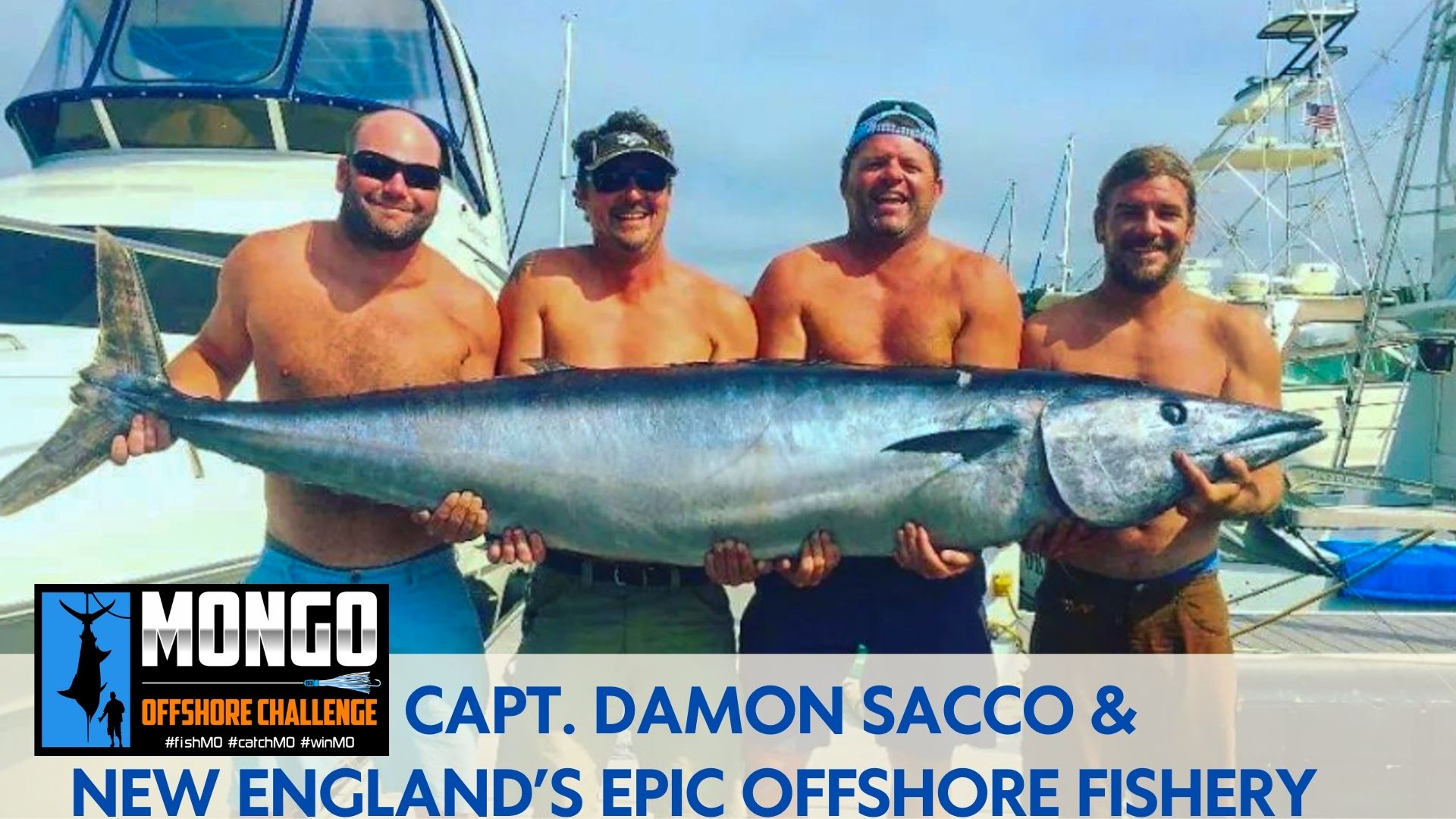
Giant blue marlin and really big wahoo might not be the first thing that comes to mind when most people think of Massachusetts. Captain Damon Sacco, one of New England’s most accomplished blue water captains, is fishing the East Coast division of the 2024 MONGO Offshore Challenge. He could well set the record straight.

A real one. Photo courtesy Castafari Charters.

Massachusetts sits at the northern extent of the MONGO’s East Coast Division.  Home world class giant bluefin tuna fishing, New England also boasts a relatively short but intensely productive canyon fishery. The MONGO dates and the peak canyon fishing parallel. When the results of this year’s MONGO are posted in the fall, don’t surprised if a contingent of trophies and giant cardboard checks head to New England.

What follows is equal parts introduction to the incredible blue water fishery in this part of the world and a profile of one of the most accomplished and interesting operations in sportfishing. If you fish out of New England, this serves as an invitation to fish the MONGO. If you’re a fisherman from the Gulf Coast, Florida, or the Mid Atlantic, this is an introduction to a part of the world that perhaps does not get the acclaim it is due.

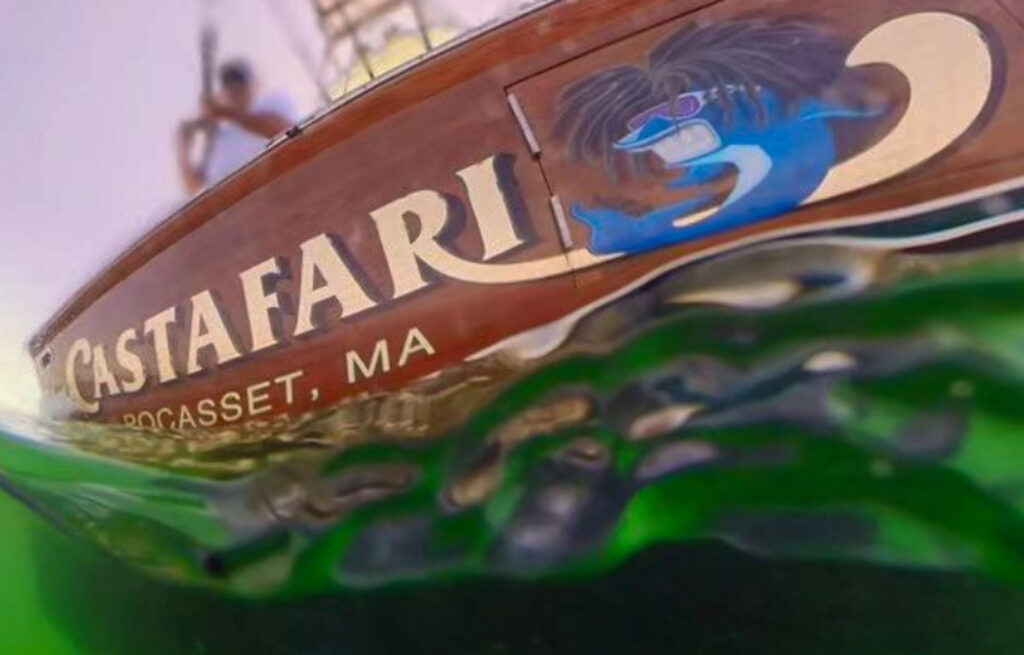
Meet Captain Damon Sacco and the Castafari

Captain Damon Sacco is a passionate, well-traveled offshore fisherman. He’s fished throughout the United States, the Caribbean, Central America and Mexico and the South Pacific. Damon is the owner and operator of the Castafari, a 45’ Jim Smith based in Cape Cod. Sacco’s deep involvement in the fabric of New England’s sportfishing community runs much deeper than simply running charters and winning tournaments.

Sacco invests much of his considerable passion and energy into giving back to the sport. Damon contributes to many of the best publications in sportfishing—Marlin Magazine, Salt Water Sportsman, the Big Game Journal and others.

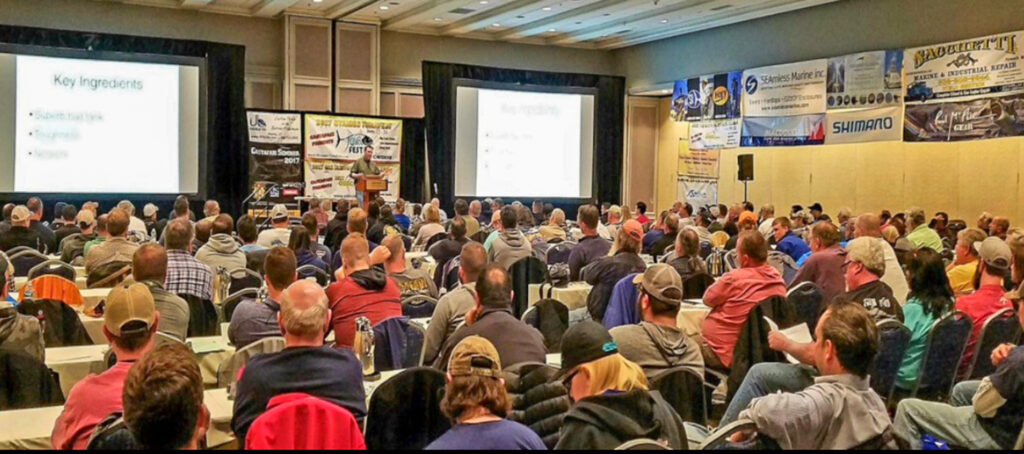
Captain Damon also runs the Castafari Big Game Fishing Seminars. Founded in 2009, these seminars have grown into perhaps New England’s most prominent and influential blue water fishing resources. Each year the seminars host hundreds of attendees from New England and New York, providing hands-on, in-depth instruction on a variety of sportfishing techniques presented by some of the leading names in the industry.

Sacco’s Castafari Big Game Fishing Seminar Series hosts hundreds of participants and dozens of vendors.

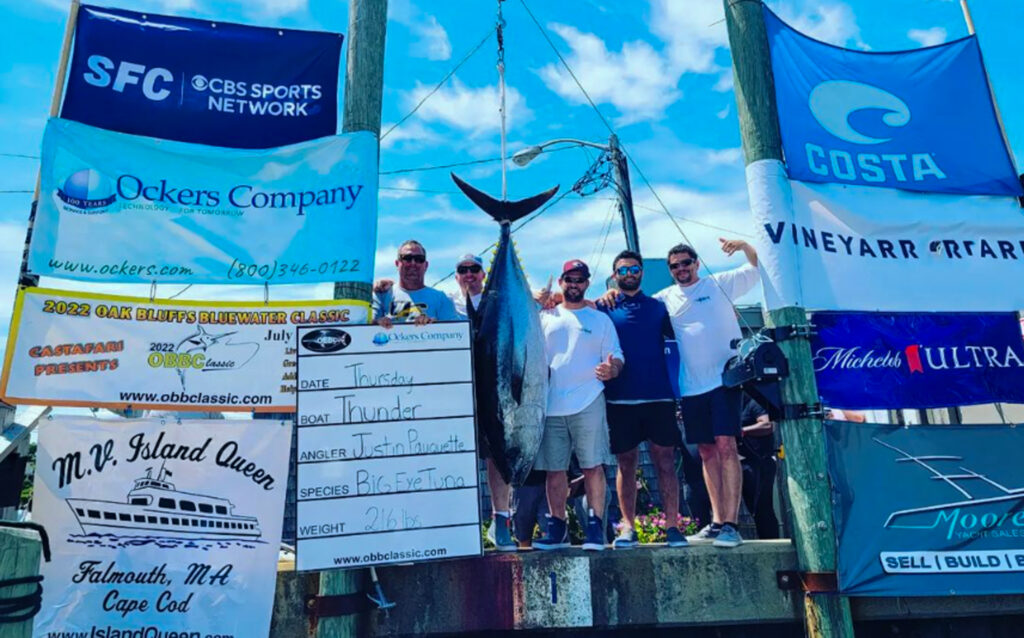
He runs the Oak Bluffs Blue Water Classic, one of New England’s premier offshore tournaments. He is a board member of the Stellwagen Charter Boat Association. Later this year, Damon is publishing an anthology of fishing stories that he’s compiled along the way. 

Captain Damon Sacco has made his reputation by consistently putting people on big fish.

While Captain Damon Sacco would not tell you this himself, it is difficult to think of a better ambassador to New England’s incredible offshore fishing. Sacco’s breadth of experience and knowledge of the landscape are second to none. When he talks fishing, many listen. 

Massachusetts: Home to a World Class Offshore Fishery

When most of the outside world thinks fishing in New England, it thinks striped bass and bluefin tuna. This is for good reason… These fisheries are world class (but neither is included in the MONGO Offshore Challenge). When Captain Damon Sacco and other New England boats join the MONGO, they do so because of the giant blue marlin, enormous wahoo and size large bigeye that inhabit their waters.

Sacco runs the Oak Bluffs Blue Water Classic, one of the highest profile tournaments in New England. Fish caught in this event would qualify for the MONGO.

The canyon fishing season runs for a 10-week span that includes parts of July, August, and September. When the warm waters of the Gulf Stream swirl above the network of topographic features that pockmark the continental shelf off the coast of Massachusetts, Connecticut and Rhode Island, magical things happen.

When you encounter a blue marlin here, it likely to be a real one. Sacco puts the average New England blue marlin around 500-pounds or so. 

The Castafari is no stranger to giant fish. Sacco has released plenty of big blue marlin—the largest measured 138” blue marlin to the fork.  When he talks about this fish, Damon describes it as “hunch backed” and “so big it looked deformed.”

There is $62,000 in rollover cash in this year’s East Coast Blue Marlin Division.

“We have plenty of moose around here,” he says, with a laugh. His Instagram captions sometime contain the word “seasquatch.”  Characterizing blue marlin in these terms is especially exciting given that there is $62,000 in rollover cash in this year’s East Coast blue marlin division.

There is, however, more to Massachusetts than just size large blue marlin. The place is home to some of the biggest wahoo in the world. When you think wahoo, you think warm waters… You likely think of the Bahamas, trolling around an oil rig in the Gulf or someplace in Baja California.

Many are surprised to find out just how good the trophy wahoo fishing can be in this part of the world. I bet you $20 that the Castafari has caught a bigger wahoo than your boat… In 2016, Sacco caught a 182-pound wahoo that was just a pound shy of the world record. That striped, blue torpedo of a fish measured an incredible 89-inches.

“There are lots of big wahoo here. It’s not uncommon to see a fish hit the docks that weighs 100-pounds,” Damon explains.

While the MONGO does not host a bluefin tuna division, bigeye are fair game. On canyon trips, boats will often troll right at dusk and as the sunrises. These are ideal times to catch bigeye. It’s also a great way to bookmark a night’s chunking for yellowfin, albacore and maybe even more bigeye. Sacco’s personal best bigeye tipped the scales at 278-pounds.

New England and the MONGO: A Perfect Match

Sure, when you think East Coast blue marlin and wahoo, you might think Oregon Inlet. Your mind might start pondering Ocean City, Cape May, Virginia Beach and boats fishing the Hudson Canyon. You think of these places and you do so with good reason—they are great places to fish.

New England’s ability to compete with these destinations illustrates the charm of the MONGO Offshore Challenge. The MONGO recognizes boats that catch the single biggest fish of a species. New England might not be able to compete with the volume of blue marlin caught in more southerly aspects of the East Coast, but if you’re looking for a single seasquatch…

As Captain Damon Sacco puts it, “I remember seeing the MONGO and I liked the format. I heard a lot of good things about the MONGO from my sources on the Gulf—people that I trust. They told me they put on a good tournament. The first time I fished the MONGO was last year. I plan to continue to do it. I am spreading the word up here. I’d love to see it turn into a fleet of 60-boats just from New England… It’s great to have the MONGO involved in our fishery. It revolves around big fish.”

For more context on what makes the MONGO so great, check this out.
January 30, 2024 by Elliott Stark

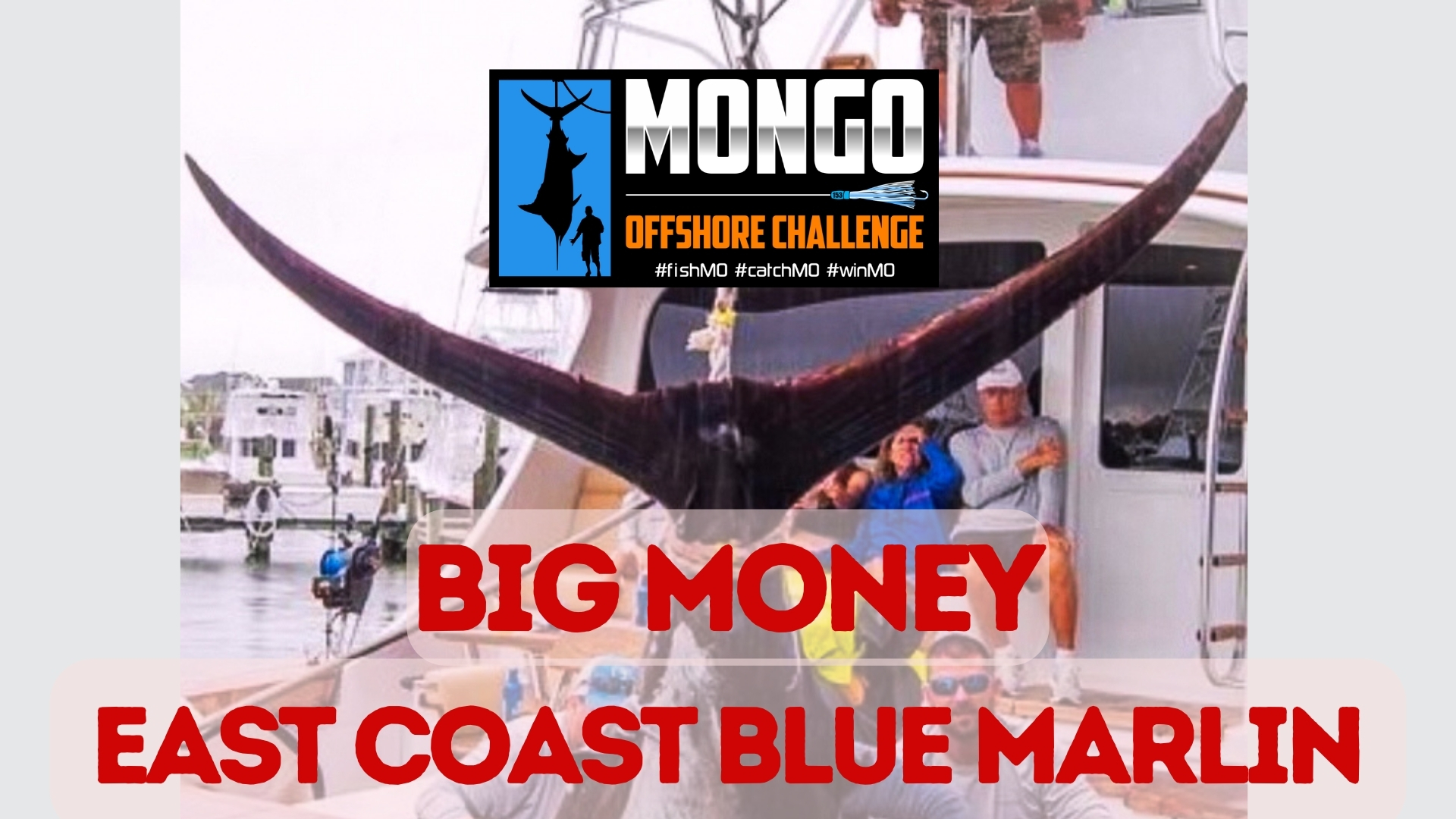
MONGO 2024: Big Money East Coast Blue Marlin

Someone in the MONGO East Coast Division is going to win a lot of money for catching a blue marlin this year.

Someone in the MONGO 2024 East Coast Division is going to win a lot of money for catching a blue marlin this year. Someone, somewhere between Florida and Massachusetts is going to hook a big fish, catch a big fish and win a big check.

$62,000 rollover money from last year is up for grabs. This money adds to this year’s entries, creating a big pay day for someone.

This fish might be caught on any day of a stretch that spans 153 days. It might be caught by a charter boat fishing one of his regulars. Maybe it will be caught by a private boat on a day of fun fishing. It might also be a blue marlin that simultaneously wins both a MONGO check and another tournament at the same time.

That’s the charm of the MONGO. The tournament is simple. Its format is straight forward. The MONGO is made for fishing.

Everyone loves catching big fish. Everyone REALLY loves getting giant cardboard checks!

One entry gains you eligibility for a whole season. Eligibility for all of the anglers that fish on your boat over the course of the season. Eligibility for all of the fish that you catch (if you weigh a fish and that fish is overtaken later in the tournament, you can weigh another one without needing to re-enter).

The MONGO is always fun. It’s always exciting. But this year brings something more.

The 2024 East Coast Blue Marlin Division brings something extra this year. It brings a whole pile of carryover cash.

2024 MONGO Registration: open February 1.

In 2023, plenty of boats fishing on the East Coast caught blue marlin that would have won the MONGO. None of these boats, however, were registered for the tournament. Plenty of people accidentally left quite a bit of money on the table. That will not happen this year.

All of the money in last year’s pot rolls over into this year’s East Coast Blue Marlin Division. It builds, automatically, with new entries into this year’s contest. That’s what makes the 2024 East Coast Blue Marlin Division even more special.

$62,000 is rollover money adds to the pot from 2024 entries. The result will make the winning blue marlin a big pay day for a big fish.

MONGO 2024 Specifics

The MONGO kicks off May 1 and runs through September 30. Registration opens soon. Base entry into the East Coast Blue Marlin Division is $2,500. If you’re fishing regularly, you might not even notice this expense (but you’d certainly notice the trophy and giant check you’d get for winning).

There are three additional optional blue marlin pots– $1,000 for the biggest fish of the season, $500 for the largest fish by the midpoint of the season and $2,000 for the biggest overall, Gulf and East Coast Divisions combined.

The MONGO celebrates boats that catch big fish. To qualify a blue marlin must measure 118″.

For a blue marlin to qualify as a MONGO, it must measure 118” short length. The MONGO is a boat-based tournament. A boat’s entry qualifies all anglers who fish aboard it, all season. There are no additional fees or entries required. All you need to do is to fill out your trip information in the MONGO app as you’re leaving the dock. You list your anglers for the day and register the trip with the tournament.

Your one-time registration takes care of everything. If you catch a qualifying fish in June and that fish is beaten in July, just keep fishing. If you catch another qualifier you’re still in the game.

More than Just a Blue Marlin Tournament

The MONGO is more than just a blue marlin tournament. It includes mahi, tuna, wahoo, and swordfish divisions too. Each division works the same. There’s a separate entry for each. You can enter all of them or just one.

A rundown of the 2023 MONGO champions…. 

They all work the same way– the dates are the same, the format, and rules. The biggest fish of each species wins. All you need to do is enter your boat and go fishing.

This is part of what makes the MONGO such an interesting tournament. It’s great for charter boats—it makes every day a tournament and lets people from all walks of life participate.

It’s great for private boats and weekend warriors too. The MONGO is perhaps the most accessible offshore tournament in the world. In its five-year history, boats from 18 to 105’ have participated.

The tournament lasts 153 days. That’s by design. This means that small boats can pick weather windows. Because it’s a biggest single fish tournament, you don’t need an Omni to compete.

MONGO: A Trusted Name in the Sportfishing Community

For those on the East Coast just hearing about the tournament, there’s more to the MONGO than meets the eye. Beyond the prospect of winning big money in the blue marlin division, beyond the ability to tournament fish every time you leave the dock, beyond making offshore tournament fishing accessible to thousands of anglers every year, there’s something else that makes the MONGO special.

The MONGO is a Gulf Coast sportfishing institution that brings its inclusive, approachable format to the East Coast.

The tournament was born on the Gulf Coast. The inspiration of three veterans of the Gulf Coast sportfishing community, brothers Captain Jeremy Cox and J.D. Cox and their longtime friend Brian Johnson, the MONGO was born of sportfishing.

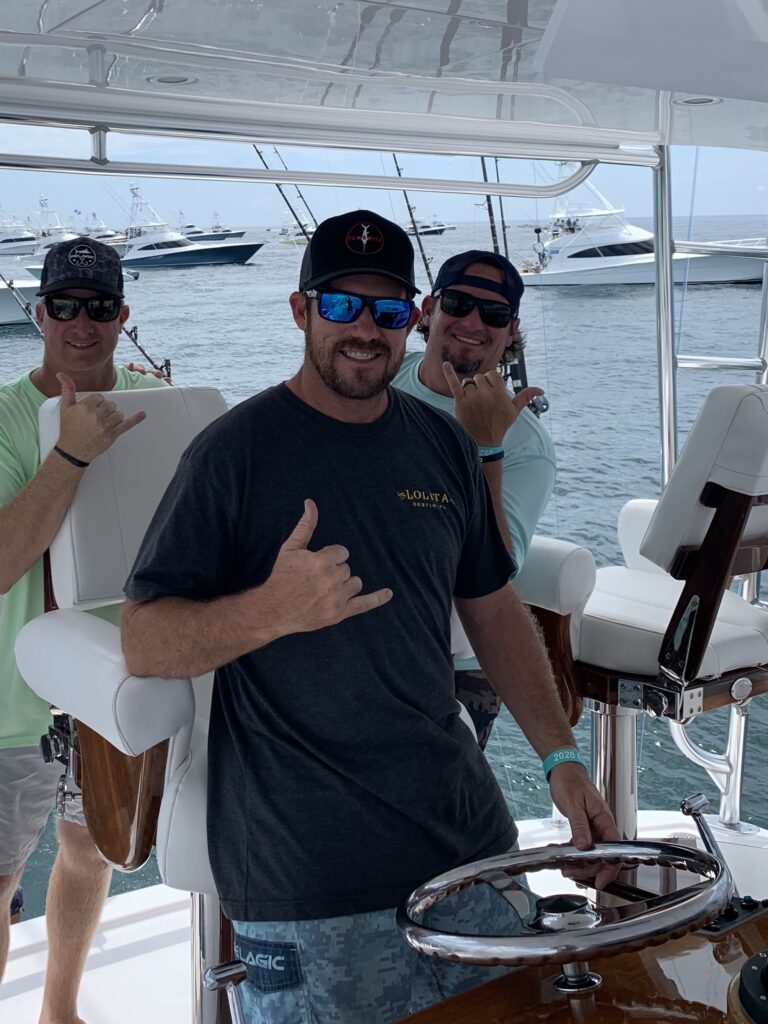
MONGO founders Capt. Jeremy Cox, J.D. Cox and Brian Johnson aboard the Lolita. Jeremy is a longtime professional captain and veteran of the Gulf Coast tournament scene.

In its third year, the MONGO set the Gulf Coast record for participation in an offshore fishing tournament.

The tournament’s innovative idea was part of the reason for its success.  More fundamentally, the tournament has grown and expanded because its run by good, honest people who understand fishing.

The MONGO Offshore Challenge is still relatively new on the East Coast. As the MONGO grows and expands, it will host more boats in farther reaches of the East Coast. The tournament’s foundation of being straight forward, honest and rooted in the fishing community continues to be the MONGO’s calling card.  

You can feel good about your entry and about how the tournament is organized and operated. We’ve got a wide network of participating marinas and weigh stations up and down the coast.  You can feel good about fishing with us and we’re excited about what is to come.

Someone is going to win a lot of money in the 2024 East Coast Blue Marlin Division. That someone might be you. That said, you can’t win unless you enter.

A recap of the 2023 MONGO.

2023 was a banner year for the MONGO– 2 divisions, 163 teams, 16 states, 3,000-plus anglers and some giant fish. 2024 is shaping up to even bigger. 

October 23, 2023 by Elliott Stark

2023: A Banner Year for the MONGO Offshore Challenge

2023 was a banner year for the MONGO Offshore Challenge-- 2 divisions, 163 teams, 16 states, 3,000-plus anglers and some giant fish.

The 2023 MONGO Offshore Challenge was a banner year. What began four years ago as an intimate celebration of the Gulf Coast Sportfishing community, has grown into the world’s largest multi-month big game challenge. In 2023, the MONGO celebrated its 4th anniversary in style—with great fishing in two divisions that span contiguously from the rigs of the Gulf Coast to the offshore canyons of New England.

The MONGO Offshore Challenge not only showcases the incredible fishing of the Gulf and East Coasts, but celebrates the people, businesses and community that comprise the sportfishing industry in the United States. The MONGO’s network of anglers (more than 3,000), boats (162), states represented (16), and composition of sponsors make it perhaps the most expansive bluewater tournament in the world.

2023 MONGO Stats

The MONGO Offshore Challenge is a celebration of fishing. The tournament’s unique set up is purposefully designed to promote accessibility, participation and cooperation.

In 2023, the MONGO’s Gulf and East Coast divisions combined to host a total of 162 participating teams. Tournament boats hailed from 16 states—from Texas to Massachusetts– ranging in length from 21-92’. A season-long, biggest fish wins affair, the MONGO’s 153 days of fishing opens the competition to boats of all sizes and crews of all experience levels.

Searching for the biggest blue marlin, swordfish, tuna, wahoo and dolphin, tournament boats logged more than 4,000 MONGO trips in 2023. A boat-based tournament, the MONGO allows any angler registered in the trip log to take part in the tournament. In 2023, the MONGO hosted an incredible 3,000 anglers.

The MONGO Offshore Challenge partners with many of the sportfishing industry’s best and brightest.

What’s more, you can fish the MONGO while fishing other tournaments. In fact, the tournament accepts weights from over 70 of the Gulf and East Coast’s premier billfish and tuna tournaments.  Once you catch a MONGO, you can weigh it any of the more than 40 partner marinas up and down the coast.

When it was all said and done–with hundreds of boats and thousands of anglers fishing over 153 days- large cardboard checks and MONGO trophies were headed to some of the most storied docks on the sportfishing landscape. Here’s a breakdown.

Gulf Division Winners:

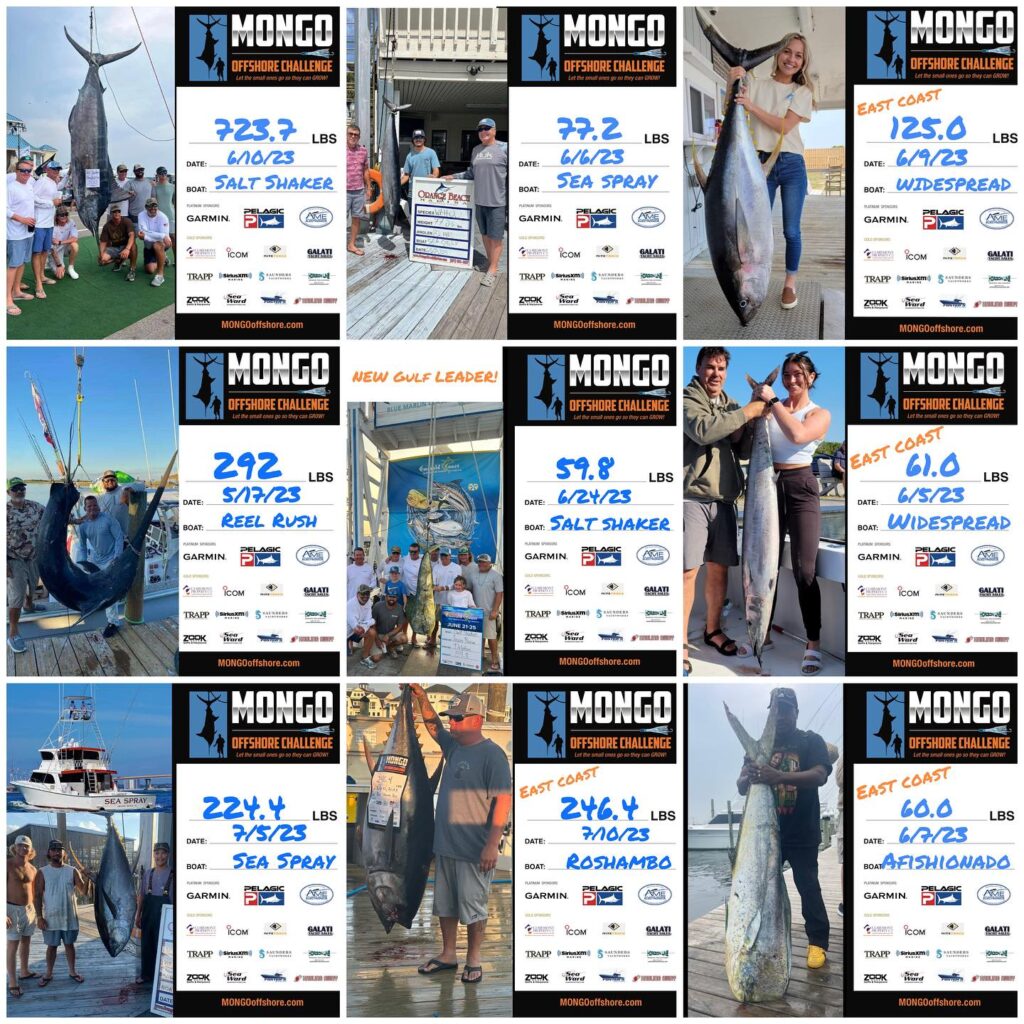
Blue Marlin: 723.7 pounds. Purse: $136,000
Mahi: 59.8 pounds. Purse: $32,300
Captain Dennis Bennett, owner Chris Hatcher, Salt Shaker. 58’ Viking. Baytown Marina, Destin, Florida.

Swordfish: 292.9 pounds. Purse: $51,000
Captain Mike Kubecka, Reel Rush. 33’ Americat. Matagorda, Texas.

Tuna: 224.4 pounds. Purse: $73,950
Wahoo: 77.2 pounds. Purse: $21,250
Captain Bill Staff, Sea Spray. 65’ Resmondo. Orange Beach, Alabama.

East Coast Division Winners

Blue Marlin- no qualifying fish weighed. $62,000 rolled into 2024 East Coast Blue Marlin Division
Swordfish- no qualifying fish weighed. $3,500 rolled into 2024 East Coast Swordfish Division

Yellowfin Tuna- 125 pounds. Purse: $16,000
Wahoo- 61 pounds. Purse: $11,600
Captain Jay Watson, owners J. J. Johnson and Dave Pirrung. Wide Spread, 52’ Crown Boatworks, Oregon Inlet Fishing Center, Manteo, North Carolina.

Bigeye Tuna- 246.4 pounds. Purse: $6,000
Captain Willie Zimmerman, Ro Sham Bo, 65’ Guthrie. Ocean City, Maryland.

Mahi: 60 pounds. Purse: $6,300
Captain Jack Graham. Afishionado, 50’ Holton. Oregon Inlet Fishing Center, Manteo, North Carolina.

MONGO Profiles: Stories of the winning fish and the winning crews

Central to the charm of offshore fishing are the people who are involved. Wherever you find passionate bluewater fishermen, you’ll find comradery and tradition. While the ways in which this passion and tradition are celebrated may vary a bit by region, there are a couple of things that never change.

For more on how the MONGO has forever changed the offshore tournament landscape, check this out.

The MONGO Offshore Challenge is built on two universal truths:

  1. Everyone loves to catch giant fish.
  2. Behind every great fish, lies a great story.

2023 was full of both—giant fish and great stories. Here’s some perspective from a couple of captains who doubled up, each winning two categories of this year’s tournament.

A Gulf Coast Double Header

Captain Dennis Bennett and the team aboard Salt Shaker, a 58’ Viking based in Destin, Florida, won the Gulf Coast division’s blue marlin and mahi categories. Each of these fish were not only good for a giant cardboard check from the MONGO, but for a payday in other tournaments as well.

The Salt Shaker’s 723.7-pound blue marlin won both $136k in the MONGO and $293,000 in the Mississippi Gulf Coast Billfish Classic. The MONGO dolphin cashed checks in two tournaments as well– breaking the Emerald Coast Blue Marlin Classic’s dolphin record on the way to winning the MONGO.

When describing his year, Bennett expresses gratitude, perspective and humility. “It’s pretty rare to catch a fish that big… to be part of a tournament was a pretty special deal,” Bennett explains. 2023 was Bennett’s fourth year fishing the MONGO. He has competed in both the Gulf and East Coast divisions.

The MONGO’s collaborative, inclusive layout imparts numerous benefits to those who participate. Not only can boats like the Salt Shaker compete in the MONGO and other tournaments simultaneously, but the MONGO makes every day on the water a tournament.

Bennett explains, “We make lots of pre-trips for tournaments. Chris (owner of the Salt Shaker) enjoys fun fishing. There’s always a chance to win some money on a big fish,” he says. “At any given moment we can have a tournament-winning fish. It’s really a cool format… everybody’s involved.”

An East Coast MONGO Meat Slam

Captain Jay Watson is no stranger to high profile east coast tournaments. The 2021 Big Rock champion, the Wide Spread fishes Pirate’s Cove, the Boat Builders and many others. Based out of the world-famous Oregon Inlet Fishing Center in Manteo, North Carolina over the past two seasons, Watson and the Wide Spread have won three East Coast Division MONGO categories.

In 2022 Watson won Mahi division nearly by accident. “I caught a nice dolphin. I wasn’t going to weigh it. We had it on the fillet table. I decided to take a picture of it for Jeremy (Capt. Jeremy Cox, co-founder of the MONGO),” Watson explains.

The dolphin weighed 41.2 pounds. As it turned out, it was the largest dolphin caught by a participating boat. “The fish won $24,000 by a pound. I caught it on the first day of the tournament… It held up for 152 days.”

You’ve got to be in it to win it.

In 2023, Watson won the tuna and wahoo categories. Watson caught the winning wahoo while plug fishing for blue marlin. The wahoo ate a lure as they were pulling them in to head back to the dock.

He caught the winning yellowfin while fishing with Scott Sommers, a freelance mate who was filling in for Watson’s normal crewman. The next day, Sommers caught the MONGO-winning 60-pound dolphin while filling in for Captain Jack Graham’s regular mate aboard the Afishionado. Sommers caught tournament winning fish on back-to-back days, fishing on different boats, filling in for two separate normal mates.

The 2023 winning dolphin caught aboard Captain Jack Graham’s Afishionado.

Watson enjoys fishing the MONGO and believes the tournament to be a good fit for the sportfishing industry on the East Coast. “The MONGO is really good for charter captains.  A charter captain can catch one good fish and say, ‘I beat everybody at the Fishing Center,’” Watson explains. “The MONGO is good for everyone.”

“A lot of my tournament guys chartered me to specifically fish the blue marlin in the MONGO. It’s exciting that the money rolled over,” Watson says. “If I have a charter client that wins the MONGO, I give them a free trip. It’s an extra bonus—try to win something and get a free trip. The MONGO provides a competitive advantage to charter guys who fish it.”

The three-time MONGO winner provides quite a bit of perspective about his excitement for the tournament’s future. “I might be the only guy to have won the meat slam in the MONGO,” Watson says. For his dolphin in 2022, he won more than $24,000. Watson took home nearly $30,000 more for his winning fish this year.

“We caught a good tuna. But there were hundreds of bigger wahoo and mahi caught on the east coast by boats who weren’t in the MONGO,” Watson explains. “It’s proof that you’ve got to be in it to win it.”

Captain Jay Watson, WideSpread. Oregon Inlet Fishing Center.

Fish the 2024 MONGO

In 2024 the MONGO will celebrate its fifth anniversary. What started as an intimate celebration of the Gulf Coast Sportfishing community has grown to become the world’s largest multi-month big game challenge. With east coast blue marlin and swordfish money rolling over, the tournament’s excitement builds.

There are as many reasons to fish the MONGO as there are fishermen who fish it. Here’s a few of our favorites:

  1. You can fish the MONGO while fishing other tournaments. In fact, the winning Gulf Coast blue marlin won the MONGO and the Mississippi Gulf Coast Billfish Classic. The winning Gulf dolphin won the MONGO and broke the Emerald Coast Blue Marlin Classic’s dolphin record. 
  2. East Coast Division: 2023 Blue Marlin and Swordfish Money Rolls Over. Somebody is going to win a bunch of money. As Captain Jay Watson of the Wide Spread explains, “You’ve got to be in to win it.”
  3. You’ve got to be in it, to win it. The MONGO’s minimum weights are such that every fish weighed is a good one. The winners are the tournament boats who weighed the largest fish in each division. In many cases, there were fish weighed by non-tournament boats that could have won the MONGO had they registered.
  4. Entry fees set to promote participation, not to break the bank. Entering many offshore tournaments requires a small fortune. The MONGO’s entry fees are set to promote participation. For many captains, you’ll burn more fuel in two trips (or have a larger bait tab) than it costs to enter the MONGO.
  5. Biggest, single fish wins. By competing for the largest single fish in each category, anyone can win the MONGO.
  6. Make every trip a tournament. The MONGO makes tournament fishing accessible to many people who might not otherwise get the chance to participate. For the tournament billfishing crew, this means the opportunity to win money any day on the water. For the charter angler, this means the opportunity to compete in a high stakes, high profile offshore tournament in a way that is not otherwise possible. 

To register for the 2024 MONGO Offshore Challenge, please visit: https://www.mongooffshore.com/

May 14, 2021 by Elliott Stark

2021 MONGO: A Record Breaker

The 2021 MONGO Offshore Challenge set a new Gulf Coast bluewater tournament record with an incredible 132 participating boats.

The 2021 MONGO Offshore Challenge is a record setting event. Building on a first year that produced 66 teams, an Alabama State Record Blue Marlin, a Texas Junior Swordfish Record and yellowfin tuna division that was won on the 153 days tournament’s last weekend, the MONGO has gone where no tournament in the Gulf has gone before.
The Chasin’ Tail. A 2021 MONGO participant.

The 2021 MONGO Offshore Challenge set a new Gulf Coast bluewater tournament record with an incredible 132 participating boats.  These boats represent all of the five Gulf Coast states, ranging from southern Texas to the Gulf Coast of Florida.

The tournament’s format is the same. It is a Gulf of Mexico wide, season long quest to catch the biggest (most huMONGOus) blue marlin, swordfish, tuna, wahoo and mahi.

The tournament is chock full of weather windows, is designed to get people out fishing (its rules are designed to encourage fishing… not make people do anything crazy), and is a boat-based event that permits anyone fishing on the boat during the season to participate. Boats also have the option to enter or not enter any category they wish. Participants can get into a world class, bluewater tournament for as little as $500.

2021 MONGO Fleet

Illustrating the MONGO’s universal appeal, participating boats range from a 21’ center console to a 105’ Cajun expedition vessel. Of the 132 boats:

  • 70 are fly bridge sportfishers.  12 of which are enclosed bridge boats;
  • 31 mono hull center consoles;
  • 22 catamaran center consoles;
  • 8 express boats, and;
  • 1 expedition vessel—that, complete with outriggers, trolls everywhere it goes at its top speed of 10-knots. The guys on the C-Quest crush it and have a great story, too.
Here is why the MONGO format is so fascinating.

The Gulf Coast bluewater tournament culminated in a wild wave of registration that lasted until the final minutes of the deadline— 11:59 pm on the night of April 28. The last day of registration met with tournament organizers Captain Jeremy Cox, J.D. Cox and Brian Johnson fielding calls until past 11:00 at night and registering more than 40 last minute sign ups.

The field includes nine charter boats. 

Category Breakdown

Like last year, the big ticket category is the blue marlin. The MONGO’s format—with a 118” minimum and payment only to first place—encourages release of the most blue marlin encountered in the Gulf.

The 2020 MONGO champion blue marlin, an Alabama state record.

Not only is the 118” threshold a high one, but payment of only one spot means that the threshold increases with each fish brought to the scales. In this way, MONGO lives up to its motto, “Let the small go so that they can grow!”

The blue marlin category—with a $2,500 entry—features 53 boats competing for a purse of $112,625.

2021 MONGO divisions.

The tournament’s largest category by entries is the mahi division. 104 boats, each wagering $500, are competing for a purse of $61,625. This prize includes the roll over from last year’s event—when no qualifying dolphin were brought to the scales. 

A Showcase of the Gulf Coast Sportfishing Community

The 2021 edition of the MONGO greets participating boats with a new website, a real time app that allows boats to check in anglers and check out for days fishing, and even more weigh stations than last year—20 in total.

The weigh stations span the Gulf Coast from Port Isabel, Texas to St. Petersburg, Florida. MONGO weigh stations are located in each of the five Gulf states. 

In addition to the expanded weigh station network, the 2021 MONGO features a newly designed website and app.  Boats can check out for days of fishing and register anglers through the app. While the checking out must be done at the time of leaving the dock, captains can register anglers ahead of time—saving time.

The app and website not only serve the tournament and anglers—providing real time leader updates, but also the tournament’s sponsors. As the Gulf Coast sportfishing scene is a close knit community, the tournament takes pride in its ability to showcase businesses and products that support it. 

2021 MONGO: Early Action

The first day of the 2021 MONGO’s 155 fishing days was April 29. While the Gulf’s bluewater season is just kicking off, the action is coming in hot.

Lainey James reeling in the first fish calcutta.

Angler Lainey James on the 42’ Freeman, Necessity, is taking home the first fish Calcutta with a 211 pound qualifying swordfish. At the time of this writing, Game Plan III is leading the swordfish division with a respectable 258-pounder. 

The Game Plan III’s 258 is currently leading the swordfish division (at the time of writing).

The wahoo division also has an early qualifier. The Pensacola-based Rigged Right, posted a 63.5 pound blue torpedo that is holding the lead in perhaps the tastiest division of the tournament.

The Rigged Right’s stud wahoo.

2021 MONGO Updates and News

For updates on leaderboards and MONGO events along the Gulf this summer, check out the tournament’s website: www.MONGOoffshore.com . FishTravelEat is excited to relate more great MONGO fishing stories as they happen… 

March 16, 2021 by Elliott Stark

The First MONGO: A Texas Junior Record

Were it not enough that the swordfish he boated in the first week of the 2020 MONGO surpassed the 175-pound threshold, it also set the Texas State Junior swordfish record.

The following is a profile of the Texas Junior Swordfish Record and the first qualifier in the history of the MONGO Offshore Challenge.

Captain Ryan Reagan loves fishing. He is also very good at it. 

A fireman who grew up in Weatherford, Texas—a town that sits about 350 miles from the Gulf– Reagan knew he wanted to live on the coast.  A vacancy at the Corpus Christi Fire Department provided just such an opportunity. As he applied to the CCFD, Reagan was asked, “Why do you want to work here?” His answer, “Because I like to fish.”

“It must have worked!” Reagan says of his response. He got the job and moved to the coast. Reagan started fishing.

These days Captain Ryan Reagan’s time is divided between fighting fires and swordfish.

He began his career working on boats on the party boats out of Port Aransas. He then earned his 100-ton captain’s license and was soon working on private boats—all the while serving as a fireman for the past 16 years.   

Multi Boat Operation

These days, Captain Ryan Reagan runs two boats. The Fishyz Nitemare –a 40’ Seahunter with trip Mercury Verados– and the Buck-N-Bills, a 70’ Ocean.

To hear Reagan tell it, he is either in the fire house or on a boat. “I work 24 on and 48 off. In those 48, I am on a boat somewhere,” Reagan explains.

He saves up all of his leave and vacation time throughout the year to use in the summer. He spends them largely in pursuit of swordfish—a pursuit in which he is highly accomplished.

Reagan and the Fishyz Nitemare were in fact the first boat in the history of the MONGO Offshore Challenge to post a qualifying fish. Were it not enough that the swordfish he boated in the first week of the 2020 MONGO surpassed the 175-pound threshold, it also set the Texas State Junior swordfish record.  On the rod was Reagan’s 14-year-old son Caden.

“Caden is really good. He helps me with everything—rigging the rods, leaders and bait—even when he can’t go because of school. He always helps me load the boat,” says Reagan proudly.

Caden Reagan with a nice dolphin.

What follows is a profile of Reagan’s operation, the story of the record fish, and some insight into just how good the swordfishing in Texas is right now. 

The MONGO’s First Qualifier

The Fishyz Nitemare does the bulk of its fishing out of Port Aransas, Texas. The team is composed of Captain Ryan, owner TK Miller, first mate Grant Kilcrease and a team of anglers that includes Caden Reagan, Bryan Conklin, Connor Bertlshofer. Captain Ryan and Grant have been fishing together for the past four years—which is about as long as Captain Ryan has run the boat.

Their program is straight forward—and one that illustrates all that a high performance, modern center console can make possible. “We don’t troll much. We primarily swordfish… mostly in the day time. We make the 85-mile run out in the morning and have just enough time to clear the jetties by dark,” Captain Ryan explains. “We average three to three and half swordfish per day.”

If you plan to run 170 miles in a day, you better pack some bean bags!

“We went out the first week of the MONGO. It was rough and we didn’t have our normal crew,” Reagan begins. On the boat was, however, 14-year-old Caden Reagan.

“We started our drift and had a bite. Caden had deployed the baits and he hooked the fish. He got into the harness and transferred the rod (from the holder into the harness) on his own. He fought the fish stand up for two hours,” Captain Ryan recalls.

At the time of hook up, Caden already held the Texas state junior record for swordfish—a 93 pounder. “The fish made a few jumps and we knew it was a bigger fish—he wanted the new record.  It would also be a qualifier in the MONGO tournament,” Captain Ryan relates.

The New Texas Junior Swordfish Record

“After two hours he was getting tired and hurting pretty good. We finally got the fish near the boat and almost into gaffing range. It was staying pretty deep, swimming perpendicular to the boat.”

“Timmy Oestreich took a deep shot—he was at the end of the gaff. He knew that Caden didn’t have much left in the tank and that we needed to get the fish. Timmy took a shot when the fish was seven or eight feet deep and made it count. He got the fish turned and we got two more gaffs into him,” Reagan recalls.

Timmy Oestreich is the captain of the Dolphin Express Head Boat in Port Aransas. This is the same party boat that gave Reagan his introduction to professional saltwater fishing.

Reagan’s fish went 183 pounds– good enough to break the Texas junior swordfish record handily. It was not only the first qualifier in the history of the MONGO Offshore Challenge, but was in the lead for about 9 hours before Captain Jeff Wilson and the Titan Up hung their swordfish—the one that would eventually win the tournament.

Crew of the Titan Up with their winning swordfish
Read the story of the Titan Up’s MONGO-winning swordfish, here.

The fish also set the Texas Junior State Swordfish Record. A successful trip and great way to kick off the MONGO.  You can find Captain Ryan Reagan and the Fishyz Nitemare in the 2021 MONGO’s swordfish division.

February 1, 2021 by Elliott Stark

Cancer Survivor, Blue Marlin State Record and MONGO Champion
“I asked the doctor if I could fish. He said yes, but I told him, “I’m not going perch fishing, I’m going to be sitting in the chair fishing for blue marlin!’”

Fishing stories come in many shapes and sizes. Few have more dimensions than the tale of 2020 MONGO champion blue marlin…

2020 was an up and down year for many. While the year will be remembered for its roller coaster of emotions by just about everyone, few people escaped the year with a more representative tale than Ginger Myers.

Ginger is a wonderfully nice woman who, along with her husband Keith, owns the 72 Viking, Fleur de Lis. Ginger’s Louisiana roots come through clearly when speaking with her—both in the manner of her speech and its content. Like any good Cajun, Myers can tell a fishing story… and does she ever have a fishing story to tell.

Were it not enough that the Fleur De Lis set the all-time Gulf of Mexico blue marlin record with 63 in the year, but they also won the MONGO and set the new Alabama state record. Any time you catch an 851-pound tournament-winning fish that sets a state record you’re likely to have a story. But considering the circumstances surrounding Ginger Myers, the fish and the tournament are more of an after thought than the main idea.

Ginger Myers: Cancer Survivor, Blue Marlin State Record Holder and MONGO Champion
Yes, you read this correctly. The timeline that leads up to July 5, 2020—the day when she caught the fish– is an incredible one.

“I was diagnosed with cancer in February 2020,” Myers begins. “My big surgery was in March. I then experienced some complications and had to have two more surgeries.”

As Myers recovered from her third of four surgeries, summer was fast approaching. The Fleur De Lis was an early registrant in the MONGO and had designs on winning the Blue Marlin World Cup on the 4th of July.
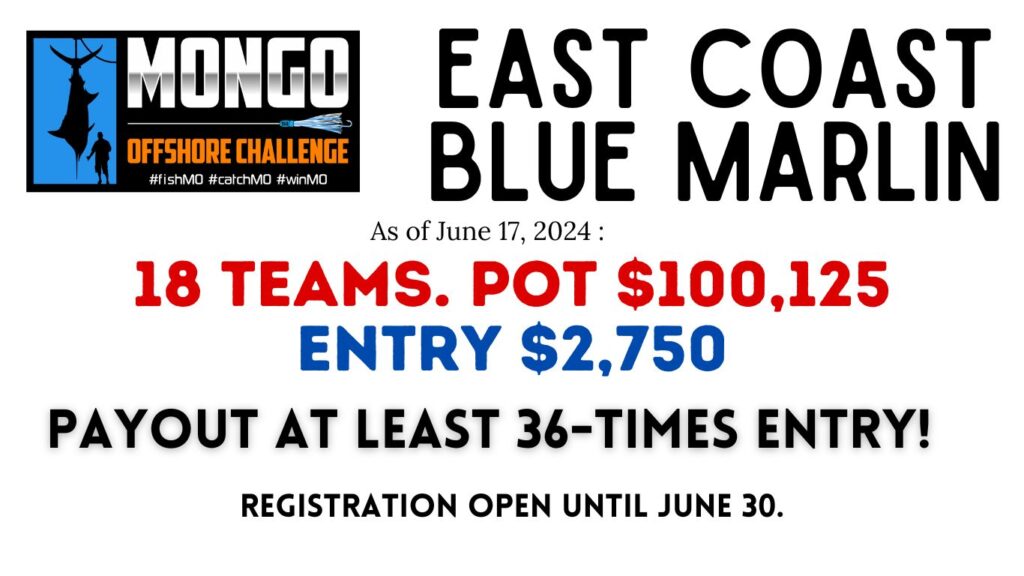
The Fleur de Lis, a 72 Viking, based in Orange Beach, Alabama.

The crew was planning the trip as Ginger visited her doctor for a surgical follow up. “I asked the doctor if I could fish. He said yes, but I told him, “I’m not going perch fishing, I’m going to be sitting in the chair fishing for blue marlin!’”
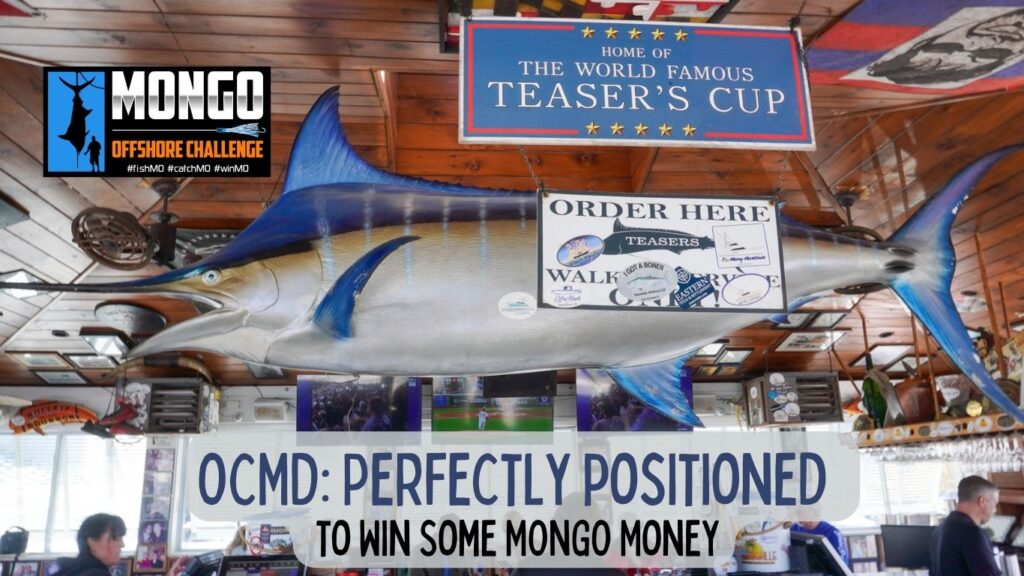
Satisfied with her recovery, the doctor gave Myers the go ahead. This doctor’s note set up an encounter with a sea monster.
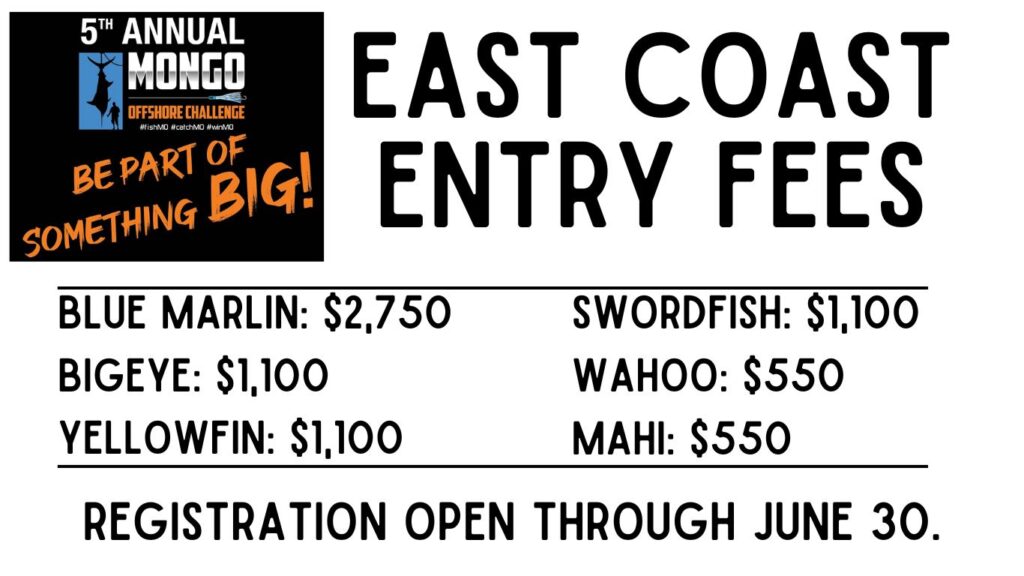
Captain Scooter Porto

Captain Scooter Porto is hell of a fisherman (he was at the helm for all 63 of those blue marlin this year). A humble, thoughtful person, I would be skeptical of anyone who claims not to like Captain Scooter. It was Porto who Myers credits with getting Keith and Ginger into blue marlin fishing.

After a long and accomplished tenure running the Reel Addiction for Rocky Jones in Pensacola, Porto’s position at the helm of the Fleur De Lis is good fit. It seems, in fact, the type of arrangement that people aspire to—the type that benefits everyone involved.

Veteran Gulf Coast Captain Scooter Porto is a hell of a nice guy who is also a hell of a marlin fisherman.

“It was the day after the World Cup. We decided to stay out because the fishing was good,” Porto begins. The Blue Marlin World Cup is a one day, world wide quest to catch the biggest blue marlin. The Gulf of Mexico holds it own against the many of the world’s great big fish destinations—Bermuda, Hawaii, Madeira, Cape Verde.

A Trip to Remember

“We caught a few fish (on the 4th of July), but not the right one,” Porto recalls. “In the morning, we had four bites. We had a fish on every bait we put out.”

Why is catching a blue marlin such an amazing thing to do? Read this for some context…

The Fleur De Lis was fishing was live baiting using blackfin tuna. They were fishing in the same area where Captain Jason Buck caught a 650-pound blue the day before—a fish that would contend for, but ultimately fall short of the 964-pound World Cup winning fish that as caught in Cape Verde.

“We decided to make one more pass before heading in. We didn’t make it around the rig before this fish bit,” the veteran explains. As fate would have it, it was Ginger’s turn to be in the chair. “It never jumped and we didn’t realize how big it was,” Porto recalls.

“Once we hooked it, I was reeling and reeling. The fish never fought very hard until we got her near the boat,” Myers explains. When the fish neared the boat, something changed. “She pulled so hard that it stood me up in the chair. I said, ‘Oh no… You’re not winning!’”

Myers estimates the fight around 20 minutes. “We weren’t really prepared to kill the fish. I looked down and saw her and thought she might qualify for the MONGO. The state record was an afterthought,” Porto describes.

“We got her to the side of the boat. Five men, with four gaffs… it took some doing. It took longer to get her into the boat than it did for me to reel it in,” says Myers with a laugh.

Headed to the Dock With a MONGO Blue Marlin

Upon wrangling the sea monster of a blue marlin onto the boat, the Fleur de Lis was faced with a new dilemma. Looking down at a cockpit full of blue marlin, they would need someone to weigh the fish.
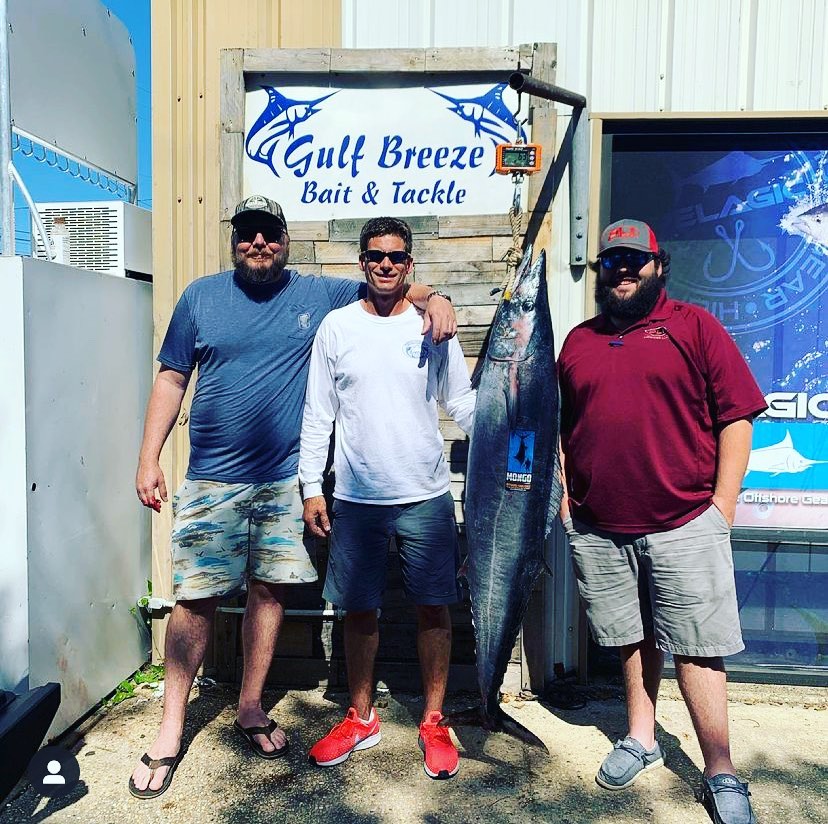
The problem for Porto and the Myers was that it was Sunday and the weigh at the Wharf in Orange Beach, Alabama was closed. Scooter called in to tell them that they were headed in with a huMONGOus blue marlin.

After a few calls and offering something in way of a financial incentive, the scales opened as they arrived at the dock. Thinking it would be a normal, sleepy Sunday afternoon, the Fleur de Lis backed its way in the slip.

Awaiting them was a carnival atmosphere. Word of the big fish had begun to spread around Orange Beach and over social media. Among the crowd of onlookers were MONGO tournament directors—Captain Jeremy Cox, his brother JD, and friend Brian Johnson were on hand to greet them and film what would come.

“There was a little boy in the crowd. He looked up at the marlin and asked, ‘Who caught that fish?’ I said, ‘Me!’” recalls Ginger with a smile. He couldn’t believe it.  “’No way!’ the boy said.” 

The Fish of A Lifetime

Marlin fishing is a team game. Success requires many skillful participants who all do their part. The Fleur de Lis is no different.

Congratulations to Keith and Ginger Myers, Captain Scooter Porto, mates Zac Taylor and Jake Glass and Nate Dennis– the photographer/chef/ do-it-all crewman who specializes in drinking FireBall. Corey and Chris Stagg are anglers who round out the team.

“Catching that fish was the highlight of our year,” concludes Miss Ginger. “We’re going across the board in the MONGO this year.”

Catch them if you can…

Fish The 2021 MONGO
December 28, 2020 by Elliott Stark

The Biggest Gulf Swordfish of 2020: Titan Up’s MONGO

What follows is the story of how Captain Jeff Wilson and the Titan Up caught the biggest Gulf swordfish of 2020. The swordfish that won the MONGO.

What follows is the story of how Captain Jeff Wilson and the Titan Up caught the biggest Gulf swordfish of 2020. The swordfish that won the MONGO.

Captain Jeff Wilson and the Titan Up fishing team are no strangers to big swordfish. In fact with the exception of maybe a longliner or two, it’s hard to imagine anyone who has tangled with more Gulf swords in the last decade than Wilson.

Not only does he hold the Texas State Record (that’s some high cotton there boys!), but he was central to pioneering deep dropping in the Gulf of Mexico. This technique of bombing baits down to 1,200 or so feet of water to catch swordfish in the daytime is all the rage these days.

Four years ago when the veteran captain was introduced to the family that owns the Titan Up it was a match made in heaven. Hardcore, accomplished fishermen in their own right, the family owned a big center console that they fished on themselves without a captain and crew.

While the Titan Up may not fish all of the tournaments, those who pay attention to the goings on in the western Gulf have taken notice of their tendency to catch big fish (including MONGO swordfish)… with regularity.

Captain Jeff Wilson

Congratulations to the Titan Up team for their victory in the 2020 MONGO.

It should come as no surprise that Captain Jeff Wilson is such an accomplished fisherman. Not only does he come by it naturally, but he can trace his passion to a specific time and place.

“My great uncle (John Callen) owned three 55’ charter boats—the Helen C 1, 2 and 3—at the Castaways Docks on Miami Beach. When I was 16, I went down thee to earn some summer money. That was the first time I had ever met my great uncle,” Wilson recalls.

“The first day we were offshore I watched a 400-pound blue marlin eat a dolphin that we fed him. The water was slick calm,” Wilson recalls. “Although we lost the fish at the boat, I knew then that this was what I wanted to do.”

Blue marlin can make quite the impression. Seeing the first one in Miami led Wilson to catch hundreds of others (like this one).

For the past four decades, Wilson has done just that. He has fished the East Coast from Cape Cod to Antigua in the Caribbean. Ten years ago he came to Texas.

The 2020 MONGO

Into the swirling uncertainty of the spring of 2020, brothers Jeremy and JD Cox and their buddy Brian Johnson launched the MONGO Offshore Challenge. Armed with a great idea and a dedication to seeing it through, Johnson and the Cox brothers talked up their idea with captains and businesses involved in the Gulf Coast sportfishing scene.

Among the early adopters of the MONGO swordfish division was Wilson and the Titan Up. “What’s great about the MONGO is that it lasts 153 days. That interested us” Jeff explains. “At the beginning of 2020, who knew what anyone was going to do?”

The 2020 MONGO featured 66 boats ranging from 25-95′ in length.

Anyone who has ever fished a season in the Gulf understands a certain inevitability. If you fish Gulf tournaments long enough, you will eventually get your teeth kicked in (by rough weather). If you have a significant investment tied up in fishing and the weather turns bad, you’re liable to find yourself rocking and rolling for a few days.

The long fishing window (153 days compared to a traditional five) provides ample ability to pick your spots. Depending on how well you choose your windows, the MONGO is all of the tournament with none of the Gulf chop.

For more on how the MONGO is changing the game in the Gulf, give this a read.

And so it was that the Titan Up registered for the MONGO. Were there a prohibitive favorite to stroke a big one, it was perhaps Wilson and company.

The First Trip

The 2020 MONGO Offshore Challenge kicked off May 15. On the 18th, the Titan Up headed offshore for an overnighter.

They headed straight out of Galveston, Texas to their swordfishing spot. Before leaving, Wilson checked out and joked with tournament control that he, “was going to catch a big swordfish and get it over with—so that he could spend the rest of the summer blue marlin fishing.”

After arriving at their spot, the Titan Up made three drops and caught three swordfish– none of them MONGO (the minimum qualifier was 175-pounds).

The conditions offshore were such that the team was itching to run to a floating rig to live bait in the afternoon. After making the run, the Titan Up caught their blue. They spent the night tuna fishing around the floater and boated a yellowfin.

With the sunrise, after a stint pulling live baits for marlin, the Titan Up ran back to their swordfish hole. The spot they fish involves a short drift over some bottom topography.

“We went through the spot. It is a fairly short drift and then you go back again,” Wilson recalls. “We made a drift and were reeling in the bait and the fish hit it on the way up.

“I saw the hit… I always watch (daytime swordfishing involves quite a bit of rod watching). When I saw the hit, I told them to take off the drill,” Wilson recalls.

(Drills assist the retrieve of weights from 1,000 feet. They cannot, however, be used to assist in fighting a fish once hooked).

Christina Thompson, an accomplished angler, then took the rod. As she held the bait in place, the fish returned and ate it. Christina hooked the sword and the fight was on.

An Hour Per Hundred Pounds

“Swordfish are interesting. You can tell how big they are because you average about an hour of fight time per hundred pounds,” Wilson says. He has tangled with enough big ones to know.

The Titan Up’s winning fish came up jumping. The site of a big swordfish out of the water can be as nerve wracking as it is exhilarating.

Christina got her fish to the boat in just over four hours. “It could have taken a lot longer,” Wilson recalls. “The fish had quite a bit left when we got it to the boat.”

“It was a tough fish. We got a couple of good jumps out of it,” Jeff recalls. “Christina is a badass, she can certainly catch a fish.”

The MONGO swordfish fish fell victim to a Shimano Talica 50 on a custom rod made by RJ Boyle.

Upon arrival at the weigh station at the Galveston Yacht Basin, the fish went 313.2 pounds. It was the first qualifying fish of any species ever to be registered in the MONGO Offshore Challenge. 

The Titan Up’s fish went 313.2.

Now all that Wilson, Thompson and the Titan Up team had to do was wait 149 of the most nerve-wracking days of fishing that you can imagine to see if their fish would hold up. The first qualifying swordfish turned out to be the biggest of the summer and the MONGO winner—worth some $21,675.

The wait was worth it. The fish held up.

Congratulations to the Titan Up team. Captain Jeff Wilson, Anglers Bill Hunt, Christina and Tommy Thompson, first mate Wes Haizlip and second mate Walter Lynch. We’ll see you all in the 2021 MONGO.

November 25, 2020 by Elliott Stark

The MONGO: Changing the Tournament Landscape

To win the MONGO, you must simply catch the biggest blue marlin, swordfish, yellowfin tuna, wahoo or dolphin in the Gulf of Mexico.

While the MONGO Offshore Challenge is a fishing tournament, the event is much more than that. As much as anything, the MONGO showcases the incredible fishing and camaraderie within the Gulf Coast sportfishing community.

The MONGO creates an umbrella from which boats from Florida, Alabama, Mississippi, Louisiana and Texas can compete in the quest to catch the biggest fish. The sportfishing scene on the Gulf Coast is an interconnected community.

Boats from all five states not only fish similar conditions, but share a kindred relationship that is more prominent here than in other places. As much as Gulf boats enjoy trying to catch bigger fish than each other, captains here are the first to help and welcome each other on their travels.

Venice, Louisiana’s Captain Hunter Caballero and Paradise Outfitters took home the top tuna in 2020.

While the MONGO Offshore Challenge showcases the Gulf Coast’s great fishing (to win the 2020 edition, it took an 851.9 pound blue marlin, 313.2 pound swordfish, 197 pound yellowfin tuna, and 73.3 pound wahoo), the tournament is more than a fishing profile. The MONGO Offshore Challenge is a celebration of the Gulf Coast sportfishing scene and all of the things that make it so great.

What is the MONGO?

The MONGO Offshore Challenge is a season long quest to catch the biggest fish in the Gulf of Mexico. The tournament lasts 153 days—from May 1- September 30, 2021. 

The MONGO is a season-long proposition with a simple objective. To win the MONGO, you must simply catch the biggest blue marlin, swordfish, yellowfin tuna, wahoo or dolphin in the Gulf of Mexico.

This approach relates directly to the prime objective of most anyone who has ever fished: catch big (huMONGOus) fish.   The tournament’s format results in many benefits to the Gulf sportfishing community and sponsors.

These include:

1. The MONGO is inclusive.

Because the tournament is 153 days long, boats of all sizes can participate. In 2020, boats from 25’- 95’ fished the MONGO.

The 66 participating teams in 2020 included center consoles, express boats, multimillion-dollar sportfish boats, novice private boats, charter boats, and professionals– all fishing on the same, level playing field.

Not only is the tournament open to boats of all sizes, but fish caught in other Gulf of Mexico tournaments are eligible to win the MONGO. The same fish that can win the Gulf Coast Triple Crown or the Texas Legends can win the MONGO. 

Any one who has ever picked up a fishing pole has dreamed of catching a huMONGOus blue marlin. This blue won the 2020 MONGO.

That said, the winning fish could also be caught by a boat and crew and that normally doesn’t fish tournaments.  That is part of the charm of the MONGO—everyone is welcome.

2. The MONGO promotes fishing.

The MONGO’s format allows participating boats to fish as often as they like. Whether it be simply picking a weather window or making it a special trip, the MONGO makes everyone a tournament angler.

The MONGO gives charter captains like Destin’s Adam Peeples (www.oneshotcharters.com) the chance to make everyone a tournament angler.

The season-long approach not only invites smaller vessels, but the duration of the event makes it possible for anyone to win. Winning the MONGO takes one big fish… a fish that can be caught any day between May 1 and September 30.

Why is fishing such a good thing? Many reasons…. Here’s a few.

Traditional tournaments—those that last a weekend and require a combination of release numbers and a big fish or two, increasingly require a dedicated, professional crew to consistently compete. By opening the competition to the biggest of each species caught over the span of 152 days, the MONGO creates an equal opportunity, all are welcome environment that results in more boats spending more time on the water.

3. The MONGO is geographically expansive.

From Port Isabel, Texas to Key West, Florida all 1,680 miles of US Gulf Coastline are in bounds. In 2020, all five Gulf States were represented in MONGO’s participating fleet.

Sportfishing boats docked behind Boshamps’ in Destin, Florida.

Not only can boats fish anywhere in the Gulf of Mexico, the MONGO works with a network of Gulf Coast marinas to allow captains to weigh their catch across the Gulf. Participating marinas—the facilities where MONGO catches must be weighed—are located in all five Gulf States.

4. The MONGO’s price tag invites participation.

These days, the price tag to enter big game sportfishing tournaments can set a barrier to entry. Including entry fees and calcuttas, the price tag to go across the board can surpass $80,000.  Investments of this magnitude effectively limits participation.

The MONGO is not only priced to promote participation, but captains can choose their targets. Blue marlin entry is $2,500 per boat… wahoo and dolphin are $500 for the entry.

This pricing structure opens participation to boats from across the Gulf of Mexico—whether or not the owner of the boat can afford a private island in the Caribbean.  All are welcome—biggest fish wins.

The 2021 edition of the MONGO will feature two new bonus, optional entries. The first is payable to the first team in each division that catches a fish that meets the tournament’s minimum size.

The minimums are set high to promote conservation. After all, the tournament’s motto is: “Let the little ones go so they can grow!”

The second optional entry is a winner take all entry open to the biggest fish in each division.

5. The MONGO is boat based… everyone who comes on the boat can fish.

The MONGO is set up to allow everyone who comes on the boat to participate. The MONGO Offshore Challenge has an app that allows captains to check in before each trip.

When checking in, captains list the anglers on they have on board. Some boats have the same group of five guys fishing every trip. Others have put together whichever of their buddies can make the trip at the time.

The fact that the tournament can accommodate either scenario is part of the MONGO’s charm. The tournament’s layout promotes fishing and participation—rather than stifling boats with rules and regulations.  


The benefits of this set up are especially apparent when it comes to charter boats. Not only can every angler fishing on a participating charter boat be a tournament angler… but they can win the tournament any day of fishing.

In fact, a charter angler on the Breathe Reel Deep out of Orange Beach caught the winning wahoo. Paradise Outfitters in Venice, Louisiana put a charter customer on the winning tuna as well.

6. The MONGO is just getting started.

2020 was the inaugural MONGO Offshore Challenge. In spite of the uncertainty that surrounded much spring of 2020, the MONGO had a fleet of 66 boats.

With a successful year one under its belt, the MONGO Offshore Challenge 2021 looks bright. Given a total 2020 payout of $144,550 (and the mahi division’s $17,425 rolling over to 2021), the future is bright for the MONGO. 

FISH. TRAVEL. EAT
  • Home
  • About
  • Contact
  • Content Services
Follow Fish Travel Eat on FacebookFollow Fish Travel Eat on Instagram

Copyright © 2026 Fish Travel Eat · All Rights Reserved · Website by Wizard of Ads Online

The Book on Travel Fishing

The Book on Travel Fishing will be available late summer 2024. Register here to receive e-mail updates on book status, behind the scenes stories, and content related to the book.

  • This field is for validation purposes and should be left unchanged.
  • This site is protected by reCAPTCHA and the Google Privacy Policy and Terms of Service apply.