• Skip to main content
  • Skip to after header navigation
  • Skip to site footer
  • About
    • Events
  • Contact
Fish Travel Eat

Fish Travel Eat

Stories about Fishing and Other Relative Truths

  • (Mis)ADVENTURE
  • FISHING
    • KIDS & FISHING
  • BEFORE YOU DIE
  • FOOD & DRINK
  • THE BOOK ON TRAVEL FISHING
  • (Mis)ADVENTURE
  • Fishing
  • BEFORE YOU DIE
  • KIDS & FISHING
  • FOOD & DRINK
  • The Book on Travel Fishing
  • About
    • Events
  • Contact
  • Content Services

blue marlin

March 20, 2025 by Elliott Stark

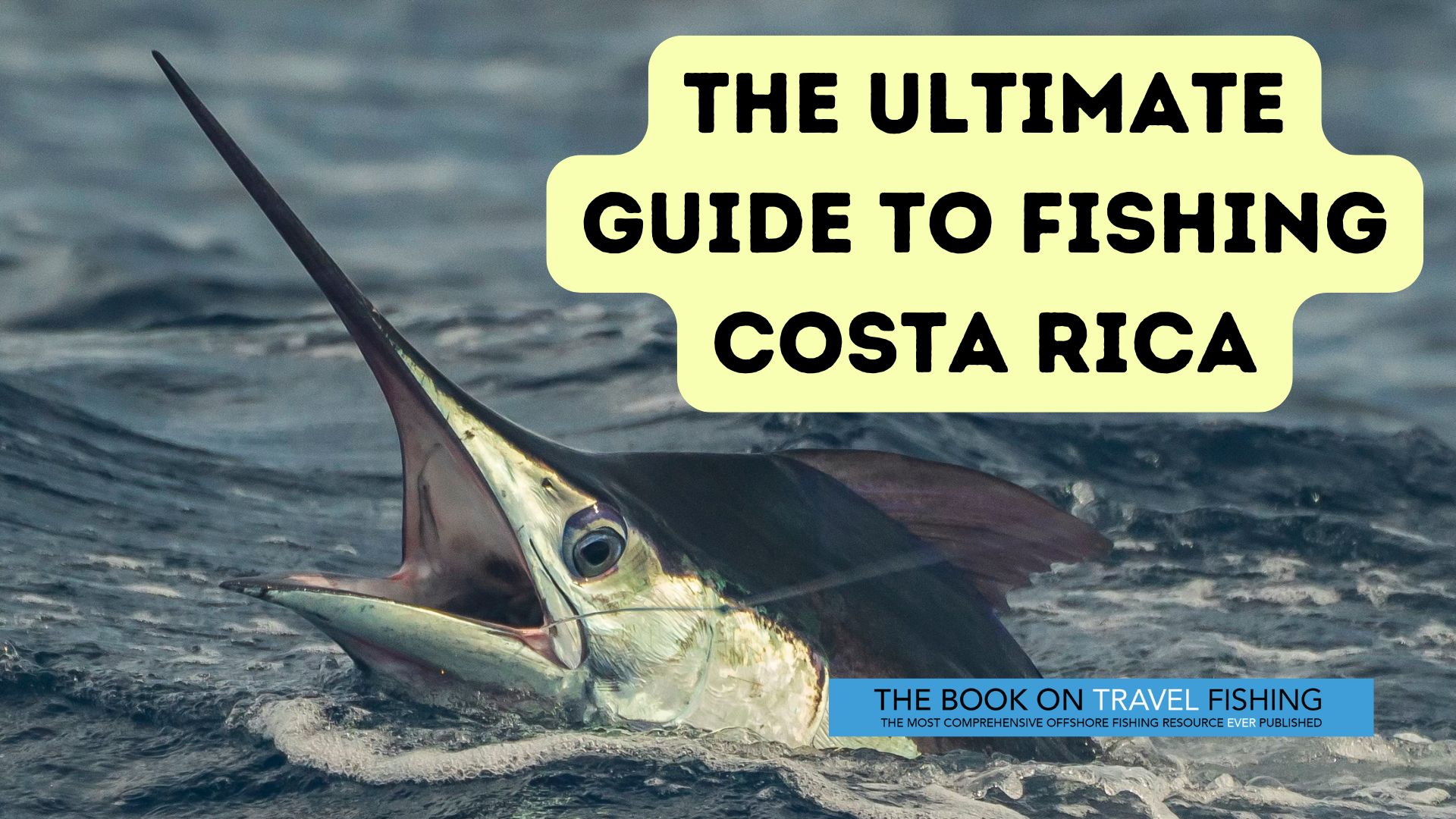
The Ultimate Guide to Fishing Costa Rica

Costa Rica Home of pura vida and perhaps the world’s best volume blue marlin fishery, Costa Rica is a fishing and vacation wonderland. Its waters are teeming with world-class inshore and offshore fisheries and it is as well set up for tourism as most any place you’ll find.  Unique Fishing Destination “It’s a unique place. …

Zancudo Lodge

Costa Rica

Home of pura vida and perhaps the world’s best volume blue marlin fishery, Costa Rica is a fishing and vacation wonderland. Its waters are teeming with world-class inshore and offshore fisheries and it is as well set up for tourism as most any place you’ll find. 

Unique Fishing Destination

“It’s a unique place. For me, the great thing about Costa Rica has always been about the people, the great fishing and the calm weather.” 

—Captain John LaGrone, captain of the Reveille out of Los Sueños, sportfishing icon and one of the early travelling captains who fished Central America. 

Fishing in Costa Rica

If the offshore fishing experience were like gambling in a casino, most places might be like Shreveport, Louisiana. Were you to liken offshore fishing to gambling in a casino, Costa Rica, on the other hand, might be like Las Vegas. Sure, the casinos in Shreveport might pay out jackpots, serve dinner buffets, and have cocktail waitresses who will bring you cold beer, but there’s a certain essential element of the casino experience that only Las Vegas can offer. After all, Elvis didn’t sing in Shreveport. Oceans 11 wasn’t filmed there, either. 

When it comes to the essential or iconic travel fishing experience, there is an element that Costa Rica offers that most others do not. Sure, the fishing is very good—it hosts the best volume blue marlin fishery in the world. But it’s more than that. Life is easy here. Travel is fun. The atmosphere is inviting, and the general ambience exudes relaxation. As a general life rule, any time you are invited to Costa Rica, you should say yes. 

The Pura Vida Lifestyle

Life and fishing are easy in Costa Rica. The people here are as welcoming and gracious as you’ll find anywhere. “Ticos” (called this for their tendency to add an extra “tico” to the end of some words) are characteristically proud to be from their wonderful corner of the world. As a rule, folks from Costa Rica are more than excited to share its bounty with anyone lucky enough to be visiting. This way of being has been captured in the term “pura vida.” You’ll find it on wall signs, t-shirts, bracelets, and license plates. The unofficial slogan of Costa Rica, life here is pure, easy, and really fun to be part of. 

Diverse and Well-Rounded Offshore Fishing

Costa Rica is also home to one of the most robust, diverse, and well-rounded offshore fisheries in the world. Since the deployment of a series of FADs around 2010, Costa Rica has forever transformed what the world considers to be a good day of blue marlin fishing.  Boats fishing out of Los Sueños, Quepos, and Golfito enjoy the world’s most reliable, consistent, and prolific blue marlin bite in the world.

Picture by Jessica Haydahl

What You Can Catch

Were you to claim to have caught 12 blue marlin in a day before the FADs (or the use of omni-directional, real-time sonars), people would have thought you were on crack. These days, when you make the same claim, people just assume you’re fishing in Costa Rica. 

Top-Shelf Fishing Targets

  • Blue marlin
  • Sailfish
  • Yellowfin tuna
  • Dorado
  • Roosterfish
  • Cubera snapper
  • Occasional black and striped marlin

Offshore Fishing: Marlin, Sailfish & More

Costa Rica’s sailfishing is great too. Were it not for Guatemala, it would likely be the best in Central America. 

There are lots of yellowfin and dorado here. In fact, the all-tackle world-record dorado came from Costa Rica.  
The Book on Travel Fishing includes the most comprehensive offshore destination guide ever published. Here’s some context.

Inshore Fishing: Roosterfish, Snapper & Black Marlin

The roosterfishing and cubera snapper fishing are really good here as well. There are some inshore rocks and pinnacles that hold black marlin too.

Why Fishing in Costa Rica is So Easy & Fun

As great as the fishing is in Costa Rica, the thing that really stands out is how easy it is. Where many parts of the world view natural places as things to be paved to build mega shopping centers, Costa Rica invests in natural infrastructure. 

Costa Rica’s Commitment to Sustainability

The country’s commitment to sustainability and its forward-thinking approach are executed naturally and seem to be absent the militant, agitated, holier-than-thou quality this type of thing brings in other places. 

The result is something of a tropical paradise. Offshore, its blue waters are teeming with world-class pelagic fisheries. 
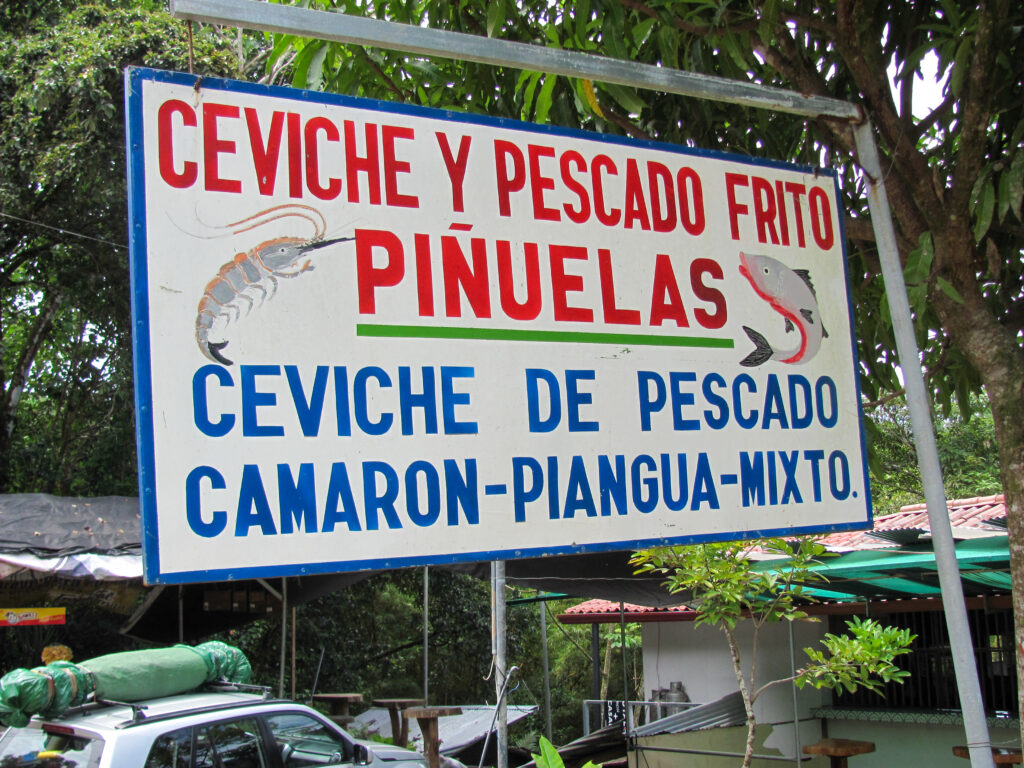
A roadside ceviche stand in Costa Rica.

Beyond Fishing: Costa Rica’s Best Activities

On land, Costa Rica is covered in not just rainforests, but inviting beach towns and friendly cities. It is home to all manner of national parks and all kinds of great tourist activities. 

Adventure, Wildlife & Relaxation

From ziplining, feeding crocodiles or monkeys, watching sloths and scarlet macaws, to stopping at roadside huts that sell the best ceviche you ever had or cold coconuts (pipas, if you’re a tico) with the top macheted off right in front of you, Costa Rica really has it all.

As a result, Costa Rica ranks among the world’s best family-fishing vacation destinations. 

Photo by Pepper Ailor

Banner Trip to Costa Rica

Life and fishing are easy here. Bring the family. Your banner trip involves the best fishing trip you might ever had while providing a wonderful experience for the whole family. It might go something like this:

You catch 10 sailfish on Monday, go ziplining Tuesday, take an overnight trip to the FADs and catch 25 blue marlin Wednesday and Thursday, play golf or go surfing on Friday, and take the kids on the Costa Cat cruise on Saturday. 

Talk about pura vida—Costa Rica made you a hero. 

Travel

Costa Rica is safe, and its roads are good. The country loves tourists and is as welcoming as any you’ll find. The largest international airport is in San Jose. From San Jose, it’s about two and half hours to Los Sueños. You can rent a car and drive or take domestic transfers to airports in Golfito or Liberia. 

Los Sueños

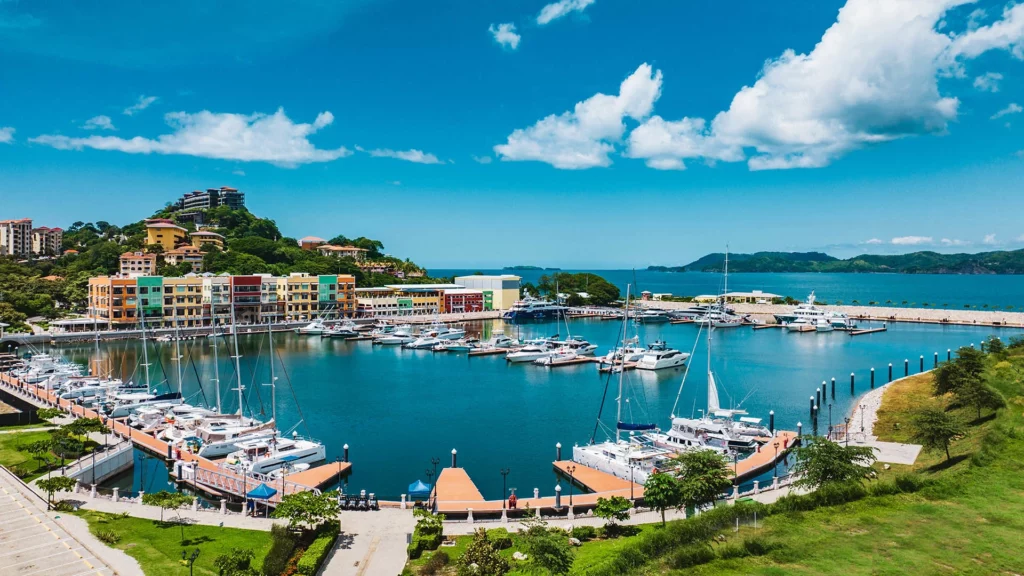
Los Sueños, Costa Rica, is an incredible place. These days there are many places that attempt to combine luxury, lifestyle, and great fishing. Los Sueños was the first. It set a standard that few others have come close to matching.
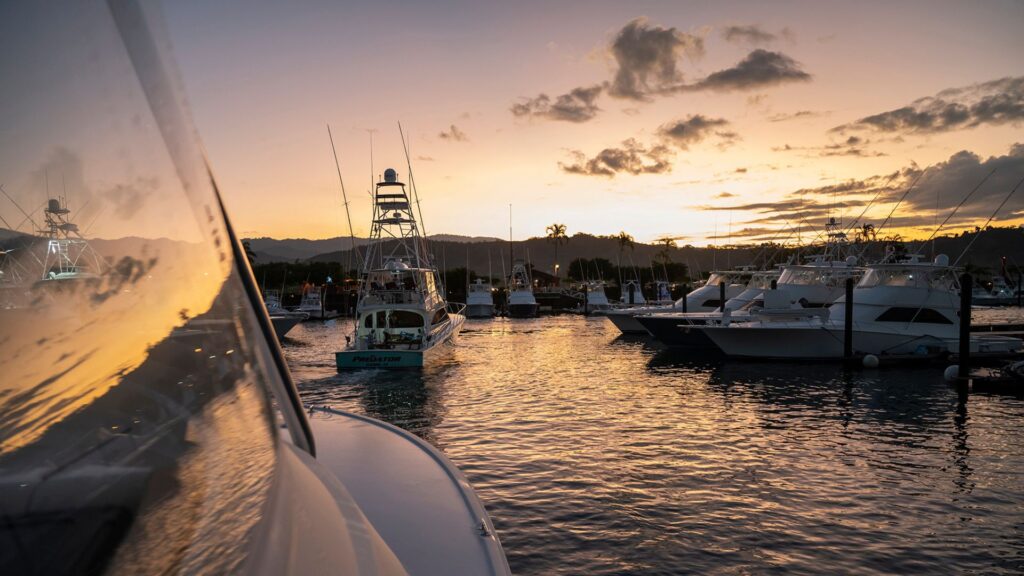
©Los Sueños Resort & Marinal Pepper Ailor

A One-Stop Shop for World-Class Fishing and Luxury

If fishing and living in Costa Rica are easy, fishing and living in Los Sueños are super easy. Host to a world-class marina, condos, private residences, a golf course, restaurants, and a rainforest reserve, Los Sueños is a one-stop shop for all things fishing trip of a lifetime. If you have the budget for it, it is one of the nicest, every-detail-considered experiences that you will find. 

You can rent a condo or home on the property at lossuenos.com. Book a golf cart while you’re at it. The place has everything you need. You can book a sailfish charter or a blue marlin trip to the FADs. Your wife can come fishing if she’s into it or stay behind and book a spa treatment and enjoy the great restaurants at the marina. 
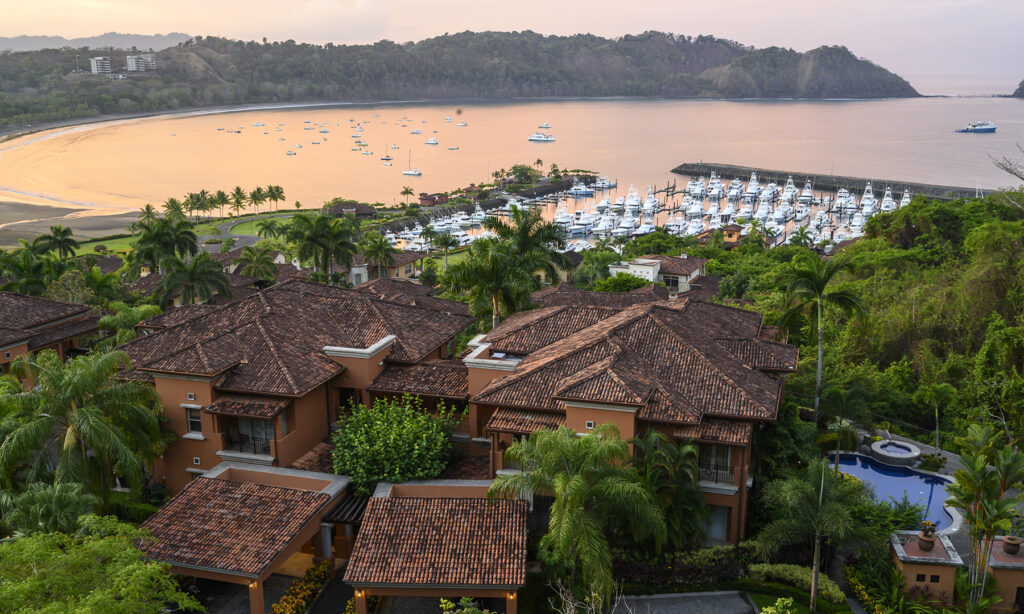
©Los Sueños Resort & Marinal Pepper Ailor

Palm Beach Vibes Meets Some of the Best Billfishing Anywhere

Los Sueños is kind of like Palm Beach in Costa Rica. From January through March, when the Los Sueños Signature Triple Crown series of billfish tournaments is going on, the lineup of private sportfishers in the marina is as nice (read nicer) than any place you’ll find in the world.

This tournament series plays host to many of the most high-profile fishing operations in the world. You’ll find some of the world’s best boatbuilders fishing alongside some of the finest crews in the world. Boats and captains from the Northeast, North Carolina, Maryland, across the Gulf Coast, South Florida, and many places in between converge on Los Sueños for its three tournaments from January through March.

The fishing is high profile and very good. The atmosphere is fun, and the place has a pronounced community feel.

The Food, the Amenities, and Jimmy T’s

Los Suenos isn’t just fishing and boats, it has a wonderfully appointed lineup of amenities. There’s Jimmy T’s, a chef-owned and operated specialty boat provisioning shop right on the premises.

You can order the best boat lunch you ever had and bring it with you. You can even arrange a private chef experience at the place you’re staying. Jimmy T has it all—lobster, wagyu beef, you name it.  

Costa Cat Adventures and Beach Days

The Costa Cat.
©Los Sueños Resort & Marinal Pepper Ailor

You can hop aboard the Costa Cat, a 54-foot catamaran that’s docked in the marina, and cruise to Isla Iguana. The 17 or so mile trip to the island is generally calm, and there’s plenty to drink while in transit.

Awaiting you at the island is a beautiful beach, stand-up paddle boards, more drinks, and a fresh grilled lunch. It’s a great time, and the people behind it, Captain Jimmy Kitchell and team, are some of the nicest and most genuine folks you can meet. 

The Best Seasons to Fish in Los Sueños

As for fishing seasons, December through March are the peak of the sailfish action. Summer is best for the blue marlin fishing on the FADs. Tuna fishing here is great too, and there’s lots of dorado. A fishing trip to Los Sueños can change your take on fishing. In terms of luxury, ease, great food, and really, really good fishing, it’s hard to beat Los Sueños. 

Photo by Jessica Haydahl

Quepos

Photo courtesy of Marina Pez Vela

Marina Pez Vela

Quepos is a wonderfully appointed beach town on the central Pacific coast of Costa Rica. From the travelling angler’s perspective Marina Pez Vela is perhaps the focal point of the town. A first-class facility, Pez Vela and hosts one of the finest line-up of charter services in sportfishing. Marina Pez Vela is also the setting for a number of high- profile tournaments throughout the year. 

Offshore Action Meets Inshore Fish

Offshore, Quepos makes accessible the incredible blue marlin fishing on the FADs, the great sailfish bite in the spring and good, consistent dorado and yellowfin tuna numbers. Inshore, the action is dominated by roosterfish and cubera snapper.  

A Melting Pot of Traveling Anglers

Due to its combination of great fishing and great amenity, Quepos is firmly established as a destination for travelling sportfishing operations from across Central America and around the world. Here you’ll find a combination of private boats, travelling sportfishers, veteran charter captains and anglers from around the world.

The atmosphere is laid back and the sportfishing culture benefits from the mix of traveling crews from around the world and a deep, well-established local sportfishing tradition. This part of the world is a great place to experience the interchange that is travel fishing.

Spend a couple of days talking with the people who fish here and you could travel around the world—and through time—in stories, jokes and perspective.

Photo by Jessica Haydahl

The City Feel

Though they offer similar fishing experiences, there are differences in feel between Quepos and Los Sueños. Quepos is a city, rather than a development Marina Pez Vela serves as a focal point. You can book a charter here and have a wide range of accommodation options—hotels, resorts, Airbnbs. 

Beyond the Rod

There is also plenty to do. Great restaurants, beaches, rainforests, zip lining, and, of course, the fishing.  

Manuel Antonio National Park

The backdrop of great fishing is enhanced by Quepos pleasant surroundings. Known as the gateway to Manuel Antonio National Park, the natural beauty of the place defines land and seascape. The diversity experiences and the tourism set up make it a great option for family vacations. 

Golfito

Small-Town Charm

Golfito is a beautiful town in southern Costa Rica. It sits on the shore of the Golfo Dulce, a section of water protected by the Osa Peninsula. The place has plenty of small-town charm.

It’s enveloped in rainforest and is home to incredible fishing and some world-class surfing. Pavones boasts the second longest left-hand break in the world, a feature that has been attracting visitors to Golfito for decades. 
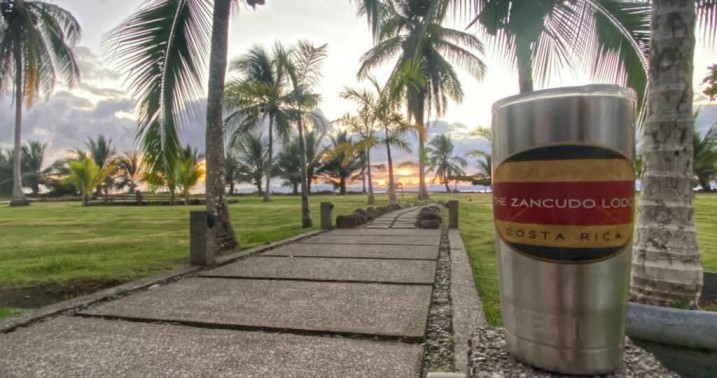
Photo courtesy of the Zancudo Lodge

The Zancudo Lodge

The Zancudo Lodge is located here. Its combination of great fishing and really good food make it a wonderful choice for the traveling angler. Zancudo offers a variety of full-service packages that include fishing, lodging, and food and drink. This wonderful place is profiled in the charter directory section. 

Casas Kaimana

Golfito is also a terrific place to spend a weekend. My friend Carlo Wein owns an Airbnb that is beautifully appointed. There are not many places in the world where you can stay in a house that is in the rainforest and on the beach at the same time.

It’s a great base from which to surf, relax, spend some time in the jungle or go fishing. Check them out on Instagram at Casas Kaimana. Not only does Casas Kaimana offer access to the surfing at Pavones, because of its proximity to the mouth of the Golfo Dulce, there are short runs to the tuna and sailfishing (and access to some great inshore fishing). 

An aerial view of Casas Kaimana in Golfito.
Photo by Carlo Wein

Matapalo

The fishing in Golfito is good and well-rounded. Matapalo is a giant rock the sits near the mouth of the Gulfo Dulce. Matapalo and the rainforest-lined beaches that surround it are home to big roosterfish, lots of cubera snapper, sierra mackerel, and a generally great inshore fishery. 

Blue Marlin on the FADs

Offshore, the headliners are the blue marlin on the FADs. The closest FADs are deployed in the range of 40 and 60 miles from Golfito. Zancudo’s fleet of Contender center consoles are outfitted well for this type of fishing and can make a day trip to the FADs (something that not many operations can do).

For blue marlin fishing, Gregg Mufson, owner of The Zancudo Lodge recommends end of November through the end of January. He also likes July and August. The average size blue marlin on the FADs runs between 200 and 300 pounds—and there’s a lot of them. When the fishing is good, you might release 10 in a day. When it’s wide open, that number might be more. 

Yellowfin, Sails, and Dorado

The yellowfin fishing here is good year-round. The average school-sized fish ranges between 60 and 80 pounds. A nice one is in the 120- to 140-pound class. They also encounter yellowfin above 200 pounds from time to time. 

The sailfish bite is good and consistent in Golfito as well. It peaks from March through May. When it’s good, you might release 10 sails in a day. There are also a ton of dorado around.

Peak of the season for these tasty creatures runs November through February. They average 20 to 30 pounds, but encounters with bigger ones are common too.  

The famous Matopalo

Flamingo

Photo courtesy Marina Flamingo.

The Legacy of a Legendary Fishery

Flamingo sits at the northern extent of Costa Rica’s Pacific coast. It is home to a beautiful, new marina. It is also one of the most historic fisheries in the country.

When travelling sportfishers first came to this part of the world in the 1980s, Flamingo was a premier destination. Captain John LaGrone would know. He was one of them.

Captain John LaGrone: One of the First to Find Home Here

“When I first came down here to run a boat for Tim (Choate), the first day we caught a double slam. There were giant sailfish. The people, the beautiful countryside—I never would have believed this place would have been my home,” says Captain John LaGrone.

These days LaGrone lives a bit further south in Herradura. He was among the first travelling captains to seriously fish Central America. He’s fished throughout Costa Rica, and beyond. 

“Costa Rica is great. Calm weather and prolific fishing. There are sails, black marlin, blue marlin, yellowfin and dorado. It’s a unique place– there’s no trash. No tiny dorado, not a bunch of sargassum or lots of bonito. I’ve never had a sailfish taken by a shark here in 32 years.”

Dynamic Sea Mount Fishing

LaGrone describes the fishing in Flamingo with nuance.

“For the last five to eight years there has been more dynamic sea mount fishing for blue marlin out of Los Sueños. The local fishing in Flamingo is good into May or June. You’ll find tunas, big dolphin, sailfish and blue marlin. There’s a beautiful facility and a new marina. You’ll fish the edge.”

Peak Season

The peak season in Flamingo runs May through September. During this span, you’ll find largely calm seas and steady billfishing. The average run out of Flamingo is in the 15-20 mile range. 

Sailfish are the bread and butter. There are blue marlin around and the tuna fishing is good and consistent. 

Bottom Fishing

Bottom fishing is fantastic for snowy grouper and you can encounter black marlin around high spots. A good day when it’s right, you might catch 10 sailfish and a marlin or two.   

The average size blue marlin here runs in the range of 250-pounds. A good day consists of one or two marlin bites. The average black comes in around 400, with most fish between 300 and about 600. Most of the black marlin are targeted specifically, fishing high spots on the edge or on pinnacles. 

Meet Captain Skeet Warren

Photo by Jessica Haydahl

Captain Skeet Warren fishes out of Flamingo. He runs the Bushwacker, a 42 Bertram. In addition to being a very nice guy and really good captain, Skeet has been fishing in this part of the world for more than 40 years. Check out his operation at www.bushwackercr.com.
February 18, 2025 by Francesca Zoia

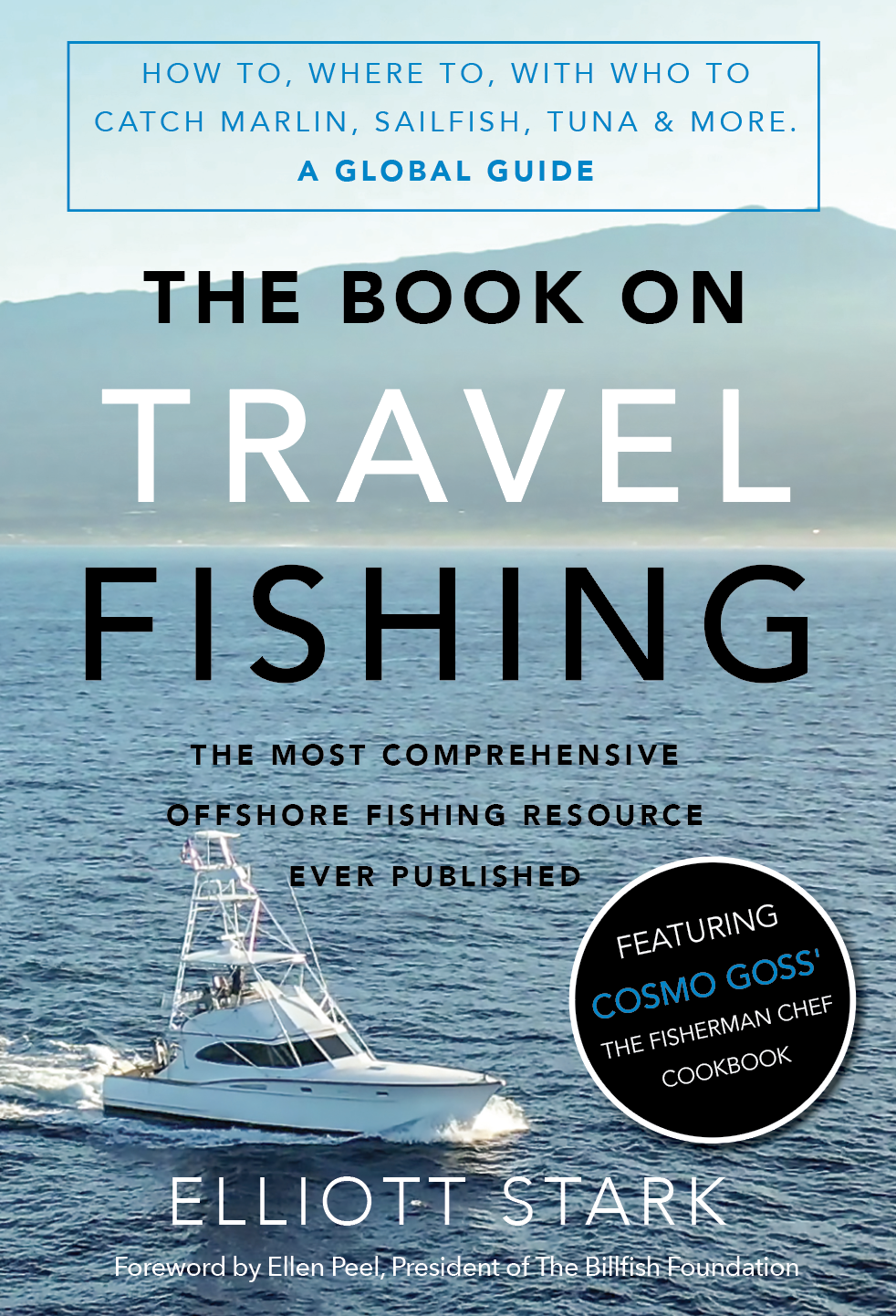
The Book on Travel Fishing

The Ultimate Offshore Fishing Blueprint Offshore fishing isn’t just about what you catch—it’s about the places you go, the people you meet, and experiences that stay with you forever. Whether you’re venturing offshore for the first time or the thousandth, there’s always something new to learn, somewhere new to fish, and someone new to meet …

The Ultimate Offshore Fishing Blueprint

Offshore fishing isn’t just about what you catch—it’s about the places you go, the people you meet, and experiences that stay with you forever.

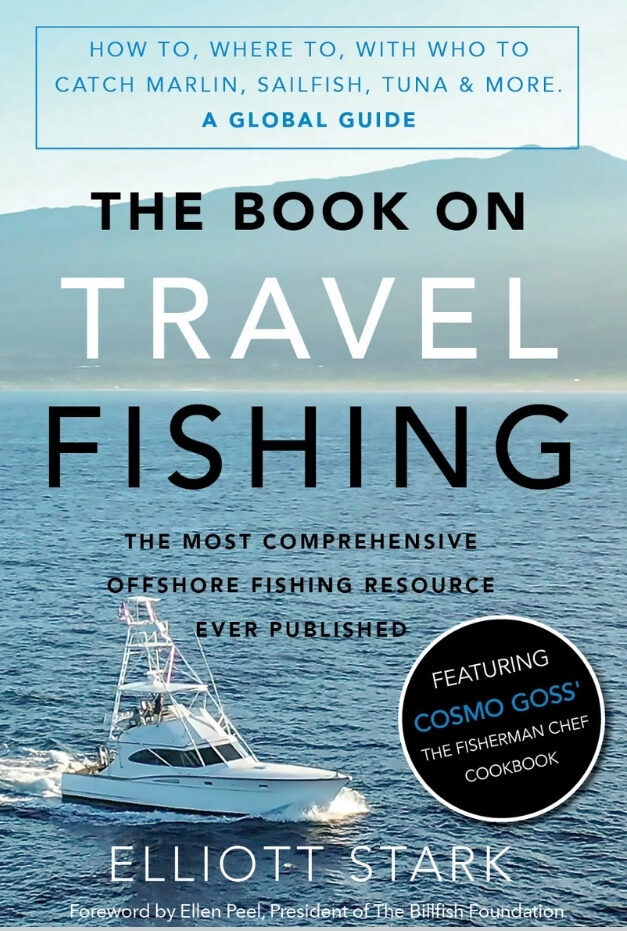
Whether you’re venturing offshore for the first time or the thousandth, there’s always something new to learn, somewhere new to fish, and someone new to meet on the docks. That’s where The Book on Travel Fishing comes in.

This isn’t just a book—it’s a passport to the world of offshore sportfishing. Covering more than 70 of the best offshore fisheries around the globe, it takes you behind the scenes with captains, fishing lodges, and the experts who know these waters better than anyone else.

From the deep blue of Kona to the legendary billfish grounds of the Great Barrier Reef, The Book on Travel Fishing is the most comprehensive offshore fishing guide ever published.

Inside the Book: A Global Fishing Adventure

So, what makes The Book on Travel Fishing stand out? It’s more than just a travel guide—it’s a deep dive into the sport, the culture, and the people who make offshore fishing what it is.

  • Destination Guide: Profiles of more than 70 of the world’s greatest fishing destinations, featuring first-hand insights from captains and experts who live and fish in them.
  • Charter Profiles: Meet 22 of the best offshore captains and lodges around the world. Learn where to go, who to fish with, and what to expect.
  • Chef Cosmo Goss’ Fisherman Chef Cookbook: A global guide to sashimi sauces, the ultimate ceviche resource, and expert insights on how to transform your catch provided by perhaps the best chef in sportfishing. 
  • The Traveling Fisherman’s Guide to Rum: rum and offshore fishing share a common lineage. If you’re catching a blue marlin in the new world, chances are that you’re fishing in rum country. Full of insight from a leading expert on this most interesting of spirits. 
  • Book of Cocktails from Around the Fishing World: Cocktails inspired by these fish and the people that catch them. 
  • Species Profiles: Blue marlin, black marlin, white and striped marlin, sailfish, swordfish, spearfish, yellowfin and bluefin tuna, wahoo, mahi-mahi. Each species is an introduction to the most exciting gamefish in the world.
  • Fishing Stories: First-hand accounts, lessons and stories from around the world.
  • International Travel Guide: What to pack, how to prepare, and everything you need to know about offshore travel fishing.

With 565 pages packed with expertise, photography, and adventure. This book is for anyone who dreams of chasing the horizon and landing the fish of a lifetime.

Welcome to the wonderful world of travel fishing.

Built on Experience, Backed by Experts

The book includes contributions from world record holders, tournament champions, legendary boat builders, and some of the most prolific billfish captains in history. The foreword is written by Ellen Peel, President of The Billfish Foundation. This organization has done more for billfish conservation than perhaps anyone else.

And if you’re into fishing photography? The book features stunning imagery from top-tier photographers like Jessica Haydahl and Captain Joe Byrum. It captures the essence of offshore fishing in ways that words alone can’t.

Jessica Haydahl photos, like this one, might make you curse your camera and wonder how she does it…

A Must-Read for Offshore Enthusiasts and Those Who Wish to Become So

Whether you’re a seasoned offshore angler or researching how to catch your first marlin, The Book on Travel Fishing is the ultimate resource. It’s a collection of the kind of knowledge that only comes from those who have spent a lifetime on the water.

This is The Book on Travel Fishing. No fluff, no filler—just real expertise, and the stories that make offshore fishing the adventure of a lifetime.

This book comes with a “3 Things, No Bullshit Guarantee.”

Books Shipping All Over the World

The Book has been shipped all over the United States and all over the world!

February 18, 2025 by Elliott Stark

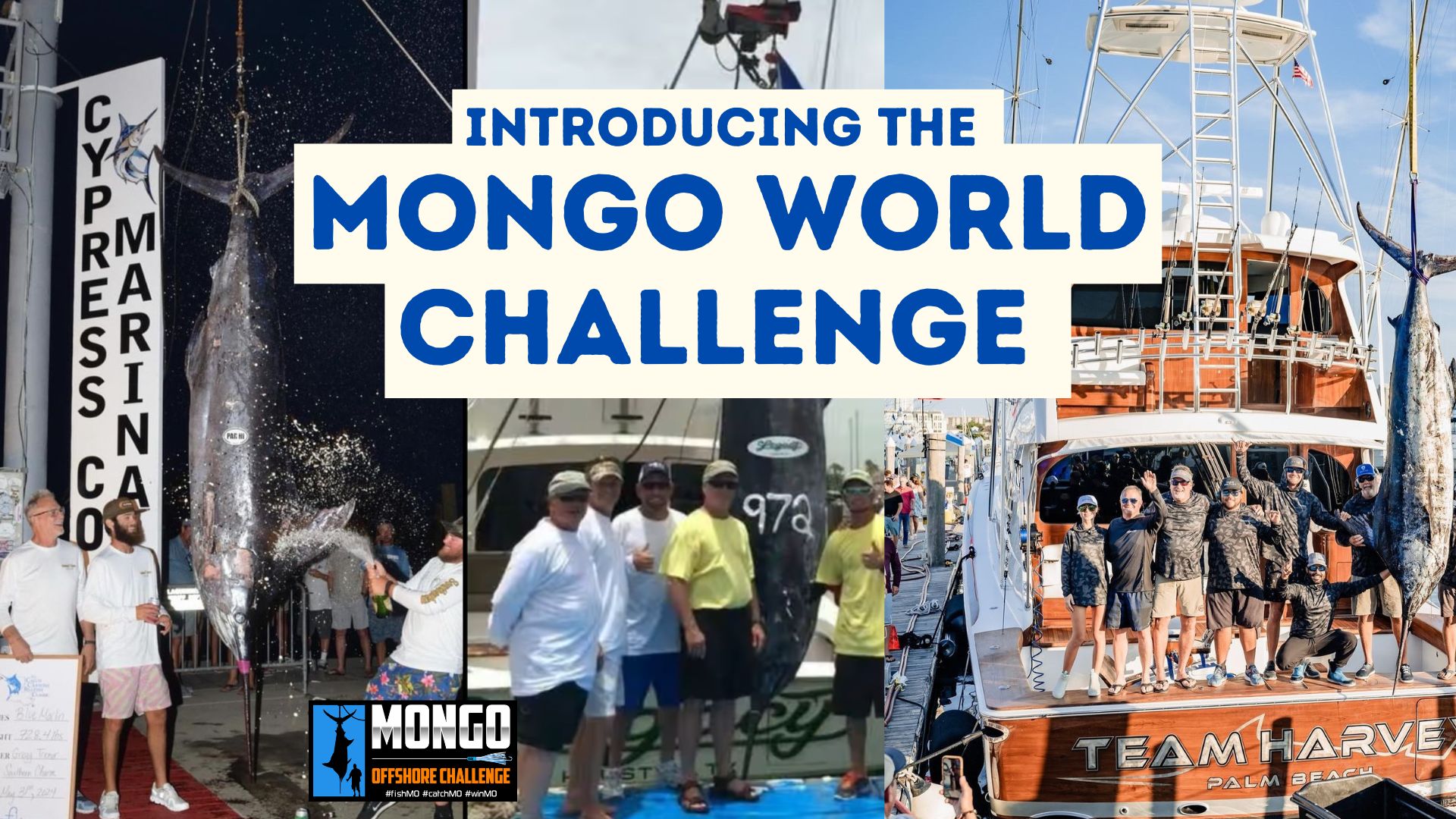
Introducing the MONGO World Challenge

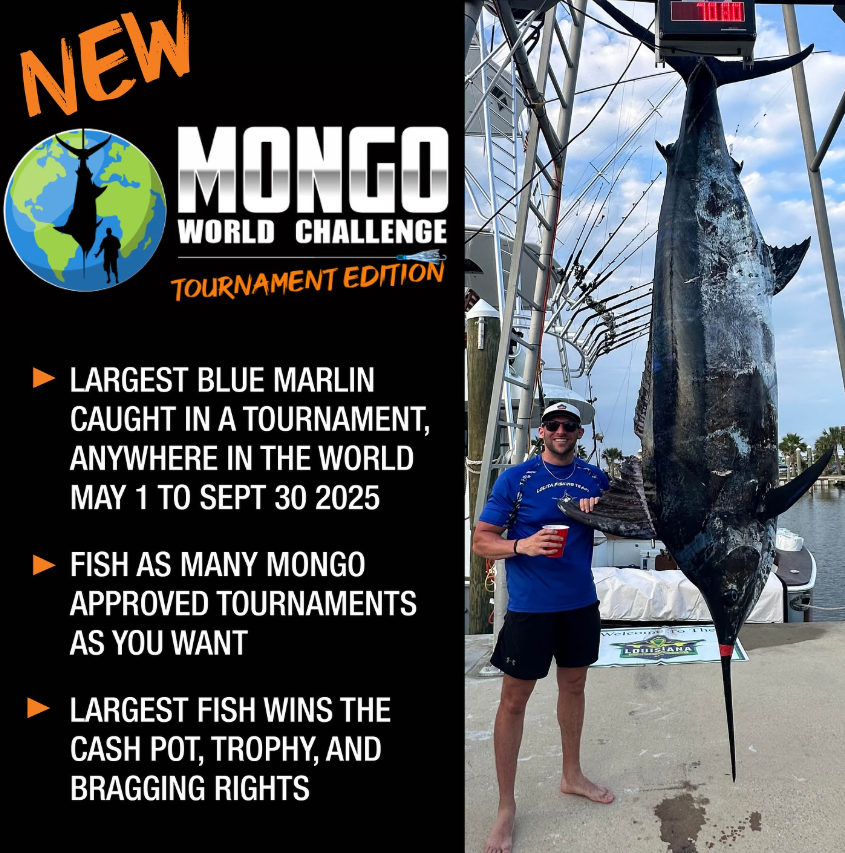
The MONGO World Challenge is paying big money for the largest tournament-caught blue marlin in 2025...

Introducing the MONGO World Challenge: Tournament Edition. This new take on an incredible idea started with a simple question. Fundamental and direct, this is a thought process that is perhaps not exercised quite often enough.

Just because something is awesome, why can’t you make it even more awesome? It was this question that resonated with MONGO co-founders Captain Jeremy Cox, J.D. Cox and Brian Johnson. It was this question that led to the MONGO World Challenge.

You see the MONGO is making moves. The new World Challenge does more than just add some increased competition the tournament’s inclusive, accessible biggest-fish-wins lots of money approach to fishing contests. It takes the MONGO global—providing boats from around the world and teams fishing the world’s best blue marlin tournaments the opportunity to win quite a bit of money and gain even more recognition for their success.  And, if you hadn’t gathered as much by now, we’re pretty excited about what is to come.

The Concept

The MONGO World Challenge is simple. The participation team that lands the largest tournament-caught blue marlin—anywhere in the world—wins. To be elegible, you just need to register for the event and catch your fish in a sanctioned blue marlin tournament.

This does a couple of things that are particularly interesting:

  1. It takes the MONGO Global– registration is open to boats anywhere in the world. Sanctioned tournamernts span the Gulf coast, the East Coast, the Caribbean, Hawaii, and when you factor in the World Cup, and a few others, the world.
  2. It provides a direct opportunity to win even more money and glory—all while catching the fish that you are already after.
  3. It provides the potential for an incredible payout-to-entry ratio– Somebody will take home a pile of money, all for an entry of $3,500—that’s less than the price of a weekend’s dockage and tournament grocery bill.

How It Works

To win the MONGO World Challenge, you first need to enter. Entry is simple and straightforward. It costs $3,500. Entry is open to any boat in the world.

The competition is limited to blue marlin caught in eligible tournaments. To win, all you’ve got to do is catch a bigger blue marlin than any other participating team.

The list of tournaments included in the MONGO World Challenge is expansive. It includes the bulk of the  East Coast, Gulf Coast, Caribbean, and Hawaii. When you include the Blue Marlin World Cup, the competition goes global. What will it take to win and where will the fish come from.

A stud from the Azores? A grander in Madeira. A giant from Bermuda? A 1,200 from Kona? All of these locations will be competing against the 800s that come from the Gulf or the potential grander from Ocean City or Hatteras. This is exciting stuff.

The rules of the contest are simple. If your blue marlin qualifies in the tournament you’re fishing it, it qualifies for the MONGO World Challenge.

For more context on how awesome the MONGO is, check this out.

There are a couple of interesting scenarios:

  1. You could catch a blue marlin that doesn’t win the tournament you’re fishing in, but does win the MONGO Offshore Challenge (after all, you’re only competing against boats who have entered the MONGO).
  2. You could also catch a stud blue marlin in a Gulf tournament that wins you three giant checks—the tournament you’re fishing in, the MONGO Gulf Blue Marlin Division, and the MONGO World Challenge.

When thinking about these scenarios, entry into the World Challenge becomes something of an insurance policy. At $3,500 some operations won’t even notice the charge. Everyone would notice the giant cardboard check, the trophies and their pictures across fishing media if they won. The worst scenario of all comes to the person who catches a stud in a tournament and leaves a pile of money on the table because they didn’t enter to fish the MONGO. 

The Payout

One of the great things about the World Challenge, and about the MONGO generally, is how simple and easy it is. It’s designed for fishing and how people fish.

There is just one entry. That entry covers your boat in all of the tournaments that fish—whether you fish two events or 20. $3,500 once, no strings, no gimmicks. Entry covers your boat and all of the anglers that fish with you.

Also new for 2025, the MONGO Tag and Release Division in the Gulf.

Once you’ve entered, its winner take all. The biggest tournament-caught blue marlin wins. That means 85% of all of the entry fees. The MONGO keeps 15% for administration and execution of the tournament, the winner takes all of the rest.

There are no side pots, no optionals. Just a big check for the team that greases the world’s biggest-tournament-caught blue marlin in the summer of 2025.

That’s right. The MONGO is taking its big fish, big money party to the world. After all, why not make some that is awesome even more awesome?

Eligible Tournaments

  • Louisiana Gulf Coast Billfish Classic
  • Hurricane hole Louisiana open
  • Orange Beach Billfish Classic
  • MBGFC Gulf Coast Masters
  • Cajun Canyons Billfish Classic
  • Mississippi Gulf Coast Billfish Classic
  • Emerald Coast Blue Marlin Classic
  • Pensacola International Billfish Tournament
  • The Gulf Cup
  • Bay Point Billfish Open
  • Blue Marlin Grand Championship
  • Houston Big Game Fishing Club’s Lonestar Shootout
  • Texas International Fishing Tournament
  • Texas Legends Billfish Tournament
  • New Orleans Invitational Billfish
  • MBGFC Ladies Tournament
  • MBGFC Invitational Labor Day Tournament
  • Charleston Billfish Invitational
  • Hatteras Village Offshore Open
  • Georgetown Blue Marlin Tournament
  • Swansboro Rotary Memorial Day Tournament
  • The Big Rock Blue Marlin Tournament
  • Cape Fear Blue Marlin Tournament
  • Carolina Billfish Classic
  • HMY Lowcountry Cup
  • Edisto Marina Billfish Tournament
  • South Carolina Blue Marlin Invitational
  • Jimmy Johnson’s Quest for the Ring, Atlantic City
  • HUK Big Fish Classic
  • Pirate’s Cove Billfish Tournament
  • Beach Haven White Marlin Invitational
  • White Marlin Open
  • The MidAtlantic
  • Virginia Beach Billfish Tournament
  • Rock ‘n Reel Hawaiian Open
  • Kona Kick Off
  • Firecracker Open
  • Skins Marlin Derby
  • The Kona Throw Down
  • Hawaii Luremaker Tournament
  • Pelagic Marlin Magic Lure Tournament
  • Big Island Marlin Tournament
  • It’s a Wrap Tourney
  • Walker’s Cay Invitational
  • Bermuda Billfish Blast
  • Bermuda Big Game Classic
  • Sea Horse Angler’s Billfish Tournament
  • The Blue Marlin World Cup
  • Bisbee’s Black and Blue
January 30, 2025 by Elliott Stark

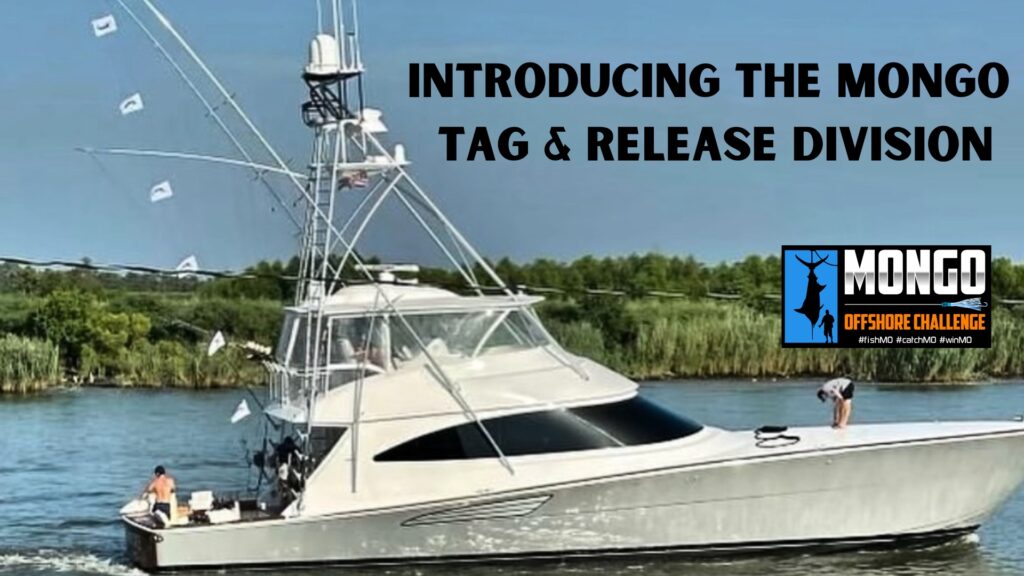
Introducing the MONGO Tag and Release Division

How do you make the coolest, most geographically expansive billfish tournament in the world even better? Add a release division, of course!

How do you make the Gulf’s coolest, longest-running and most geographically expensive bluewater tournament even better? Add a MONGO tag and release division, of course.

Brothers Captain Jeremy and J.D. Cox and Brian Johnson, co-founders of the MONGO Offshore Challenge, have done just that. New for 2025, with an entry of just $3,500 teams across the Gulf Coast can now win money releasing billfish in the same wide open, incredibly accessible manner they fish the MONGO’s big fish competition. 

The excitement is building. It is palpable across the Gulf Coast. Here’s a breakdown of what to expect and how it works.

The Gulf Coast Tag and Release Landscape: Why It’s Such a Good Fit 

The Gulf Coast is home to some of the finest crews in sportfishing. In recent years, with all of the big blue marlin caught on live bait, the billfish numbers have been overshadowed. 

What many people, in other parts of the US, might not realize is just how good the billfishing can be. Recent years have seen daily and trip release records fall from the lower coast of South Texas to the Panhandle of Florida. These records are set every year. 

It is into this environment, with Gulf Coast tournaments producing Costa Rica-like billfish numbers, that MONGO launches its tag and release competition. The excitement is building across the Gulf. It stems from several factors. 

Format

A yearly entry to the Tag and Release Division is $3,500. This covers the boat and all of the anglers for the year. There is no additional fee for anglers, whether you fish the same three or you have a different group each day you fish. 

Each team is allocated three tag and release days per month. Only fish released during these days count toward the competition. 

To register your day as a tag and release day, you just sign up before you leave the dock. You do it all through the MONGO app. 

Your entry qualifies you for two ways to win. 

Monthly Winners

There is a monthly Tag and Release winner each month from May through September. Each winner takes home 10% of the total pot. 

Season Long Winner

The cumulative, season-long winner, the boat with the most release points accrued during its release days over the course of the entire tournament, will take home 50% of the total purse. 

This format is designed for fishing and for strategy. It allows teams to line up release days during tournaments, when they’ll be fishing anyway, or while fun fishing.

If you plan to bet heavy in a tournament and focus on release numbers, you can use these same days as your monthly MONGO release days. Alternatively, if you find numbers of fish and dial in a hot bite, you can set your MONGO release day as soon as the next day. If the bite continues, you register the next two days as more release days.

The important part about all of this is the flexibility. You can set your release days for a time you will be fishing anyway or you can use them as an excuse to get offshore (and try to win some money) anytime you find a good bite. 

In this way, the Release Division offers the same accessibility, ease, and broad ability to win as the MONGO’s big fish categories. 

How It Works

Once you’ve registered for the Release Division, you get to dedicate three days of each month to release fishing. For the days to count, you’ll have to register them through the app when you’re leaving the dock. You need to register the days before you fish… You can’t release four blue marlin and then decide to make the day a release day. The registration is easy—you’ll do it the same way you register a normal trip—in the MONGO app.

The points structure works like this:

  • Blue Marlin –  650 points
  • White Marlin – 200 points 
  • Spearfish – 200 points
  • Sailfish – 100 points
  • Unidentified billfish – 100 points
  • Boats that catch a grand slam in a single day receive 500 bonus points.

For the release to count, you’ll need to provide an unbroken clip of video that identifies the billfish, shows the release and pans the boat’s GPS to show location, time and date. It works just like it does in every other billfish release tournament that you fish.

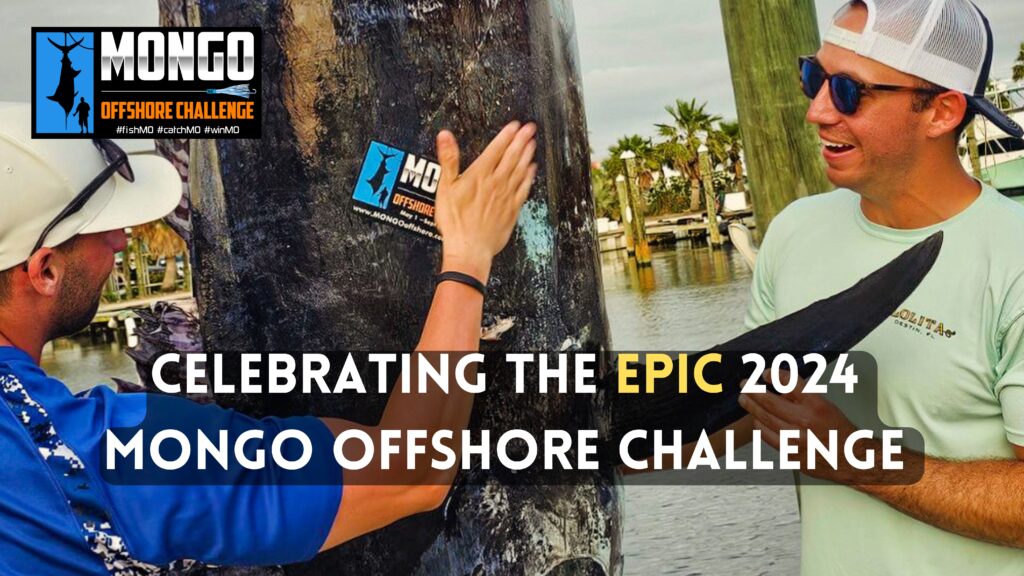
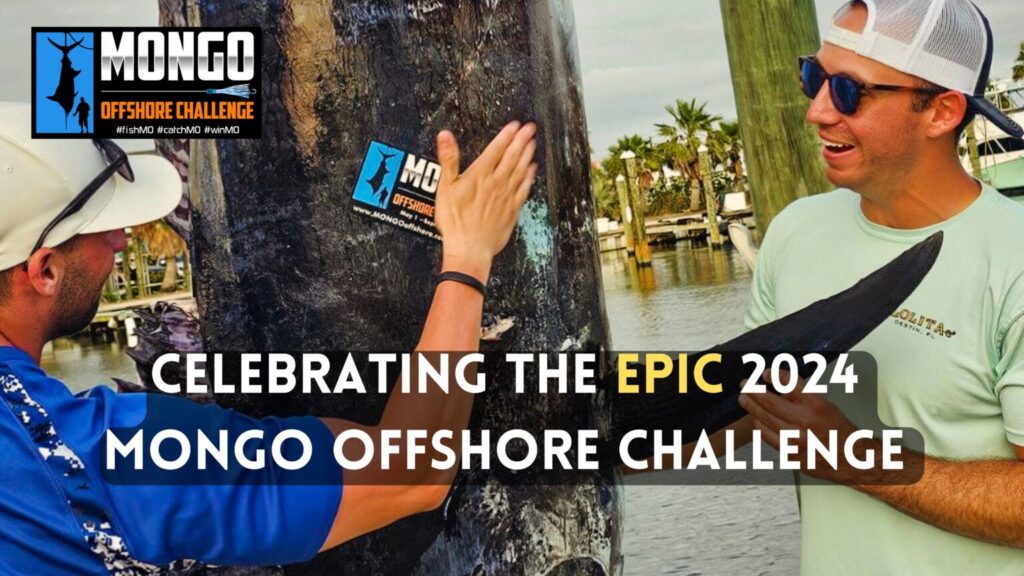
Here’s a recap of the EPIC 2024 MONGO offshore Challenge. 

When you get back to the dock, just upload the videos. You can do this through the app or via email. The MONGO has retained the services of an experienced, independent, professional video reviewer to judge and evaluate all of the release submissions. We’ll then keep tallies of the score for the monthly and season-long competitions. 

The best part of all of this (well, maybe the best part… there are lots of awesome things about it)? If, while you’re trying to stack up releases, you happen upon a MONGO, you can stroke it and it will count for the MONGO big fish competition (though that fish will not count for release points). Not only might you happen upon a giant, qualifying blue marlin, but the winning mahi-mahi or wahoo might well be caught by a boat trolling dink baits while release fishing for billfish.

Go Fishing, Win Money

The MONGO turns every day into a tournament. It’s accessible and it’s awesome. 

The MONGO was built for fishing and for winning money. It now includes a release division.  Registration opens February 15.

January 7, 2025 by Elliott Stark

The Ultimate Guide to Fishing Guatemala

Guatemala is home to perhaps the world's best sailfishing and lots of blue marlin. Here is everything you need to know to fish Guatemala.

This is the Guide to Fishing Guatemala from The Book on Travel Fishing.

The world’s best volume sailfish fishery, Guatemala’s calm blue waters are home to great blue marlin fishing and all the dorado you want. The place is steeped in fishing tradition and home to some of the best and most prolific operations on the sportfishing landscape.

Want to see bunch of sailfish and blue marlin on a teaser? Come to Guatemala.

“You want a quote about the fishing in Guatemala, eh mate? How about, ‘consistency.’ The sailfish and blue numbers make it a great place to learn dead bait fishing skills, especially bait and switch. That we see so many fish day in day out allows us to show anglers from all over the world what offshore fishing is all about.”
—Captain Kiwi Van Leeuwen, owner of Sailfish Oasis

“Guatemala is a year-round fishery for sailfish. I’ve caught 120 sailfish in three days in September. Every month of the year we’ve had 8 or 10 sailfish days. Every place has a three or four good-month period, here it’s good all year long. It’s the most consistent fishing I’ve found on the planet.”

—Captain David Salazar, owner of Casa Vieja Lodge

“Other than the obvious of this being the very best sail fishery in the world, with good numbers of blue marlin also, what makes Guatemala special is the flat seas and cooperative fleet that works together in finding and staying on the fish each and every day. There are no big hotels and not many visiting boats here. There are a few key charter guys that keep the old school ways of working together on the water for every angler’s benefit.”

—Captain Brad Philipps, owner of Guatemalan Billfishing Adventures

Guatemala Fishing Overview

Photo Courtesy Casa Vieja Lodge

When it comes to volume billfish fisheries, few places in the world can compete with Guatemala. The Pacific sailfish is Guatemala’s bread and butter. Boats fishing in this part of the world routinely sweep The Billfish Foundation’s annual tag-and-release awards for these fish. Before the deployment of the FADs in Costa Rica, Guatemala would win the Pacific blue marlin awards quite often as well.

The fishing is so good, so consistent, and of such high volume that it can be hard to put into perspective. Here’s a couple pieces of context:

  1. The world’s three most prolific billfish captains, as measured in terms of career release numbers, all spent significant portions of their professional fishing lives based in Guatemala. These captains, Ron Hamlin and Chris Sheeder (both wonderful men who are now deceased) and Brad Philipps, another great guy who owns Guatemalan Billfishing Adventures, could not have put up such numbers fishing anywhere else. Brad recently released his 40,000th billfish.
  2. The bulk of Guatemala’s Pacific sportfishing takes place from the same marina. Since its construction, boats departing from this dock—nondescript and largely unremarkable in most every other way—have tallied more sailfish releases than perhaps any other port in the world.
Captain Brad Philipps backing down on a nice blue marlin. Photo courtesy Richard Gibson.

When you hit Guatemala right, you might see 50 sailfish in a day. There are enough of them, and they are here consistently enough, that you can fly fish for them. This is a sight to behold. There are not many places in the world with enough fish for this to be a doable proposition. If you’re in Guatemala, even if you’re not a fly fisherman, you ought to give it a shot. It’s incredibly exciting especially if a blue marlin happens onto the teaser.

The People: What Makes Guatemala Great

Captain Kiwi Van Leeuwen, center, and Guatemala’s incredible fishing bring smiles to anglers from around the world.

As good as the fishing is in Guatemala, perhaps my favorite part of the place are the people who fish here for a living. Guatemala is the home of the fisherman’s fisherman. It doesn’t have the glamour and luxury of Palm Beach or parts of Costa Rica, but it has incredible fishing. Since the 1980s, this fishing has been attracting a certain category of captain from all over the world. Americans, South Africans, and New Zealanders mingle with captains and crew who have grown up here. All are bound by the strange passion that so thoroughly captivates those who love offshore fishing.

The result is a dock that seems enchanted. The fishing here is good enough to be singular. Singular in that a trip to Guatemala is most easily compared with another trip to Guatemala, rather than thinking about it in relation to other destinations. In this place, stories and jokes flow freely. The atmosphere results from the mixture of adventurous people from around the world with those who were raised right down the road.

This is what the world’s most productive billfish dock looks like. It’s in Guatemala. Photo by Kiwi Van Leeuwen.

For the captains and mates who have grown up here and not fished anywhere else, it must seem strange to imagine people coming from all over the world to experience what happens so naturally and consistently in their own backyard. All the people who fish here, whether born and raised in Guatemala or somewhere else, are more than happy and more than generous to share Guatemala’s offshore bounty with those who have come to visit.

Bait and Switch: An Incredible Volume Billfish Fishery

Guatemala is a great place to learn to hook fish on a pitch bait. You get enough shots in a day to be able to practice—without having to stress too much about missing a bite or two. It’s hard to learn to hook fish on circle hooks in other places because you don’t get enough bites to be able to practice—and if you only get three bites on a trip, it really hurts to miss them.

Courtesy Casa Vieja Lodge

The blue marlin fishing is good in Guatemala too. If you’re fishing when they are around, you might have four or five bites in a day. Any time you are fishing here, you can hope to at least catch one or two over three days of fishing. You can find dorado, happen upon schools of yellowfin offshore, even catch the occasional black or striped marlin. Trolling in Guatemala is really, really fun. The sailfish keep the action coming.

Days offshore are as often as not highlighted by teaser-crashing blue marlin. If you’ve caught your fill of sailfish, you can generally target blue marlin—either fishing different bottom or changing your tactics. The blue marlin here might average around 300 pounds or so. A good one is in the range of 500 or 600. The marlin can be around any month of the year. If you’re looking for more marlin, with a bit less reliable sailfish volume, you might come down between May and August. There’s big tuna here then too.

Courtesy Sailfish Oasis Lodge.

The water is also characteristically calm in Guatemala. The sailfish numbers and the sea state are the result of the same variable. The sailfish are here because of the presence of lots of bait. The bait is here because deep-water currents deflect off canyons on the bottom. They bring with them nutrient-rich, oxygenated water that sets into motion the foundation of life. When it reaches the sunlit upper reaches of the ocean, phytoplankton use the nutrients to grow. The bait is here eating the plankton. This upwelling not only sets off great fishing, but slicks down swell and chop when it hits the surface.

There are lots and lots of sea turtles in Guatemala. There are enough of them, in fact, that the ride to and from the dock usually includes some zigs and zags as the captain tries not to run them over.

The fishing in Guatemala is so good and so consistent that a trip here should be part of any traveling angler’s lifetime agenda. Do it once, and you’ll want to come back. The fishing is so good and reliable that it’s a great choice for someone who wants to see what offshore fishing is all about. For the serious angler, it’s a wonderland. Because it’s calm and the sailfish are so prolific, it’s also great for older folks, kids, and other demographics who might not do well in rough seas.

There are few places in the world where you can book a trip six months in advance and plan to catch 15 or 20 sailfish over two or three days. Of course, you should never vocalize or acknowledge this “plan” in your mind, as it might draw bad weather or a skunk.  If your scheduling is good and your navigation of aspiration/hope/planning is such that it does not draw the ire of the universe, you might catch four times this many. 

A Banner Trip in Guatemala

Sailfish Oasis Lodge

Over three days your boat releases around 75 sailfish (you lost exact count, because you started on the rum and cokes after catching 26 by 11 am on the second day). Ten of your sailfish came on the fly rod. This was badass! Watching them eat 15 feet behind the boat made you feel like Brad Pitt in “A River Runs Through It.”

If the mates had kept hooking fish the whole time, your release tally would have been triple digits. But now you’re a beast. You’ve got the hang of pitching to fish and hooking them yourself.

Your trip’s highlight was going 4 for 7 on blue marlin. The biggest pushed 450 pounds. You fought it stand up on a 50. Pitching the rigged mackerel, you hooked it your damn self. 

You found the tuna one morning and ate really good for the rest of the trip. You’d have eaten good either way, but the sashimi always tastes better if you think there’s a chance you caught it. Before you depart, you’ve rebooked for next year. You’re bringing your buddies and might invite your wife. She’d like to fish for a day or two, and you’ll arrange sometime in Antigua.


Top-Shelf Fishing Targets in Guatemala

Sailfish, blue marlin, dorado, yellowfin tuna, occasional black and striped marlin

Guatemala Fishing Season 

The sailfishing can be epic any month of the year. Prime time for sailfish is perhaps December through April, leaving some room for variation from year to year. May through August offers a bit more diversity. There are often big tuna around—sometimes to 200 pounds. The blue marlin fishing can be good, too. Sailfish are around but perhaps not as reliably in volume.

The dreaded San Cocho.

Travel: How to Get Here

Fly into Guatemala City. Your lodge handles the transfer to and from the airport. They’ll have a sign with your name on it as you exit baggage claim and will have a cooler of cold beer ready for the trip (they’re for you and other guests; the driver doesn’t drink them). Guatemala City might not be the place to drive yourself. 

Fishing Lodges in Guatemala

There are lots of great fishing lodges in this place. Chronicles of three of the best are included in the charter profile section of The Book on Travel Fishing.

They are all wonderful. I’ve fished with each of them (and with any luck will fish with each of them some more). Which one is right for you depends on what you’re into. Check out the charter profile section for context.

  • Captain Kiwi Van Leeuwen- Sailfish Oasis Lodge
  • Casa Vieja Lodge
  • Captain Brad Philipps- Guatemalan Billfishing Adventures

In addition to these, Captain Kennedy Hernandez is one of the nicest people in sportfishing. Kennedy grew up in Guatemala and began his career working with Captain Brad Philipps. Kennedy has been running boats for Big Buoys Sportfishing for a number of years to great effect. This operation fishes the same waters and catches lots of fish while offering a price point that is more approachable for some anglers. You can find them at www.thebigbuoys.com. No matter which operation you choose, you can’t go wrong.

One Thing to Consider

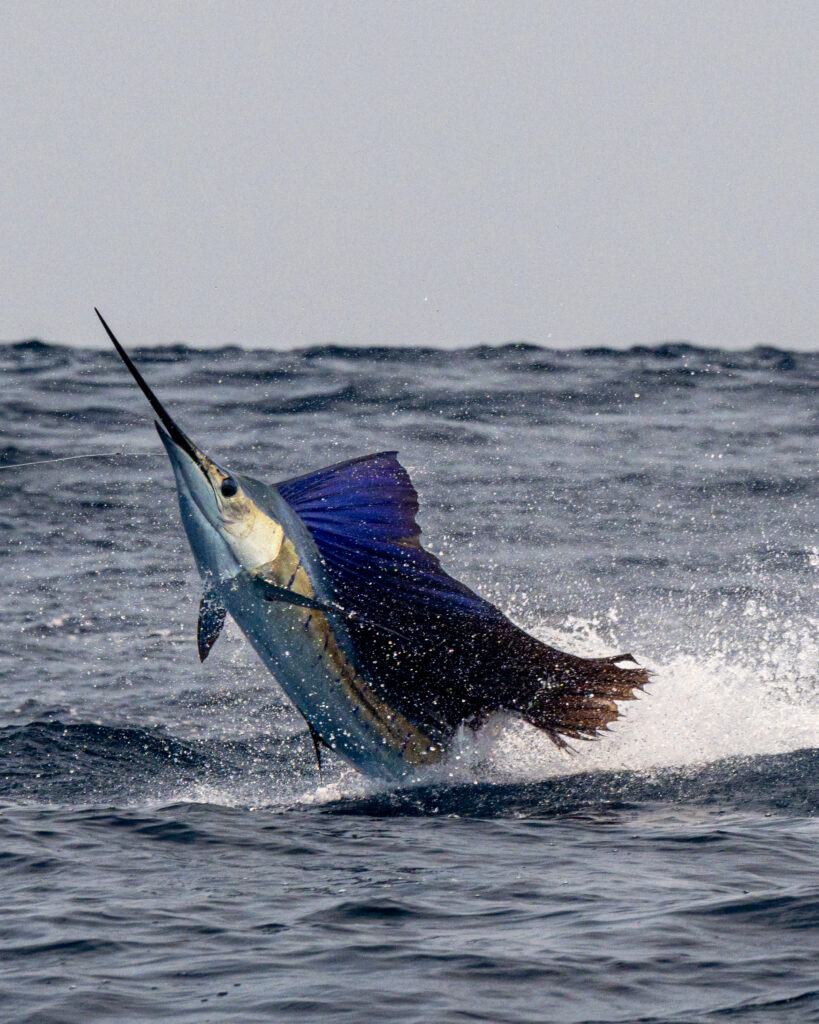
Guatemala is a wonderful place to plan a fishing trip. If your kids are into fishing and you want to show them the ropes of marlin and sailfishing, Guatemala is a perfect spot. The seas are calm most of the time, and there’s lots of fish and sea turtles. If your wife likes fishing, bring her too. Sailfish are a great option for kids (say 9 or 10 and up). They fight beautifully, jumping across the surface. They will not, however, dog you out like a 500-pound blue marlin or a big tuna. For these fisheries, there is a strength component. For sailfish, the physical threshold is much more attainable for younger or older anglers.

If you haven’t surmised as much, I really, really like Guatemala. That said, it may not be the place to bring people who aren’t into fishing. In the place you’ll be staying, there’s not likely to be much to do on land beyond the confines of the lodge. The lodges are great and well-appointed, and non-fishing folks will have a good time and be well-fed, but if they come with the expectation of a trip that involves the beach, shopping, golf or hitting restuarants, they may be disappointed. Most operations can book a day or overnight trip to Antigua. This beautiful town in the mountains is rumored to be the oldest city in North America. 

Overall, Guatemala’s land-based activities can’t compete with the attractions or beauty of Costa Rica, Cabo San Lucas, or Panama. That said, once you’re offshore, there aren’t many places on earth that can compete with the sheer volume of billfish in Guatemala.

June 11, 2024 by Elliott Stark

Satellite Tagging a Blue Marlin

Ever wondered what it was like to satellite tag a blue marlin? Wonder no more. Step aboard the Miss Remy, a wonderfully appointed 65’ Viking based out of Cypress Cove Marina in Venice, Louisiana. Rene Cross, tournament director of the Cajun Canyons Billfish Tournament and the crew of the Miss Remy provide a backstage pass …

Ever wondered what it was like to satellite tag a blue marlin? Wonder no more.

Step aboard the Miss Remy, a wonderfully appointed 65’ Viking based out of Cypress Cove Marina in Venice, Louisiana. Rene Cross, tournament director of the Cajun Canyons Billfish Tournament and the crew of the Miss Remy provide a backstage pass to cutting edge conservation work.

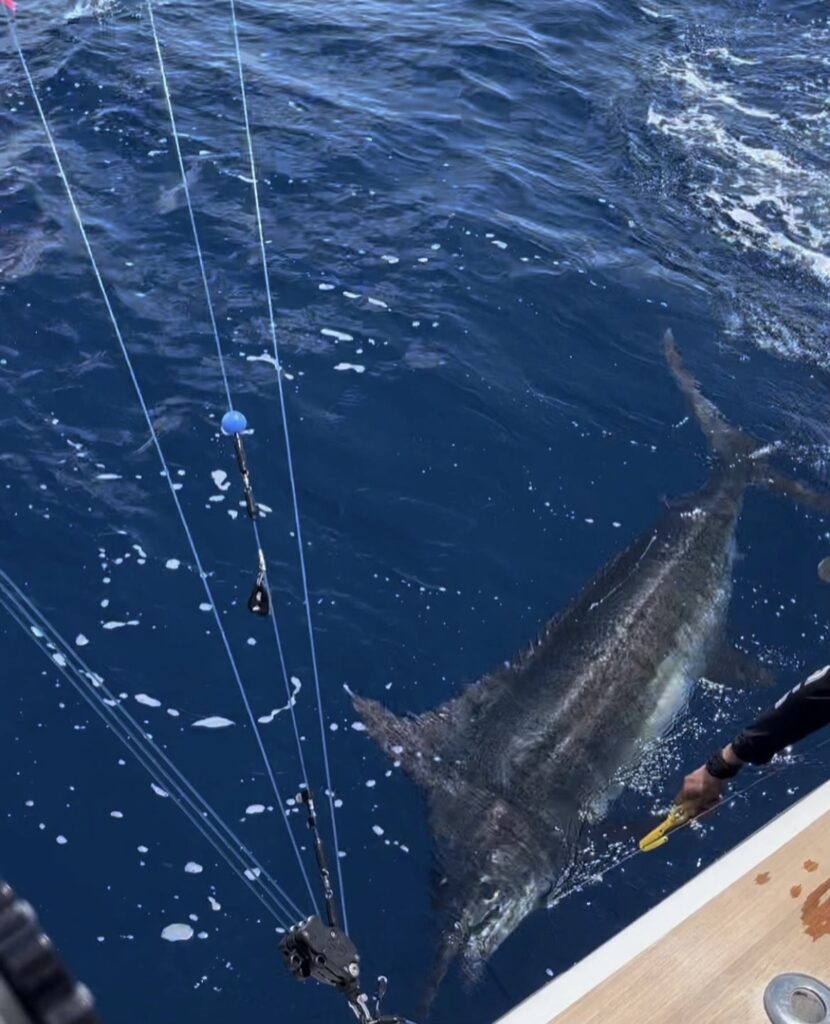
With Rene Cross putting the wood to a nice blue marlin on a 130, Justin Bunch pulls the fish alongside the boat. Brad Nezat, veteran tournament crewman whose lineup of stories and jokes is good enough that it could make him an ambassador to the great State of Louisiana, deftly applies the satellite tag. Captain Luke Crenshaw drives a hell of a boat on a hooked fish.

This blue marlin ate a live blackfin during the 2024 Cajun Canyons Billfish Tournament. The Billfish Foundation satellite tag that’s deployed is part of a TBF research initiative that illustrates connectivity between blue marlin populations in the Gulf, Atlantic and Caribbean basins.

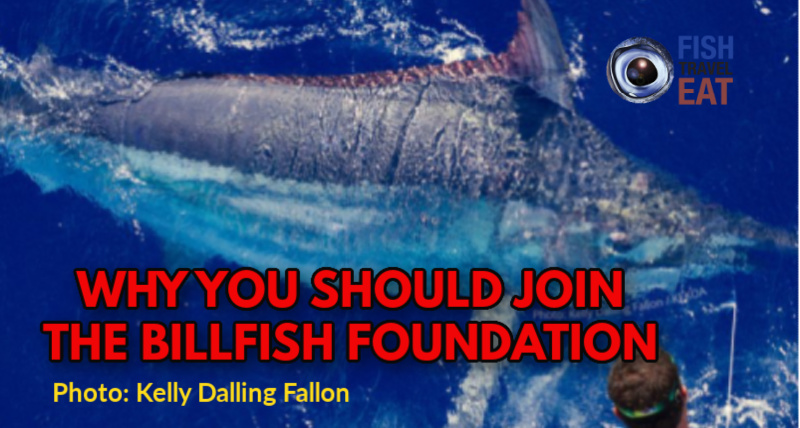
The Billfish Foundation does incredible work. Blue marlin like this one swim easier knowing that Miss Ellen and the hardworking TBF team work on their behalf. If you enjoy fishing (or just knowing that incredible creatures like this reside in the ocean), you might consider joining The Billfish Foundation.

If you like catching blue marlin, tuna, redfish or snapper, consider paying a visit to Cypress Cove Marina and Lodge in Venice. It’s something of a fishing wonderland. The people who run the place are as nice as they come.

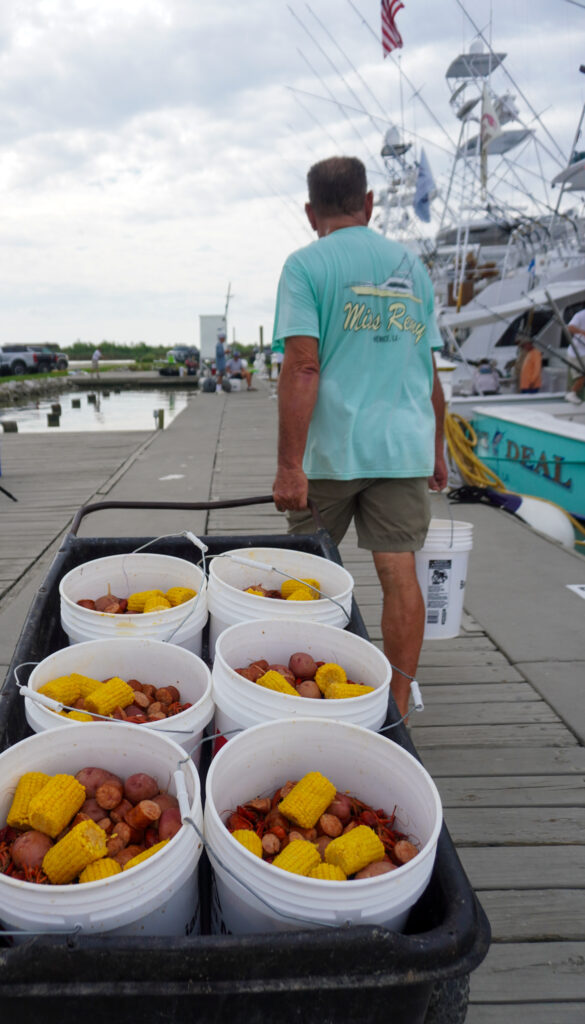
Yes, that’s a 5 gallon bucket of crawfish for every boat fishing the tournament.
June 10, 2024 by Elliott Stark

The 2024 MONGO Gulf Division: A Celebration of Fishing

More than a season-long tournament, the MONGO is a 150-boat fishing party. With the Gulf’s tournament 2024 tournament season in full swing, here is a breakdown of the 2024 MONGO Gulf Coast Division.

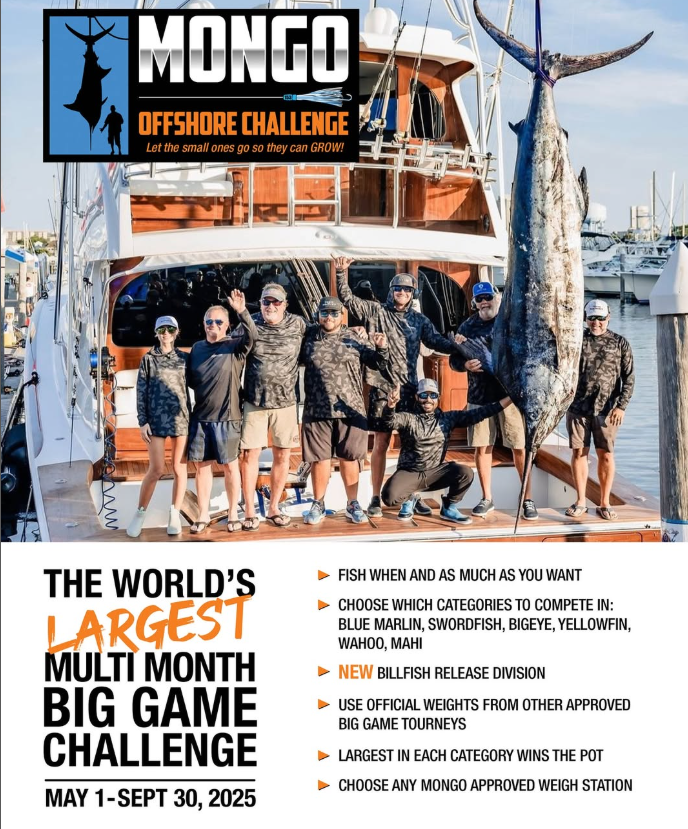
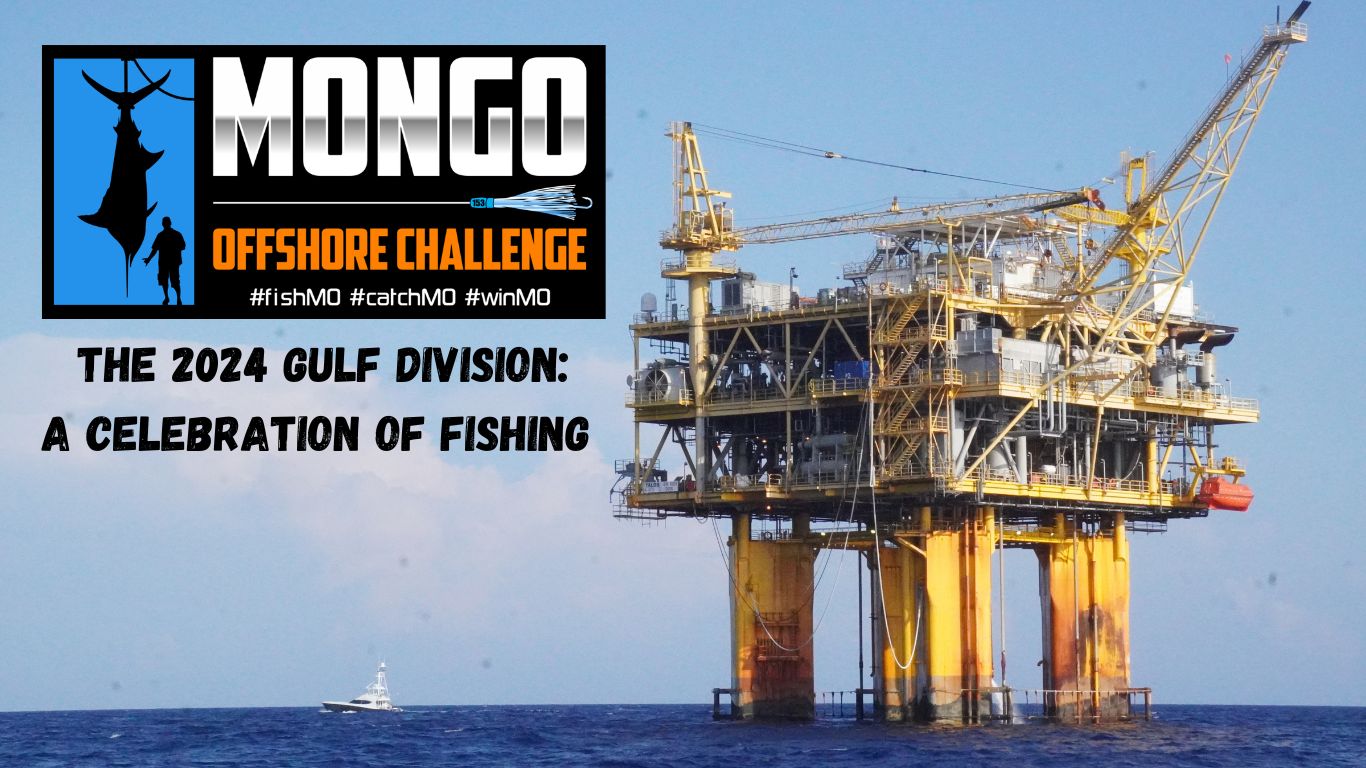
The 2024 MONGO Offshore Challenge is a celebration of the Gulf Coast’s incredible bluewater fishing and the community of boats that so thoroughly enjoy it. More than a season-long tournament, the MONGO is a 150-boat fishing party. With the Gulf’s tournament 2024 tournament season in full swing, here is a breakdown of the 2024 MONGO Gulf Coast Division: the teams, the current leaders and the industry-leading lineup of sponsors who support it. Thanks to all the teams who have entered and all of the partners who have sponsored the event. The 5th annual MONGO is rolling and we’re excited.

150 Teams Fishing for More Than $500,000

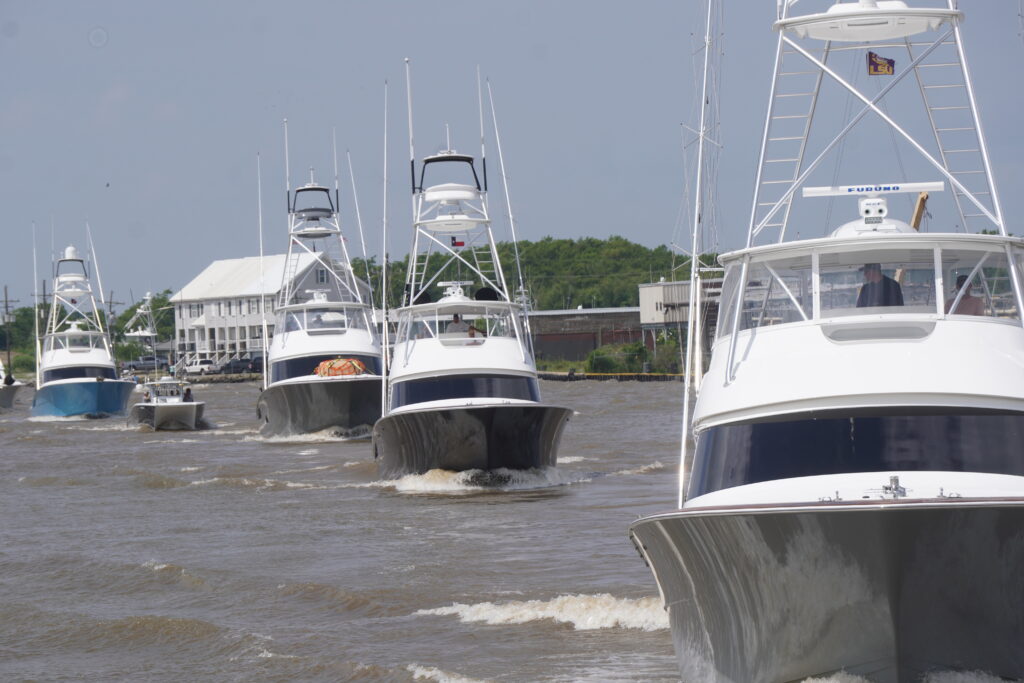
In terms of volume of participation, the MONGO is the Gulf’s largest and most widely distributed bluewater tournament. From south Texas to Florida, the field is composed of boats representing all five Gulf states. Boats range from 29 feet to 80.

The MONGO is designed for fishing and for how people fish. A boat-based tournament, everyone who fishes aboard the vessel is a tournament angler. Not only that, but when the boat fishes tournaments those fish qualify for the MONGO as well.

It is with this backdrop—widespread, participatory and inclusive—that the MONGO 2024 Gulf Coast division is best understood. Here’s a breakdown of where we stand through the first six weeks of the action.

Blue Marlin: 86 Teams

Captain Jeremy Cox and the Lolita jumped out to an early lead with a 704 on the 3rd day of the 153 day tournament.

Through the first third of the MONGO, perhaps no division showcases the quality of the fishing in the Gulf quite like the blue marlin division. In just over a month of fishing MONGO teams have hung two fish north of 700.

It was Captain Jeremy Cox and team Lolita that kicked off the action on May 3 (just three days into the action). After five hours in the chair, Cox and company boated a 122 inch blue marlin with a 65 inch girth. At 704, the fish not only took top honors in the Hurricane Hole Louisiana Open, but stamped an imposing mark for the remainder of the MONGO field.

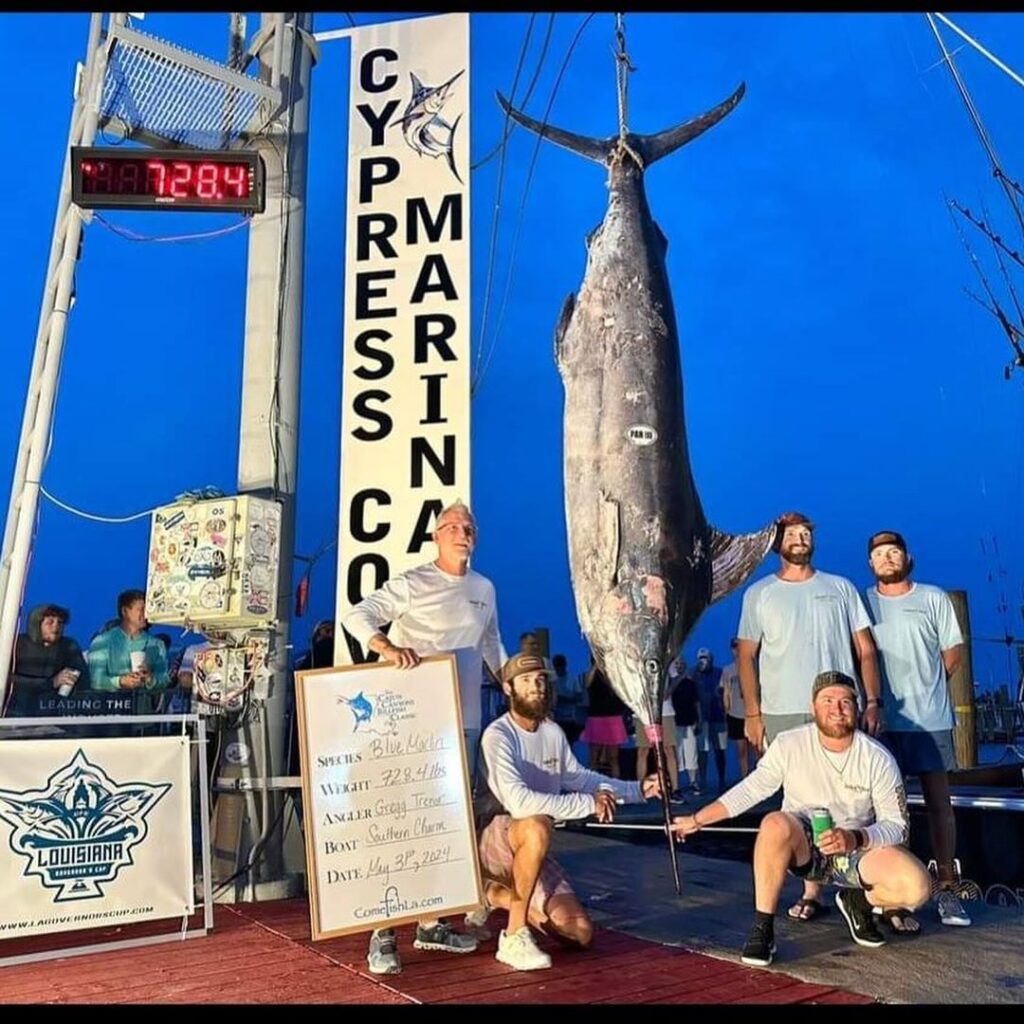
The Southern Charm’s 728 pound blue is currently leading the MONGO in the Gulf.

Lolita’s fish led the MONGO until the Cajun Canyons Billfish Tournament. The Southern Charm cashed a tournament check with 728 that currently leads the Gulf Coast Division. Connor, the first mate on the boat, was gracious enough to share the experience of catching the fish on the dock after the fishing.

In many parts of the world, a 728 pound blue marlin would be a lock. On the Gulf Coast, with three months of fishing remaining, however, there’s quite a bit of fishing remaining. 

What will it take to win the Gulf Blue Marlin Division? Veteran Gulf Captain Patrick Ivey of the Breathe Easy provides his best guess… 

Tuna: 71 Teams

The MONGO wonderfully showcases the Gulf’s incredible tuna fishing. The 71 teams competing to catch the biggest yellowfin in the Gulf face stiff competition. Between boats fishing tournaments and club competitions and charter operations, there are lots of big tuna caught in the Gulf.

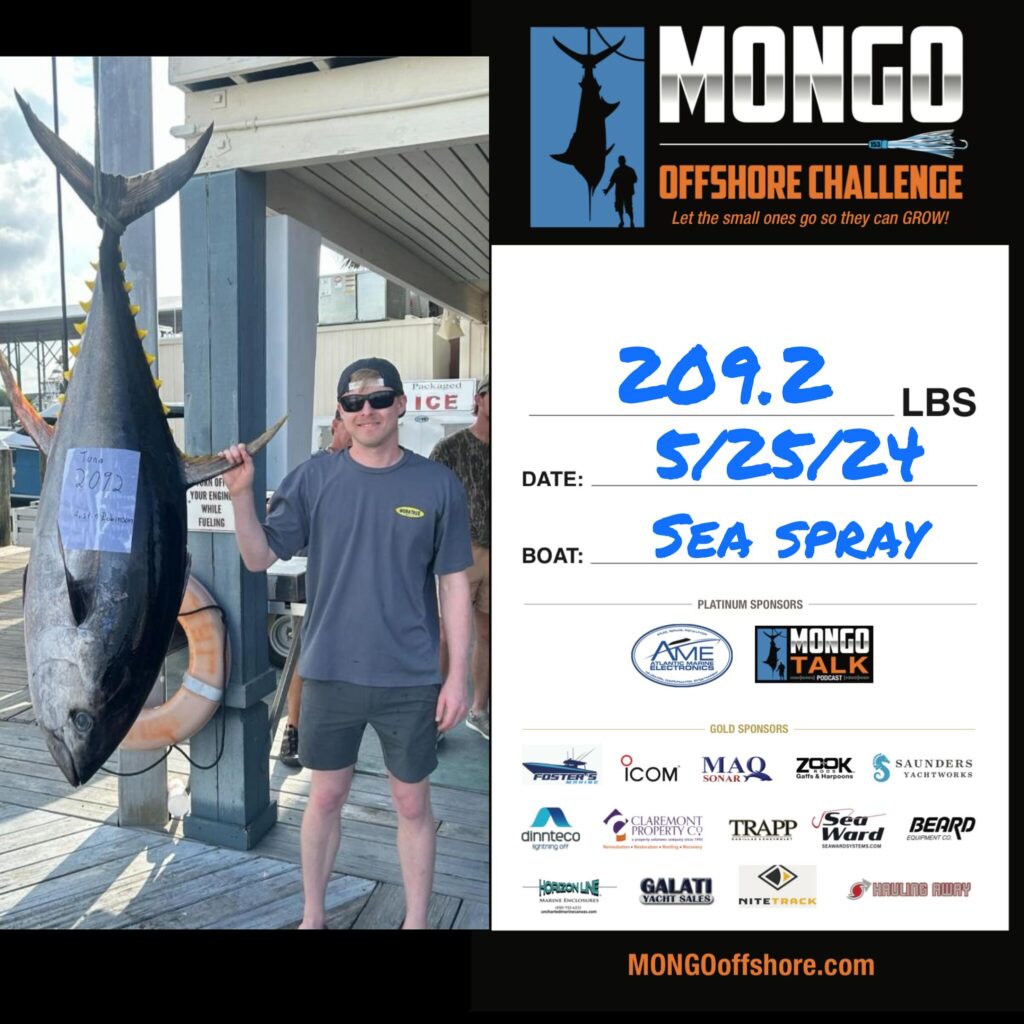
Sea Spray’s stud yellowfin hanging at Orange Beach Marina.

In its first month the 2024 MONGO has posted two yellowfin north of 200. Rene Cross and the Miss Remy jumped out to an early lead with a 200.6 that cashed a check in the Louisiana Gulf Coast Billfish Classic. The current leader is the Sea Spray who hung a 209.6 pound yellowfin at Orange Beach Marina on May 25.

Mahi: 71 Teams

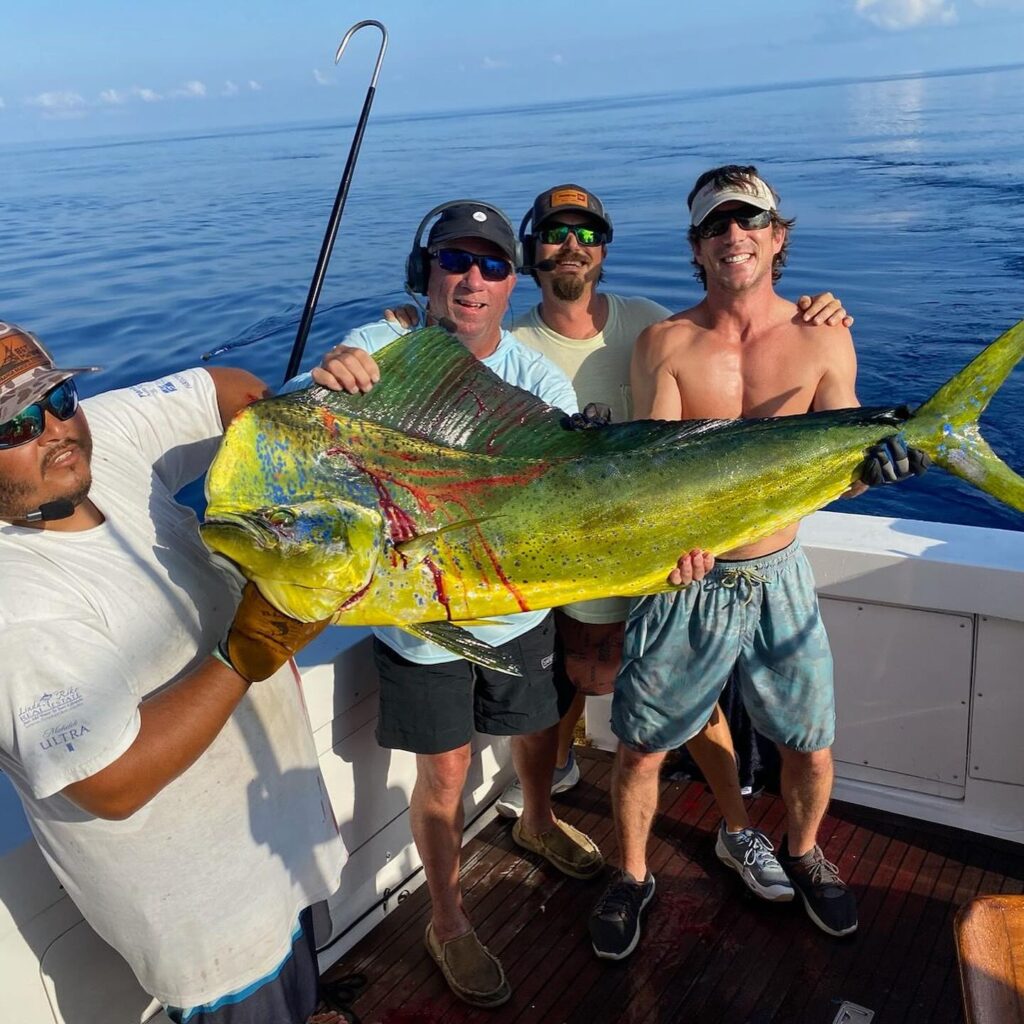
Fins Up with the current leader in the Gulf mahi division.

The Mississippi Gulf Coast Billfish Classic set the stage for the current leader in the Gulf’s mahi division. The Fins Up, a 54’ Bertram, caught a 42.1 pound dolphin.

Swordfish: 42 Teams  

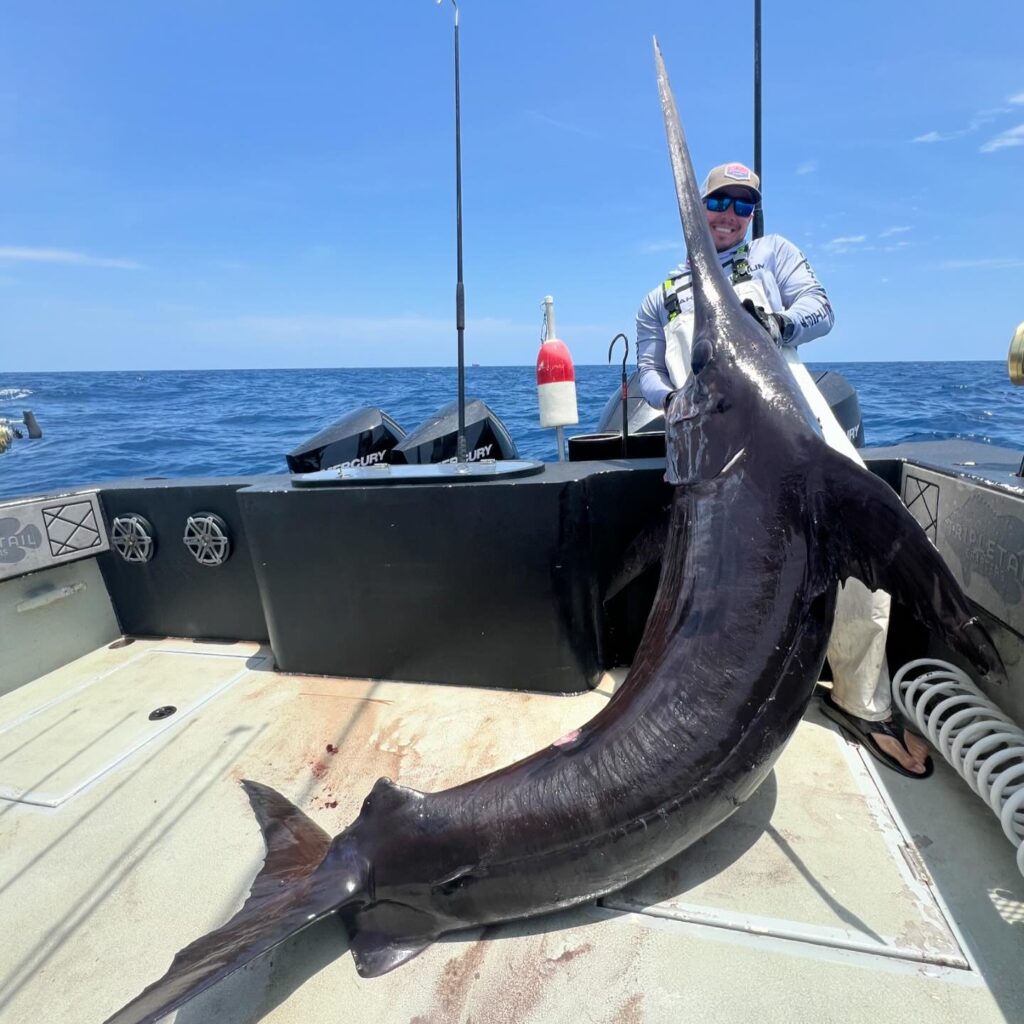
The Gulf is home to one of the best swordfish fisheries in the world. It is also home to some really good, really innovative swordfish crews. More than any other event, the MONGO showcases the quality of this fishery and the skill of the boats who do it.

The current leader is the Ransom, a 38’ Empire boatworks. They weighed their 245-pound sword at Cypress Cove Marina in Venice, Louisiana.

Wahoo: 74 Teams

Some 74 teams across the Gulf are in search of the largest blue torpedo. No qualifying wahoo has yet been weighed. The minimum wahoo weight is 60 pounds. A MONGO wahoo is likely to make an appearance between now and September.

A Celebration of Fishing and the Industry that Makes it Possible

The MONGO Offshore Challenge celebrates fishing. The MONGO celebrates the act of catching big fish and the fisheries that make it possible. It showcases the boats and crews whose skill and dedication provide the foundation of the activity.

The MONGO also partners with many of the best companies in sportfishing industry. When doing business with these companies you can feel good in knowing that each is an expert in what it does and that each are passionate about fishing and the people who do it.

The MONGO East Coast: Registration Open Through June 30

The MONGO’s East Coast division remains open through June 30. With the season kicking off, boats from Florida to New England compete for the biggest blue marlin, swordfish, yellowfin, bigeye, wahoo and swordfish.

$62,000 – 1

Were this not exciting enough, the Blue Marlin Division has $62,000 in rollover cash from last year. Plenty of boats will catch big blue marlin this year. If they’re entered in the MONGO, one will win a pile of money. 

April 30, 2024 by Elliott Stark

Ocean City: Perfectly Positioned

Ocean City’s location and the attributes that define its offshore fishery make this a prime location for boats vying for MONGO. Ocean City is home to one of the finest marinas on the east coast, the largest tournament in fishing, and an incredible sportfishing culture.

Ocean City, Maryland is something of a fisherman’s paradise. The offshore fishing in this part of the world is marked by diversity and size. The fleet that fishes here—both resident boats and those that visit during the summer—is one of the most remarkable aspects of this wonderful corner of the world.

Ocean City’s location and the attributes that define its offshore fishery make this a prime location for boats vying for MONGO cash this summer. Ocean City is home to one of the most famous and most well-equipped marinas on the East Coast. It’s also home to the White Marlin Open– the largest billfish tournament in the world– and one of sportfishing’s most influential fishing clubs. OCMD’s sportfishing tradition and the amenities that draw boats to this part of the world are, however, only part of the equation.

What follows is a breakdown of why and how boats fishing out of this part of the world are so well positioned to win the 2024 MONGO East Coast division. All that said, you can’t win it unless you’re in it.

If you fish out of Ocean City, Maryland, there is a strong case to make for joining the many other Mid-Atlantic boats fishing the 2024 MONGO.

OCMD: The Fishery

Ocean City sits at the southern extent of the East Coast canyon fisheries. This network of seafloor topography pockmarks the continental shelf—a residual effect of glacial movement in the last ice age.

Where their boundaries intersect with warm waters from the Gulf Stream, these canyons host some of the best tuna and swordfish fishing on the East Coast. From north to south, there are five major canyons within range of Ocean City boats—the Wilmington, Baltimore, Poorman’s, Washington, and Norfolk.

When deep water currents deflect off of bottom topography they flow toward the surface. When these nutrient and oxygen-rich waters encounter sunlight, they support phytoplankton growth. This sets the stage for an offshore buffet for pelagic predators of all manner.

Boats troll might troll for blue and white marlin in the daytime, perhaps putting out spreader bars for bigeye as the sun begins to set. When darkness falls, boats will set up around the rim or edge of a canyon for a night of chunking for tuna while deploying a swordfish bait or two.

Giant swordfish. Maryland state record. MONGO winner.

From June through September, this part of the world is a hotbed of sportfishing activity. The Gulf Stream passes about 125 miles offshore of Ocean City. Warm water eddies spin off the main current, sending bodies of warm water within range of the fleet. When marlin fishing, boats will target these warmer waters and temperature breaks.

For a week or two in August or September, it will likely host some of the best white marlin fishing in the world. Giant blue marlin haunt these waters.

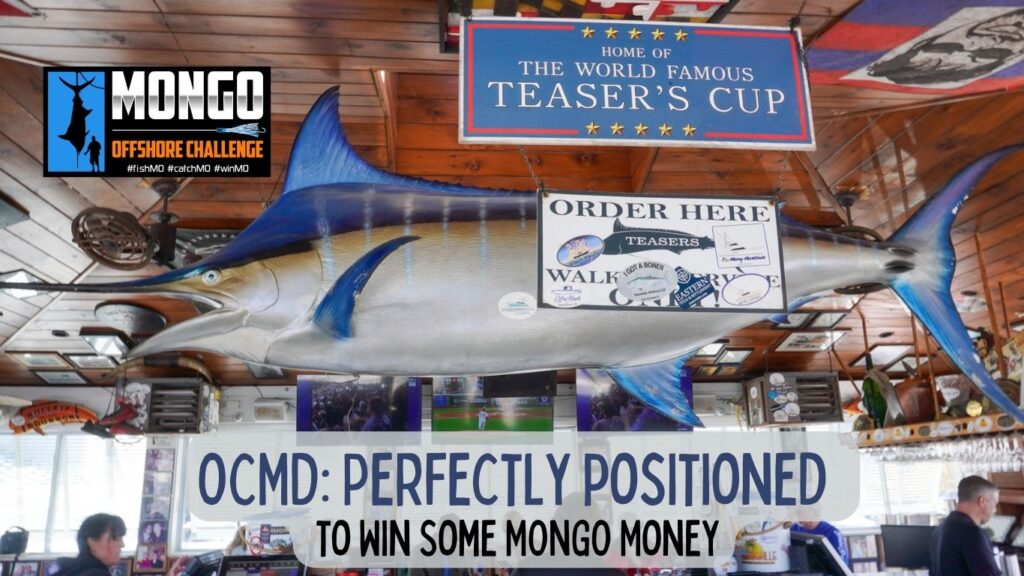
Just how giant? A mount of the Billfisher’s Maryland state record adorns the ceiling of the Ocean City Marlin Club. The submarine of a blue marlin weighed an incredible 1,135 pounds. Captain Jon Duffie and company caught this fish in the Mid-Atlantic 500, no less. 

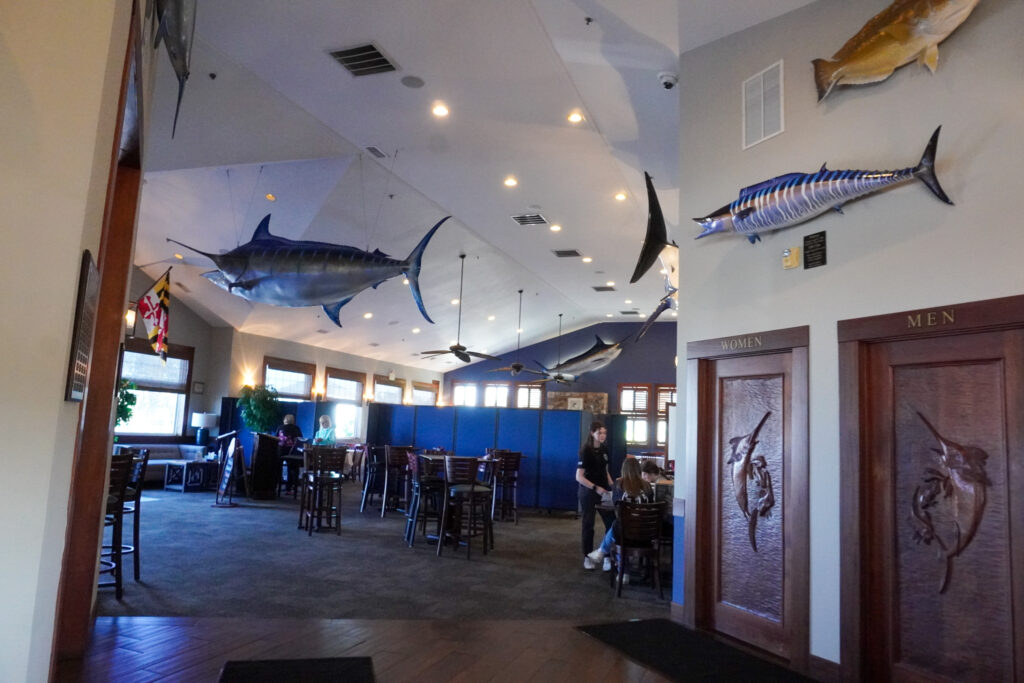
The Ocean City Marlin Club’s dining room. How do you make an 800-pound blue marlin look small? Hang it in the same room as an 1,125-pound blue marlin.
Ocean City is also home to a great swordfish fishery. In fact, Captain Willie Zimmerman and the OCMD-based RoShamBo won the 2022 MONGO Swordfish division with a state-record 393-pound sword.

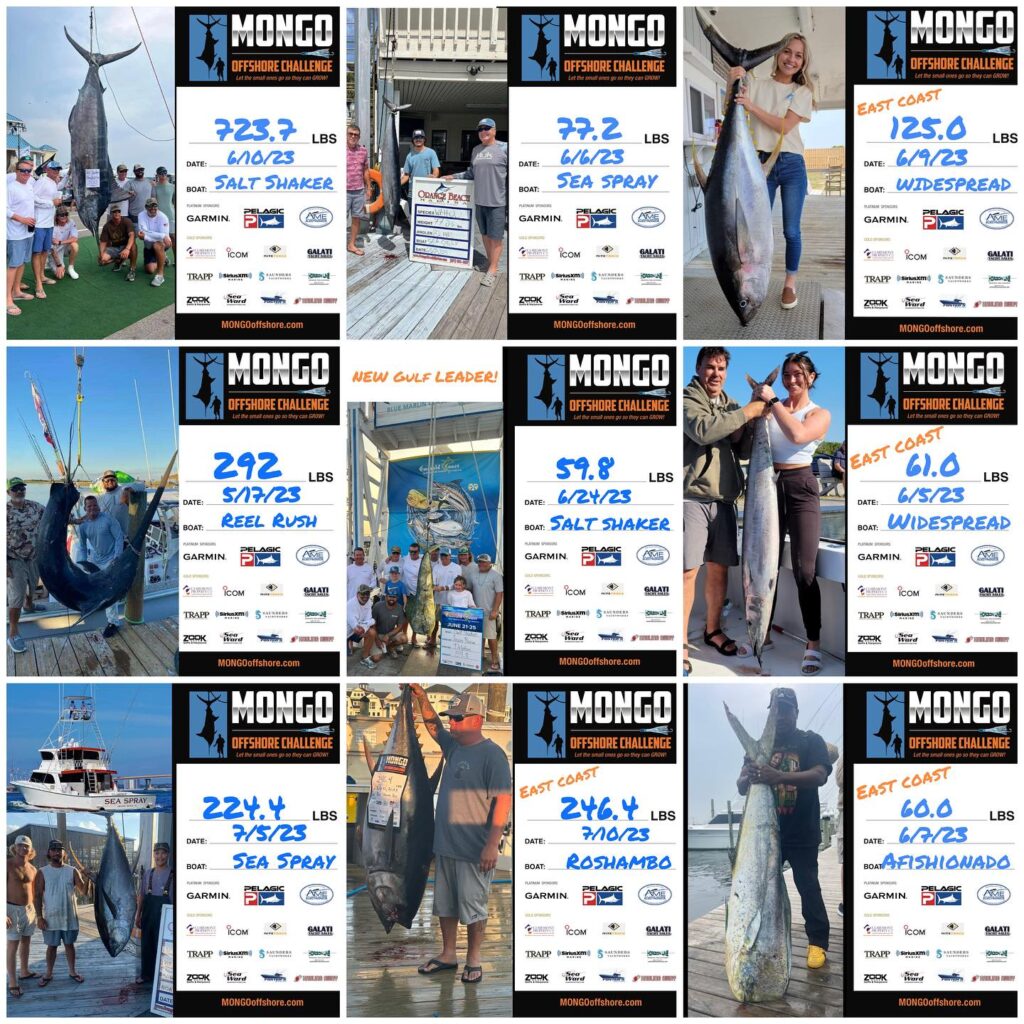
Bigeye perhaps headline the tuna fishing here. The RoShamBo took home the 2023 East Coast Bigeye division with a 246.4-pounder last year. 

OCMD: The Volume of Fishing Activity

The second reason why boats that fish out of Ocean City are so well positioned to win MONGO money results from the volume of fishing that happens here. Lots of boats fish quite a few days out of Ocean City.

You’ve got to be in it to win it.

Scott Lenox owns Fish in OC, a media platform that keeps its finger squarely on the pulse of all things fishing in Ocean City. Scott provides context as to what makes this part of the world so unique.

“We’re strategically located in the central Mid-Atlantic region. From June through September we have great fishing in the canyons. We catch lots of really sought after species and our high dollar tournaments attract quite a few anglers,” Lenox explains. “Ocean City also hosts lots of high-net-worth visitors from New York, D.C, and Virginia. They come here for all of the tourism infrastructure we have. This increases the fishing that we do.”

Scott Lenox, source on all things fishing in Ocean City.

Ocean City’s visitor experience has something for everyone. Great seafood is abundant and fresh. Crab cakes made this part of the world-famous.

The Ocean City Boardwalk has been attracting visitors for decades. The beaches are beautiful and the amenities that are available here are perhaps as well-rounded as any place on the eastern seaboard.

In addition to the tourists who charter boats here, Ocean City hosts a thriving, homegrown sportfishing culture. The great fishing and atmosphere in this part of the world exists as the foundation of one of sportfishing’s longest-running and most influential organizations—The Ocean City Marlin Club.

From its wonderfully appointed clubhouse—a full-service bar and restaurant that overlooks Sunset Marina—the Ocean City Marlin Club has been fishing and supporting conservation since 1936. Club members fish around the world and compete in local club tournaments every summer. Crewmen and anglers who have grown up hooking white marlin on rigger bites and pitching to fish on dredges gain a skillset that is uniquely valuable to volume billfish tournaments around the world.

Ocean City’s incredible fishing and boating infrastructure benefit visitors and locals alike. In many ways, this starts and stops with Sunset Marina. Home to hundreds of slips, a full-service boatyard, restaurants and bars, Sunset Marina is an icon of the sportfishing landscape.

Are you really a fisherman if you haven’t drank an Orange Crush at Teaser’s in Sunset Marina? Of course you can’t talk about Sunset Marina or fishing in Ocean City without talking about the White Marlin Open.

OCMD: The Tournaments

There are fishing tournaments and then there is the White Marlin Open. With purses large enough to impact the GDP, the White Marlin Open is something of an Ocean City, Maryland institution.

Photo courtesy of Ocean City’s iconic Sunset Marina.

Just how big and how influential is this tournament. The White Marlin Open has been running annually for more than 50 years. All told, the tournament has awarded more than $105 million.

In 2023, the White Marlin Open hosted a fleet of more than 400 boats and 3,500 anglers and crew. The Reel Floor’s 640-pound blue marlin won more than $ 6.2 million and set a record for the largest payout for a single fish in the history of sportfishing.

More than the largest and richest tournament in the world, the White Marlin Open uniquely showcases the great fishing and wonderful atmosphere in Ocean City. Anglers from around the world join boats and crews from across the East Coast to try their hand at winning life-changing amounts of money.

The White Marlin Open is a one-of-a-kind celebration of offshore fishing. The Orange Crushes flow like water. Hundreds of boats fish not only the tournament days but practice days in the lead-up.

This tournament in and of itself is responsible for thousands of fishing days on the water. Each one of these days could result in a MONGO fish—even fish caught during the White Marlin Open.

Sunset Marina also serves as the southern port of call for the Mid-Atlantic 500. The size, scope and quality of these two events draw boats from all over the place. The timing of these great tournaments coincides with some of the best fishing you’ll find anywhere.

If You Fish Ocean City, You Should Fish the MONGO

If you run or own a boat out of Ocean City, Maryland there is a very strong case that you should enter the MONGO. The blue marlin category includes $62,000 in rollover cash. The price tag for the MONGO is reasonable—in fact, in relation to all of the other expenses that come with this wonderful hobby of ours, you might not even notice it.

If you’ll be on the water quite a bit this year, you may well run across a MONGO. The only thing better than catching a giant blue marlin, swordfish, bigeye, yellowfin, wahoo or mahi-mahi is catching a giant fish and winning a giant cardboard check for having done so. 

April 1, 2024 by Elliott Stark

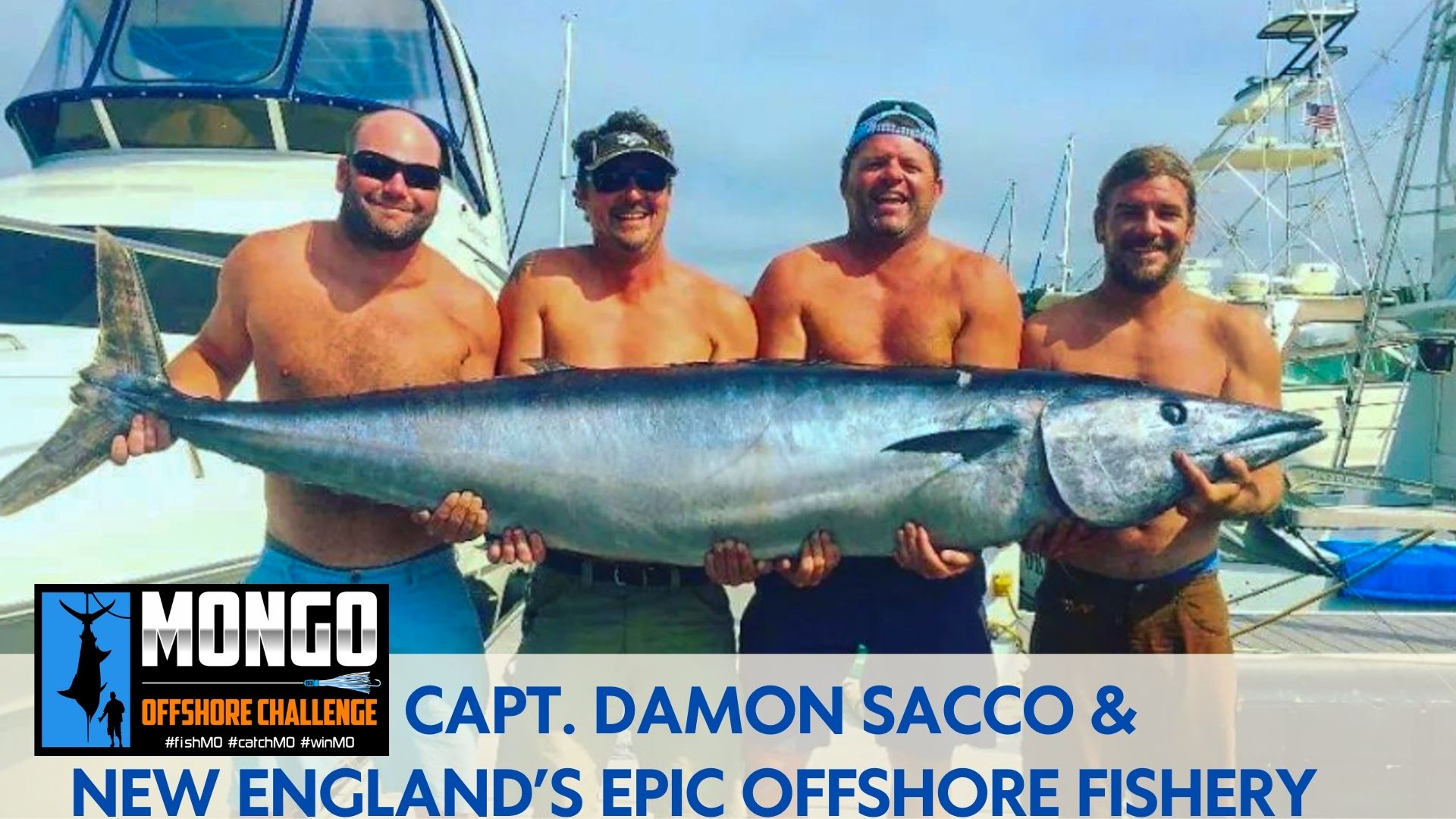
Damon Sacco and New England’s Epic Offshore Fishery

Giant blue marlin and really big wahoo might not be the first thing that comes to mind when most people think of Massachusetts. This might be a mistake.

Giant blue marlin and really big wahoo might not be the first thing that comes to mind when most people think of Massachusetts. Captain Damon Sacco, one of New England’s most accomplished blue water captains, is fishing the East Coast division of the 2024 MONGO Offshore Challenge. He could well set the record straight.

A real one. Photo courtesy Castafari Charters.

Massachusetts sits at the northern extent of the MONGO’s East Coast Division.  Home world class giant bluefin tuna fishing, New England also boasts a relatively short but intensely productive canyon fishery. The MONGO dates and the peak canyon fishing parallel. When the results of this year’s MONGO are posted in the fall, don’t surprised if a contingent of trophies and giant cardboard checks head to New England.

What follows is equal parts introduction to the incredible blue water fishery in this part of the world and a profile of one of the most accomplished and interesting operations in sportfishing. If you fish out of New England, this serves as an invitation to fish the MONGO. If you’re a fisherman from the Gulf Coast, Florida, or the Mid Atlantic, this is an introduction to a part of the world that perhaps does not get the acclaim it is due.

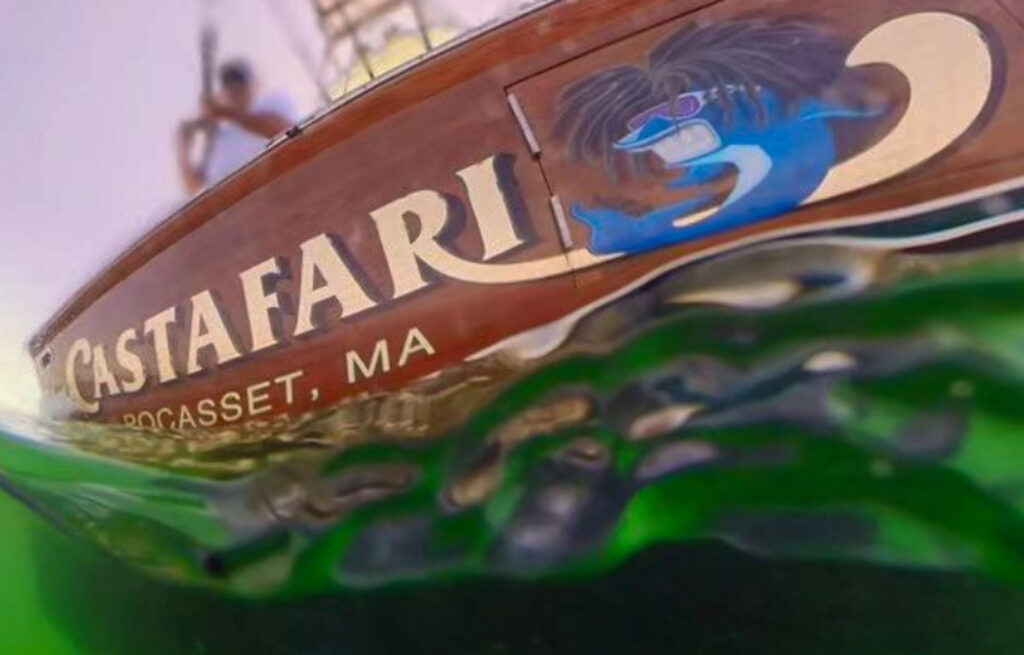
Meet Captain Damon Sacco and the Castafari

Captain Damon Sacco is a passionate, well-traveled offshore fisherman. He’s fished throughout the United States, the Caribbean, Central America and Mexico and the South Pacific. Damon is the owner and operator of the Castafari, a 45’ Jim Smith based in Cape Cod. Sacco’s deep involvement in the fabric of New England’s sportfishing community runs much deeper than simply running charters and winning tournaments.

Sacco invests much of his considerable passion and energy into giving back to the sport. Damon contributes to many of the best publications in sportfishing—Marlin Magazine, Salt Water Sportsman, the Big Game Journal and others.

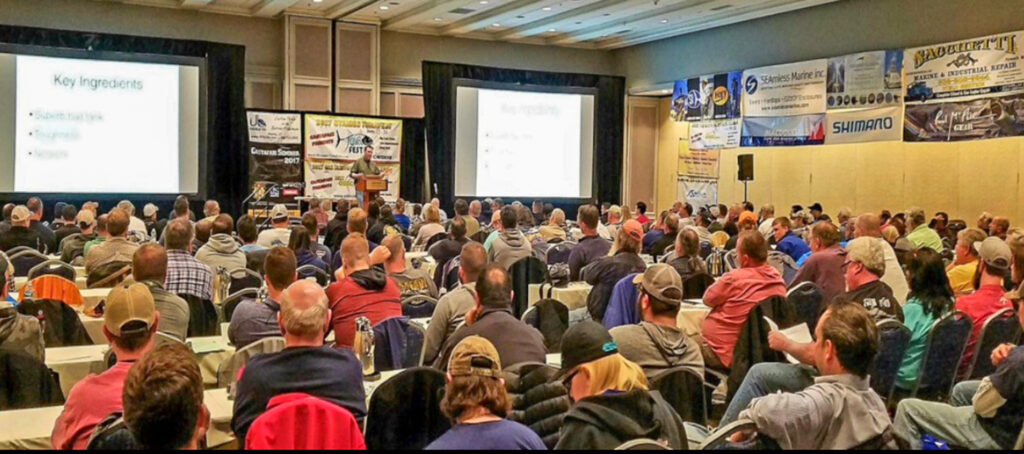
Captain Damon also runs the Castafari Big Game Fishing Seminars. Founded in 2009, these seminars have grown into perhaps New England’s most prominent and influential blue water fishing resources. Each year the seminars host hundreds of attendees from New England and New York, providing hands-on, in-depth instruction on a variety of sportfishing techniques presented by some of the leading names in the industry.

Sacco’s Castafari Big Game Fishing Seminar Series hosts hundreds of participants and dozens of vendors.

He runs the Oak Bluffs Blue Water Classic, one of New England’s premier offshore tournaments. He is a board member of the Stellwagen Charter Boat Association. Later this year, Damon is publishing an anthology of fishing stories that he’s compiled along the way. 

Captain Damon Sacco has made his reputation by consistently putting people on big fish.

While Captain Damon Sacco would not tell you this himself, it is difficult to think of a better ambassador to New England’s incredible offshore fishing. Sacco’s breadth of experience and knowledge of the landscape are second to none. When he talks fishing, many listen. 

Massachusetts: Home to a World Class Offshore Fishery

When most of the outside world thinks fishing in New England, it thinks striped bass and bluefin tuna. This is for good reason… These fisheries are world class (but neither is included in the MONGO Offshore Challenge). When Captain Damon Sacco and other New England boats join the MONGO, they do so because of the giant blue marlin, enormous wahoo and size large bigeye that inhabit their waters.

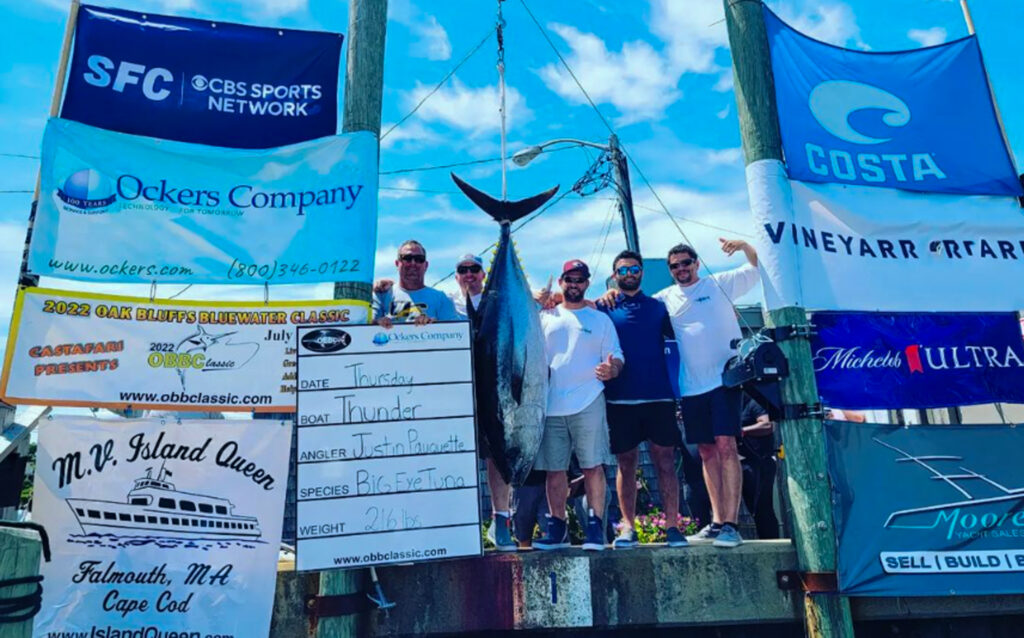
Sacco runs the Oak Bluffs Blue Water Classic, one of the highest profile tournaments in New England. Fish caught in this event would qualify for the MONGO.

The canyon fishing season runs for a 10-week span that includes parts of July, August, and September. When the warm waters of the Gulf Stream swirl above the network of topographic features that pockmark the continental shelf off the coast of Massachusetts, Connecticut and Rhode Island, magical things happen.

When you encounter a blue marlin here, it likely to be a real one. Sacco puts the average New England blue marlin around 500-pounds or so. 

The Castafari is no stranger to giant fish. Sacco has released plenty of big blue marlin—the largest measured 138” blue marlin to the fork.  When he talks about this fish, Damon describes it as “hunch backed” and “so big it looked deformed.”

There is $62,000 in rollover cash in this year’s East Coast Blue Marlin Division.

“We have plenty of moose around here,” he says, with a laugh. His Instagram captions sometime contain the word “seasquatch.”  Characterizing blue marlin in these terms is especially exciting given that there is $62,000 in rollover cash in this year’s East Coast blue marlin division.

There is, however, more to Massachusetts than just size large blue marlin. The place is home to some of the biggest wahoo in the world. When you think wahoo, you think warm waters… You likely think of the Bahamas, trolling around an oil rig in the Gulf or someplace in Baja California.

Many are surprised to find out just how good the trophy wahoo fishing can be in this part of the world. I bet you $20 that the Castafari has caught a bigger wahoo than your boat… In 2016, Sacco caught a 182-pound wahoo that was just a pound shy of the world record. That striped, blue torpedo of a fish measured an incredible 89-inches.

“There are lots of big wahoo here. It’s not uncommon to see a fish hit the docks that weighs 100-pounds,” Damon explains.

While the MONGO does not host a bluefin tuna division, bigeye are fair game. On canyon trips, boats will often troll right at dusk and as the sunrises. These are ideal times to catch bigeye. It’s also a great way to bookmark a night’s chunking for yellowfin, albacore and maybe even more bigeye. Sacco’s personal best bigeye tipped the scales at 278-pounds.

New England and the MONGO: A Perfect Match

Sure, when you think East Coast blue marlin and wahoo, you might think Oregon Inlet. Your mind might start pondering Ocean City, Cape May, Virginia Beach and boats fishing the Hudson Canyon. You think of these places and you do so with good reason—they are great places to fish.

New England’s ability to compete with these destinations illustrates the charm of the MONGO Offshore Challenge. The MONGO recognizes boats that catch the single biggest fish of a species. New England might not be able to compete with the volume of blue marlin caught in more southerly aspects of the East Coast, but if you’re looking for a single seasquatch…

As Captain Damon Sacco puts it, “I remember seeing the MONGO and I liked the format. I heard a lot of good things about the MONGO from my sources on the Gulf—people that I trust. They told me they put on a good tournament. The first time I fished the MONGO was last year. I plan to continue to do it. I am spreading the word up here. I’d love to see it turn into a fleet of 60-boats just from New England… It’s great to have the MONGO involved in our fishery. It revolves around big fish.”

For more context on what makes the MONGO so great, check this out.
January 30, 2024 by Elliott Stark

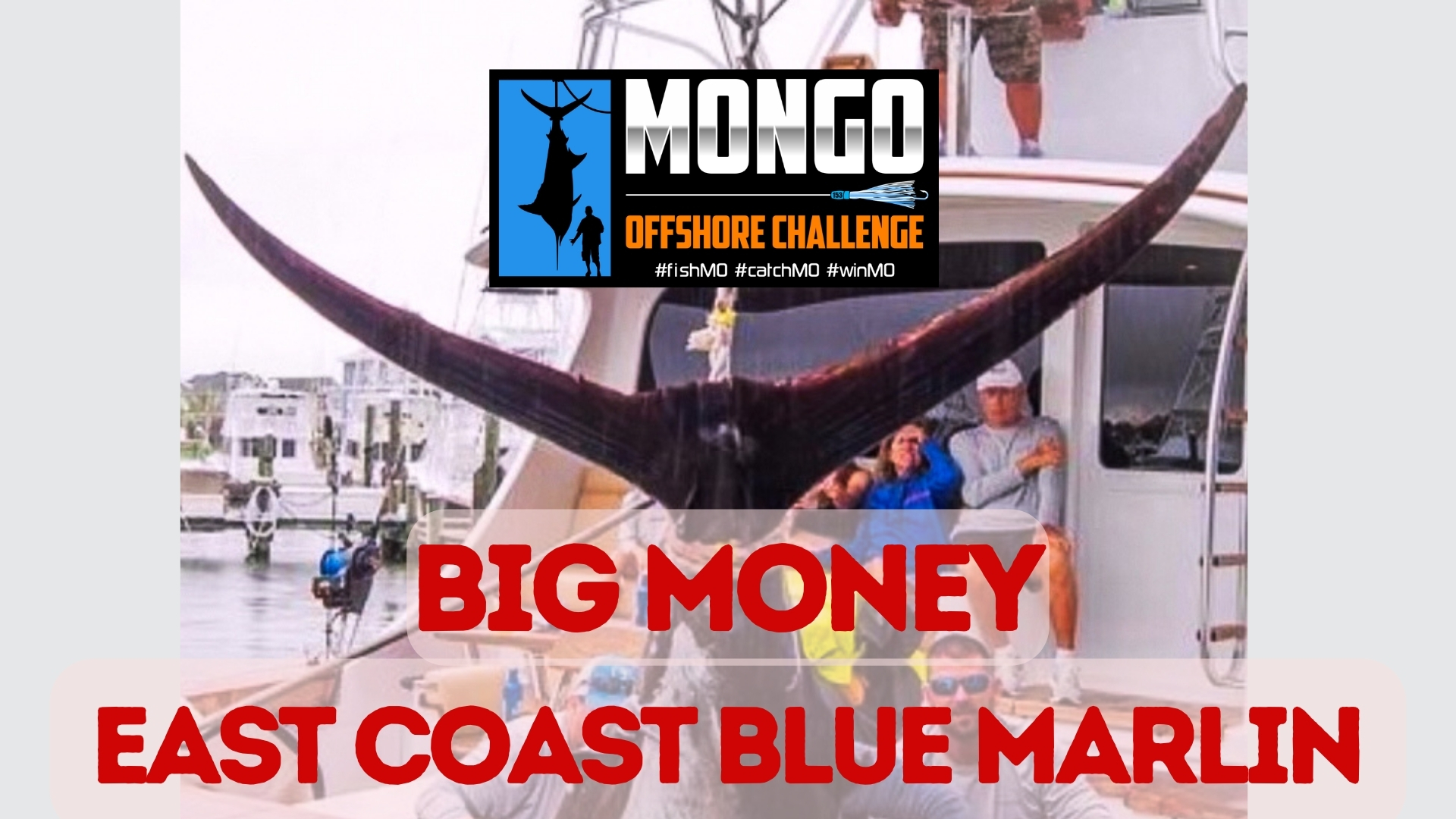
MONGO 2024: Big Money East Coast Blue Marlin

Someone in the MONGO East Coast Division is going to win a lot of money for catching a blue marlin this year.

Someone in the MONGO 2024 East Coast Division is going to win a lot of money for catching a blue marlin this year. Someone, somewhere between Florida and Massachusetts is going to hook a big fish, catch a big fish and win a big check.

$62,000 rollover money from last year is up for grabs. This money adds to this year’s entries, creating a big pay day for someone.

This fish might be caught on any day of a stretch that spans 153 days. It might be caught by a charter boat fishing one of his regulars. Maybe it will be caught by a private boat on a day of fun fishing. It might also be a blue marlin that simultaneously wins both a MONGO check and another tournament at the same time.

That’s the charm of the MONGO. The tournament is simple. Its format is straight forward. The MONGO is made for fishing.

Everyone loves catching big fish. Everyone REALLY loves getting giant cardboard checks!

One entry gains you eligibility for a whole season. Eligibility for all of the anglers that fish on your boat over the course of the season. Eligibility for all of the fish that you catch (if you weigh a fish and that fish is overtaken later in the tournament, you can weigh another one without needing to re-enter).

The MONGO is always fun. It’s always exciting. But this year brings something more.

The 2024 East Coast Blue Marlin Division brings something extra this year. It brings a whole pile of carryover cash.

2024 MONGO Registration: open February 1.

In 2023, plenty of boats fishing on the East Coast caught blue marlin that would have won the MONGO. None of these boats, however, were registered for the tournament. Plenty of people accidentally left quite a bit of money on the table. That will not happen this year.

All of the money in last year’s pot rolls over into this year’s East Coast Blue Marlin Division. It builds, automatically, with new entries into this year’s contest. That’s what makes the 2024 East Coast Blue Marlin Division even more special.

$62,000 is rollover money adds to the pot from 2024 entries. The result will make the winning blue marlin a big pay day for a big fish.

MONGO 2024 Specifics

The MONGO kicks off May 1 and runs through September 30. Registration opens soon. Base entry into the East Coast Blue Marlin Division is $2,500. If you’re fishing regularly, you might not even notice this expense (but you’d certainly notice the trophy and giant check you’d get for winning).

There are three additional optional blue marlin pots– $1,000 for the biggest fish of the season, $500 for the largest fish by the midpoint of the season and $2,000 for the biggest overall, Gulf and East Coast Divisions combined.

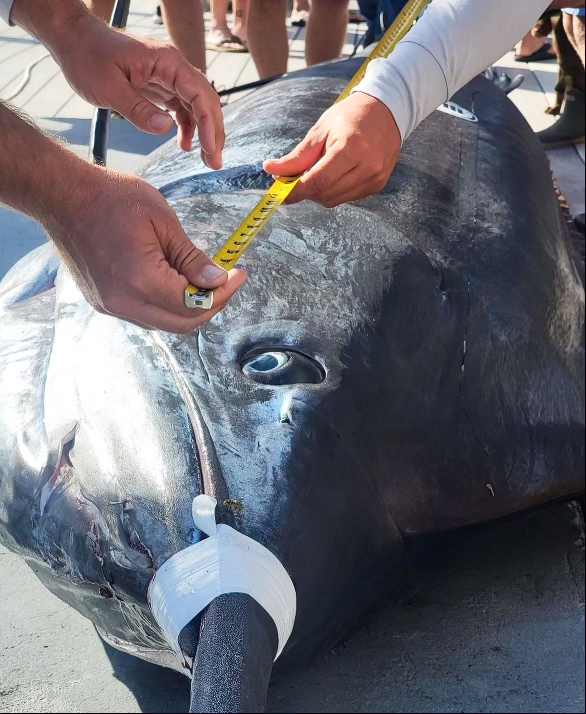
The MONGO celebrates boats that catch big fish. To qualify a blue marlin must measure 118″.

For a blue marlin to qualify as a MONGO, it must measure 118” short length. The MONGO is a boat-based tournament. A boat’s entry qualifies all anglers who fish aboard it, all season. There are no additional fees or entries required. All you need to do is to fill out your trip information in the MONGO app as you’re leaving the dock. You list your anglers for the day and register the trip with the tournament.

Your one-time registration takes care of everything. If you catch a qualifying fish in June and that fish is beaten in July, just keep fishing. If you catch another qualifier you’re still in the game.

More than Just a Blue Marlin Tournament

The MONGO is more than just a blue marlin tournament. It includes mahi, tuna, wahoo, and swordfish divisions too. Each division works the same. There’s a separate entry for each. You can enter all of them or just one.

A rundown of the 2023 MONGO champions…. 

They all work the same way– the dates are the same, the format, and rules. The biggest fish of each species wins. All you need to do is enter your boat and go fishing.

This is part of what makes the MONGO such an interesting tournament. It’s great for charter boats—it makes every day a tournament and lets people from all walks of life participate.

It’s great for private boats and weekend warriors too. The MONGO is perhaps the most accessible offshore tournament in the world. In its five-year history, boats from 18 to 105’ have participated.

The tournament lasts 153 days. That’s by design. This means that small boats can pick weather windows. Because it’s a biggest single fish tournament, you don’t need an Omni to compete.

MONGO: A Trusted Name in the Sportfishing Community

For those on the East Coast just hearing about the tournament, there’s more to the MONGO than meets the eye. Beyond the prospect of winning big money in the blue marlin division, beyond the ability to tournament fish every time you leave the dock, beyond making offshore tournament fishing accessible to thousands of anglers every year, there’s something else that makes the MONGO special.

The MONGO is a Gulf Coast sportfishing institution that brings its inclusive, approachable format to the East Coast.

The tournament was born on the Gulf Coast. The inspiration of three veterans of the Gulf Coast sportfishing community, brothers Captain Jeremy Cox and J.D. Cox and their longtime friend Brian Johnson, the MONGO was born of sportfishing.

MONGO founders Capt. Jeremy Cox, J.D. Cox and Brian Johnson aboard the Lolita. Jeremy is a longtime professional captain and veteran of the Gulf Coast tournament scene.

In its third year, the MONGO set the Gulf Coast record for participation in an offshore fishing tournament.

The tournament’s innovative idea was part of the reason for its success.  More fundamentally, the tournament has grown and expanded because its run by good, honest people who understand fishing.

The MONGO Offshore Challenge is still relatively new on the East Coast. As the MONGO grows and expands, it will host more boats in farther reaches of the East Coast. The tournament’s foundation of being straight forward, honest and rooted in the fishing community continues to be the MONGO’s calling card.  

You can feel good about your entry and about how the tournament is organized and operated. We’ve got a wide network of participating marinas and weigh stations up and down the coast.  You can feel good about fishing with us and we’re excited about what is to come.

Someone is going to win a lot of money in the 2024 East Coast Blue Marlin Division. That someone might be you. That said, you can’t win unless you enter.

A recap of the 2023 MONGO.

2023 was a banner year for the MONGO– 2 divisions, 163 teams, 16 states, 3,000-plus anglers and some giant fish. 2024 is shaping up to even bigger. 

October 23, 2023 by Elliott Stark

2023: A Banner Year for the MONGO Offshore Challenge

2023 was a banner year for the MONGO Offshore Challenge-- 2 divisions, 163 teams, 16 states, 3,000-plus anglers and some giant fish.

The 2023 MONGO Offshore Challenge was a banner year. What began four years ago as an intimate celebration of the Gulf Coast Sportfishing community, has grown into the world’s largest multi-month big game challenge. In 2023, the MONGO celebrated its 4th anniversary in style—with great fishing in two divisions that span contiguously from the rigs of the Gulf Coast to the offshore canyons of New England.

The MONGO Offshore Challenge not only showcases the incredible fishing of the Gulf and East Coasts, but celebrates the people, businesses and community that comprise the sportfishing industry in the United States. The MONGO’s network of anglers (more than 3,000), boats (162), states represented (16), and composition of sponsors make it perhaps the most expansive bluewater tournament in the world.

2023 MONGO Stats

The MONGO Offshore Challenge is a celebration of fishing. The tournament’s unique set up is purposefully designed to promote accessibility, participation and cooperation.

In 2023, the MONGO’s Gulf and East Coast divisions combined to host a total of 162 participating teams. Tournament boats hailed from 16 states—from Texas to Massachusetts– ranging in length from 21-92’. A season-long, biggest fish wins affair, the MONGO’s 153 days of fishing opens the competition to boats of all sizes and crews of all experience levels.

Searching for the biggest blue marlin, swordfish, tuna, wahoo and dolphin, tournament boats logged more than 4,000 MONGO trips in 2023. A boat-based tournament, the MONGO allows any angler registered in the trip log to take part in the tournament. In 2023, the MONGO hosted an incredible 3,000 anglers.

The MONGO Offshore Challenge partners with many of the sportfishing industry’s best and brightest.

What’s more, you can fish the MONGO while fishing other tournaments. In fact, the tournament accepts weights from over 70 of the Gulf and East Coast’s premier billfish and tuna tournaments.  Once you catch a MONGO, you can weigh it any of the more than 40 partner marinas up and down the coast.

When it was all said and done–with hundreds of boats and thousands of anglers fishing over 153 days- large cardboard checks and MONGO trophies were headed to some of the most storied docks on the sportfishing landscape. Here’s a breakdown.

Gulf Division Winners:

Blue Marlin: 723.7 pounds. Purse: $136,000
Mahi: 59.8 pounds. Purse: $32,300
Captain Dennis Bennett, owner Chris Hatcher, Salt Shaker. 58’ Viking. Baytown Marina, Destin, Florida.

Swordfish: 292.9 pounds. Purse: $51,000
Captain Mike Kubecka, Reel Rush. 33’ Americat. Matagorda, Texas.

Tuna: 224.4 pounds. Purse: $73,950
Wahoo: 77.2 pounds. Purse: $21,250
Captain Bill Staff, Sea Spray. 65’ Resmondo. Orange Beach, Alabama.

East Coast Division Winners

Blue Marlin- no qualifying fish weighed. $62,000 rolled into 2024 East Coast Blue Marlin Division
Swordfish- no qualifying fish weighed. $3,500 rolled into 2024 East Coast Swordfish Division

Yellowfin Tuna- 125 pounds. Purse: $16,000
Wahoo- 61 pounds. Purse: $11,600
Captain Jay Watson, owners J. J. Johnson and Dave Pirrung. Wide Spread, 52’ Crown Boatworks, Oregon Inlet Fishing Center, Manteo, North Carolina.

Bigeye Tuna- 246.4 pounds. Purse: $6,000
Captain Willie Zimmerman, Ro Sham Bo, 65’ Guthrie. Ocean City, Maryland.

Mahi: 60 pounds. Purse: $6,300
Captain Jack Graham. Afishionado, 50’ Holton. Oregon Inlet Fishing Center, Manteo, North Carolina.

MONGO Profiles: Stories of the winning fish and the winning crews

Central to the charm of offshore fishing are the people who are involved. Wherever you find passionate bluewater fishermen, you’ll find comradery and tradition. While the ways in which this passion and tradition are celebrated may vary a bit by region, there are a couple of things that never change.

For more on how the MONGO has forever changed the offshore tournament landscape, check this out.

The MONGO Offshore Challenge is built on two universal truths:

  1. Everyone loves to catch giant fish.
  2. Behind every great fish, lies a great story.

2023 was full of both—giant fish and great stories. Here’s some perspective from a couple of captains who doubled up, each winning two categories of this year’s tournament.

A Gulf Coast Double Header

Captain Dennis Bennett and the team aboard Salt Shaker, a 58’ Viking based in Destin, Florida, won the Gulf Coast division’s blue marlin and mahi categories. Each of these fish were not only good for a giant cardboard check from the MONGO, but for a payday in other tournaments as well.

The Salt Shaker’s 723.7-pound blue marlin won both $136k in the MONGO and $293,000 in the Mississippi Gulf Coast Billfish Classic. The MONGO dolphin cashed checks in two tournaments as well– breaking the Emerald Coast Blue Marlin Classic’s dolphin record on the way to winning the MONGO.

When describing his year, Bennett expresses gratitude, perspective and humility. “It’s pretty rare to catch a fish that big… to be part of a tournament was a pretty special deal,” Bennett explains. 2023 was Bennett’s fourth year fishing the MONGO. He has competed in both the Gulf and East Coast divisions.

The MONGO’s collaborative, inclusive layout imparts numerous benefits to those who participate. Not only can boats like the Salt Shaker compete in the MONGO and other tournaments simultaneously, but the MONGO makes every day on the water a tournament.

Bennett explains, “We make lots of pre-trips for tournaments. Chris (owner of the Salt Shaker) enjoys fun fishing. There’s always a chance to win some money on a big fish,” he says. “At any given moment we can have a tournament-winning fish. It’s really a cool format… everybody’s involved.”

An East Coast MONGO Meat Slam

Captain Jay Watson is no stranger to high profile east coast tournaments. The 2021 Big Rock champion, the Wide Spread fishes Pirate’s Cove, the Boat Builders and many others. Based out of the world-famous Oregon Inlet Fishing Center in Manteo, North Carolina over the past two seasons, Watson and the Wide Spread have won three East Coast Division MONGO categories.

In 2022 Watson won Mahi division nearly by accident. “I caught a nice dolphin. I wasn’t going to weigh it. We had it on the fillet table. I decided to take a picture of it for Jeremy (Capt. Jeremy Cox, co-founder of the MONGO),” Watson explains.

The dolphin weighed 41.2 pounds. As it turned out, it was the largest dolphin caught by a participating boat. “The fish won $24,000 by a pound. I caught it on the first day of the tournament… It held up for 152 days.”

You’ve got to be in it to win it.

In 2023, Watson won the tuna and wahoo categories. Watson caught the winning wahoo while plug fishing for blue marlin. The wahoo ate a lure as they were pulling them in to head back to the dock.

He caught the winning yellowfin while fishing with Scott Sommers, a freelance mate who was filling in for Watson’s normal crewman. The next day, Sommers caught the MONGO-winning 60-pound dolphin while filling in for Captain Jack Graham’s regular mate aboard the Afishionado. Sommers caught tournament winning fish on back-to-back days, fishing on different boats, filling in for two separate normal mates.

The 2023 winning dolphin caught aboard Captain Jack Graham’s Afishionado.

Watson enjoys fishing the MONGO and believes the tournament to be a good fit for the sportfishing industry on the East Coast. “The MONGO is really good for charter captains.  A charter captain can catch one good fish and say, ‘I beat everybody at the Fishing Center,’” Watson explains. “The MONGO is good for everyone.”

“A lot of my tournament guys chartered me to specifically fish the blue marlin in the MONGO. It’s exciting that the money rolled over,” Watson says. “If I have a charter client that wins the MONGO, I give them a free trip. It’s an extra bonus—try to win something and get a free trip. The MONGO provides a competitive advantage to charter guys who fish it.”

The three-time MONGO winner provides quite a bit of perspective about his excitement for the tournament’s future. “I might be the only guy to have won the meat slam in the MONGO,” Watson says. For his dolphin in 2022, he won more than $24,000. Watson took home nearly $30,000 more for his winning fish this year.

“We caught a good tuna. But there were hundreds of bigger wahoo and mahi caught on the east coast by boats who weren’t in the MONGO,” Watson explains. “It’s proof that you’ve got to be in it to win it.”

Captain Jay Watson, WideSpread. Oregon Inlet Fishing Center.

Fish the 2024 MONGO

In 2024 the MONGO will celebrate its fifth anniversary. What started as an intimate celebration of the Gulf Coast Sportfishing community has grown to become the world’s largest multi-month big game challenge. With east coast blue marlin and swordfish money rolling over, the tournament’s excitement builds.

There are as many reasons to fish the MONGO as there are fishermen who fish it. Here’s a few of our favorites:

  1. You can fish the MONGO while fishing other tournaments. In fact, the winning Gulf Coast blue marlin won the MONGO and the Mississippi Gulf Coast Billfish Classic. The winning Gulf dolphin won the MONGO and broke the Emerald Coast Blue Marlin Classic’s dolphin record. 
  2. East Coast Division: 2023 Blue Marlin and Swordfish Money Rolls Over. Somebody is going to win a bunch of money. As Captain Jay Watson of the Wide Spread explains, “You’ve got to be in to win it.”
  3. You’ve got to be in it, to win it. The MONGO’s minimum weights are such that every fish weighed is a good one. The winners are the tournament boats who weighed the largest fish in each division. In many cases, there were fish weighed by non-tournament boats that could have won the MONGO had they registered.
  4. Entry fees set to promote participation, not to break the bank. Entering many offshore tournaments requires a small fortune. The MONGO’s entry fees are set to promote participation. For many captains, you’ll burn more fuel in two trips (or have a larger bait tab) than it costs to enter the MONGO.
  5. Biggest, single fish wins. By competing for the largest single fish in each category, anyone can win the MONGO.
  6. Make every trip a tournament. The MONGO makes tournament fishing accessible to many people who might not otherwise get the chance to participate. For the tournament billfishing crew, this means the opportunity to win money any day on the water. For the charter angler, this means the opportunity to compete in a high stakes, high profile offshore tournament in a way that is not otherwise possible. 

To register for the 2024 MONGO Offshore Challenge, please visit: https://www.mongooffshore.com/

People to fish with before you die opening graphic
August 7, 2021 by Elliott Stark

Kiwi Van Leeuwen: People to Fish With Before You Die

As a general rule, it seems that the more a person has seen and done… the more diverse his or her baseline of experiences… the more interesting they become.

Many are the people who can catch fish. Few are the people to fish with before you die… Kiwi is one such person.

Captain Chris “Kiwi” Van Leeuwen is a hell of an interesting guy. Like somebody named “Tex,” you might guess where Kiwi grew up.

If his nickname didn’t give it away, the accent and content of Van Leeuwen’s speech belie his origin. Kiwi delivers his stories (and he surely has some good ones) with a characteristic ease and understatement that is every bit New Zealand.

These days you can fish with Van Leeuwen aboard his 40’ Allure II while staying at the lodge that he and his wife, Liz, own and operate in Guatemala.  The Sailfish Oasis, as it is known, is a wonderfully appointed backdrop that is perfectly suited to making fishing stories.

You can’t possibly be in a bad mood when walking into the Sailfish Oasis.

A stay here is welcoming and hospitable. The food is good and the drinks are cold—but it is the ambience of the place that makes it remarkable.

Seared tuna while fishing on the Allure II. You couldn’t find a better, more fulfilling dining experience in a Michellin star restaurant.

The Van Leeuwens seem to enjoy life—their resort exudes this fact. Some places make a big spectacle to try to make you feel welcome—a bottle of champagne at check type of deal.

There is no pretense or flash in the Sailfish Oasis’ brand of hospitality. It is rather the welcome that you feel when you are surrounded by nice, authentic, interesting people who have invited you to spend some time with them. 

The Allure II.

This brand of hospitality does not always result from the transactional arrangements of charter fishing. It is the type of welcome that you’d like to repay over a beer and a steak at your own house.

This is part of what makes them people to fish with before you die.

Guatemala

Then there is Guatemala… A place straight out of a Hemingway novel.

A big black marlin…

The Pacific Coast of Guatemala is as productive of a sailfish fishery as there is in the world. It is not uncommon for boats fishing here to see 50 fish—days of catching 100 of them are not out of the question. 

Think about these numbers in context…

For most of the world’s fishermen (from an aggregate, strictly numbers context that includes freshwater and inshore anglers) catching a single Pacific sailfish might be the crowning achievement of their angling lives.

Yes, you are reading that correctly. These guys caught 265 sailfish on a trip to fish with Kiwi.

Guatemala’s blue marlin fishery is also very good. There are piles of dorado here and the tuna fishing can be pretty good too.

blue marlin at the side of a boat with kids
There is perhaps nothing in the world that is better than catching blue marlin… It is that much more fun when the seas are clam as a lake. Photos courtesy Sailfish Oasis.

It’s waters generally very calm, most always deep blue. Were that not enough, there are lots of lots of sea turtles to look at too.

The place is something of a legend in the fishing world. The upwellings of nutrient rich waters—brought to the surface after deflecting off of the walls of underwater canyons—support one of the most extravagantly productive big game fisheries in the world.

Kiwi’s longtime mates, Julio and Enio Morales are great deckhands and a joy to fish with.
Los hermanos Morales son buena gente y marineros de alta abilidad.

Guatemala’s insane fishing—some captains here release an incredible 2,000 sailfish and 100 blue marlin in a year- has been attracting dedicated, adventurous fishermen from around the world for going on three decades. It is in this place that Guatemalan captains mix with Americans—both of the mainland and Hawaiian variety— and a pronounced South African and New Zealand influence.   

Captain Chris “Kiwi” Van Leeuwen receiving his top Pacific Sailfish Captain award from The Billfish Foundation.

The Charm of the Place

Those first visiting might be surprised that the place is such an enduring Mecca for anglers. The coastline here offers none of the high rises of Miami or sparkling luxury of some places within Costa Rica.

The fact that Guatemala has perhaps (and you could make this case quite reasonably) the best bluewater fishing in the world without all of the bullshit is part of what makes it so wonderful.  It’s a fisherman’s fishing destination…

A Guatemalan fire drill in the cockpit of the Allure II. A pack of five sailfish can teach you to dance in a hurry!

If you’re after an experience that includes golf, going to the mall, ziplining with monkeys, eating at $500 buffets, petting the stingrays or hugging caged porpoises, you might should go someplace else. If you are looking to catch a mess of sailfish, tangle with multiple blue marlin (with maybe a black or a stripe mixed in) while fishing in predictably calm water, Guatemala is pretty high on the list.

Hordes of sailfish (and the people who come to catch them) make Guatemala all the more interesting.

An Interesting Guy

The fishing in Guatemala is good. There exists a hand full of operations that, like Kiwi’s, provide charter services here.

Most all of them are great. In fact, this “People to Fish With Before You Die” campaign will be back to the same dock… probably more than once. 

The reason to fish with him is not just the fact that Captain Kiwi Van Leeuwen is a highly skilled captain who fishes in an incredibly productive place. In fact, that’s not the half of it.

Chris and Liz Van Leeuwen are great hosts and wonderfully nice people. The stories and experiences they’ve accumulated around the world are incredible.

This fact more proximately results from the combination of his fishing skill and his laid back take on the world. As a general rule, it seems that the more a person has seen and done… the more diverse his or her baseline of experiences… the more interesting they become.

An International Fishing Odyssey

The Van Leeuwens have seen and done. The journey that has taken them to where they are could never have happened by accident. It could well be interpreted as a commitment to living a full and exciting life.

bay and mountains in new zealand
lake and mountains in new zealand
Peaks of Darran Mountains reflecting in a Lake Marian, Fiordland national park, New Zealand South island
guyser in new zealand
scenic coastline of New Zealand
Surrounded by such natural beauty, it is little wonder why the people from New Zealand seem especially good with a story.

In my experience, spending time in the presence of people who have done such things is good for you.

Kiwi hails from the North Island of the Bay of Plenty on New Zealand’s east coast. Growing up 40 minutes inland, he cut his teeth traversing the bush and fly fishing for rainbow and brown trout in lakes and rivers.

New Zealand is a magical place… full of wonder and giant red stags. Like this one shot by Johnny Van Leeuwen.

Van Leeuwen’s early saltwater adventures took place aboard his father’s buddy boat that they launched out of Whakatane—targeting yellowfin tuna, (yellowtail) kingfish, and snapper. It wasn’t until Kiwi was in early 20s that he began to venture offshore.

It was fishing out of Waihau Bay (and tangling with his first marlin) where his affliction began. He was bitten by the marlin bug.

When the marlin bug creeps up and bites you, there can be benefits to heeding its call…

Van Leeuwen then decided to go overseas to learn bait and switch fishing and big game fly fishing. In New Zealand in the 1990s, most offshore fishing in volved dragging lures. 

Overseas

Chris and Liz were married and left New Zealand in 2000. After spending a year in Europe—fishing for bluefin tuna around the Straits of Gibralter, the Van Leeuwens headed to Florida.

Aerial view of the Straits of Gibraltar connecting Africa and Europe, Spain and Morocco, the Mediterranean Sea and the Atlantic Ocean.

It was here, through a series of connections, that Kiwi met Tim Choate. Choate hired Van Leeuwen to run a boat in his charter operation in the Galapagos Islands.

After 10 months of great fishing and interesting experiences (a man never commits another man’s best stories to writing… you’ll have to ask Kiwi about these yourself), Van Leeuwen was off to fish at Choate’s operation in Guatemala.

The Galapagos is the land of giant tortoises, giant striped marlin, and incredible scenery. Photo courtesy Captain Nico Schiess– Tesoro Sportfishing, Galapagos (www.tesorogalapagos.com)

That was 2002. In 2005, Choate’s operation shut down but Kiwi stayed in country and kept fishing. If you plan on going offshore fishing while in the Galapagos, there are plenty of captains nearby with sportfishing yachts that can put you on the bite.

In 2010, the Van Leeuwens bought their lodge. After a nine-year partnership with Texans Hill Dishman and Craig Johnson, Kiwi and Liz bought the Allure II in 2016.

Today they own and operate both the lodge and the boat. They can accommodate groups up to 20 people and have arrangements to fish up to six boats.

People to Fish With Before You Die

Some 20 years after leaving their New Zealand, Chris and Liz Van Leeuwen not only own a wonderful boat and fishing lodge in Guatemala, but an incredible book of stories, experiences and perspective. From the mountains of New Zealand to the Galapagos Islands to the Straits of Gibralter and the incredible fishing on Central America’s Pacific coast, Captain Chris “Kiwi” Van Leeuwen has seen (and caught) it all.

This perspective—and the fact that self-reliant, adventurous people who live life on their own terms are often the most interesting— is palpable upon walking into the Sailfish Oasis. A humble, understated guy (who would never tell you this himself), Captain Chris “Kiwi” Van Leeuwen is most definitely one of the people to fish with before you die.

May 14, 2021 by Elliott Stark

2021 MONGO: A Record Breaker

The 2021 MONGO Offshore Challenge set a new Gulf Coast bluewater tournament record with an incredible 132 participating boats.

The 2021 MONGO Offshore Challenge is a record setting event. Building on a first year that produced 66 teams, an Alabama State Record Blue Marlin, a Texas Junior Swordfish Record and yellowfin tuna division that was won on the 153 days tournament’s last weekend, the MONGO has gone where no tournament in the Gulf has gone before.

The Chasin’ Tail. A 2021 MONGO participant.

The 2021 MONGO Offshore Challenge set a new Gulf Coast bluewater tournament record with an incredible 132 participating boats.  These boats represent all of the five Gulf Coast states, ranging from southern Texas to the Gulf Coast of Florida.

The tournament’s format is the same. It is a Gulf of Mexico wide, season long quest to catch the biggest (most huMONGOus) blue marlin, swordfish, tuna, wahoo and mahi.

The tournament is chock full of weather windows, is designed to get people out fishing (its rules are designed to encourage fishing… not make people do anything crazy), and is a boat-based event that permits anyone fishing on the boat during the season to participate. Boats also have the option to enter or not enter any category they wish. Participants can get into a world class, bluewater tournament for as little as $500.

2021 MONGO Fleet

Illustrating the MONGO’s universal appeal, participating boats range from a 21’ center console to a 105’ Cajun expedition vessel. Of the 132 boats:

  • 70 are fly bridge sportfishers.  12 of which are enclosed bridge boats;
  • 31 mono hull center consoles;
  • 22 catamaran center consoles;
  • 8 express boats, and;
  • 1 expedition vessel—that, complete with outriggers, trolls everywhere it goes at its top speed of 10-knots. The guys on the C-Quest crush it and have a great story, too.
Here is why the MONGO format is so fascinating.

The Gulf Coast bluewater tournament culminated in a wild wave of registration that lasted until the final minutes of the deadline— 11:59 pm on the night of April 28. The last day of registration met with tournament organizers Captain Jeremy Cox, J.D. Cox and Brian Johnson fielding calls until past 11:00 at night and registering more than 40 last minute sign ups.

The field includes nine charter boats. 

Category Breakdown

Like last year, the big ticket category is the blue marlin. The MONGO’s format—with a 118” minimum and payment only to first place—encourages release of the most blue marlin encountered in the Gulf.

The 2020 MONGO champion blue marlin, an Alabama state record.

Not only is the 118” threshold a high one, but payment of only one spot means that the threshold increases with each fish brought to the scales. In this way, MONGO lives up to its motto, “Let the small go so that they can grow!”

The blue marlin category—with a $2,500 entry—features 53 boats competing for a purse of $112,625.

2021 MONGO divisions.

The tournament’s largest category by entries is the mahi division. 104 boats, each wagering $500, are competing for a purse of $61,625. This prize includes the roll over from last year’s event—when no qualifying dolphin were brought to the scales. 

A Showcase of the Gulf Coast Sportfishing Community

The 2021 edition of the MONGO greets participating boats with a new website, a real time app that allows boats to check in anglers and check out for days fishing, and even more weigh stations than last year—20 in total.

The weigh stations span the Gulf Coast from Port Isabel, Texas to St. Petersburg, Florida. MONGO weigh stations are located in each of the five Gulf states. 

In addition to the expanded weigh station network, the 2021 MONGO features a newly designed website and app.  Boats can check out for days of fishing and register anglers through the app. While the checking out must be done at the time of leaving the dock, captains can register anglers ahead of time—saving time.

The app and website not only serve the tournament and anglers—providing real time leader updates, but also the tournament’s sponsors. As the Gulf Coast sportfishing scene is a close knit community, the tournament takes pride in its ability to showcase businesses and products that support it. 

2021 MONGO: Early Action

The first day of the 2021 MONGO’s 155 fishing days was April 29. While the Gulf’s bluewater season is just kicking off, the action is coming in hot.

Lainey James reeling in the first fish calcutta.

Angler Lainey James on the 42’ Freeman, Necessity, is taking home the first fish Calcutta with a 211 pound qualifying swordfish. At the time of this writing, Game Plan III is leading the swordfish division with a respectable 258-pounder. 

The Game Plan III’s 258 is currently leading the swordfish division (at the time of writing).

The wahoo division also has an early qualifier. The Pensacola-based Rigged Right, posted a 63.5 pound blue torpedo that is holding the lead in perhaps the tastiest division of the tournament.

The Rigged Right’s stud wahoo.

2021 MONGO Updates and News

For updates on leaderboards and MONGO events along the Gulf this summer, check out the tournament’s website: www.MONGOoffshore.com . FishTravelEat is excited to relate more great MONGO fishing stories as they happen… 

February 1, 2021 by Elliott Stark

Cancer Survivor, Blue Marlin State Record and MONGO Champion

“I asked the doctor if I could fish. He said yes, but I told him, “I’m not going perch fishing, I’m going to be sitting in the chair fishing for blue marlin!’”

Fishing stories come in many shapes and sizes. Few have more dimensions than the tale of 2020 MONGO champion blue marlin…

2020 was an up and down year for many. While the year will be remembered for its roller coaster of emotions by just about everyone, few people escaped the year with a more representative tale than Ginger Myers.

Ginger is a wonderfully nice woman who, along with her husband Keith, owns the 72 Viking, Fleur de Lis. Ginger’s Louisiana roots come through clearly when speaking with her—both in the manner of her speech and its content. Like any good Cajun, Myers can tell a fishing story… and does she ever have a fishing story to tell.

Were it not enough that the Fleur De Lis set the all-time Gulf of Mexico blue marlin record with 63 in the year, but they also won the MONGO and set the new Alabama state record. Any time you catch an 851-pound tournament-winning fish that sets a state record you’re likely to have a story. But considering the circumstances surrounding Ginger Myers, the fish and the tournament are more of an after thought than the main idea.

Ginger Myers: Cancer Survivor, Blue Marlin State Record Holder and MONGO Champion

Yes, you read this correctly. The timeline that leads up to July 5, 2020—the day when she caught the fish– is an incredible one.

“I was diagnosed with cancer in February 2020,” Myers begins. “My big surgery was in March. I then experienced some complications and had to have two more surgeries.”

As Myers recovered from her third of four surgeries, summer was fast approaching. The Fleur De Lis was an early registrant in the MONGO and had designs on winning the Blue Marlin World Cup on the 4th of July.

The Fleur de Lis, a 72 Viking, based in Orange Beach, Alabama.

The crew was planning the trip as Ginger visited her doctor for a surgical follow up. “I asked the doctor if I could fish. He said yes, but I told him, “I’m not going perch fishing, I’m going to be sitting in the chair fishing for blue marlin!’”

Satisfied with her recovery, the doctor gave Myers the go ahead. This doctor’s note set up an encounter with a sea monster.

Captain Scooter Porto

Captain Scooter Porto is hell of a fisherman (he was at the helm for all 63 of those blue marlin this year). A humble, thoughtful person, I would be skeptical of anyone who claims not to like Captain Scooter. It was Porto who Myers credits with getting Keith and Ginger into blue marlin fishing.

After a long and accomplished tenure running the Reel Addiction for Rocky Jones in Pensacola, Porto’s position at the helm of the Fleur De Lis is good fit. It seems, in fact, the type of arrangement that people aspire to—the type that benefits everyone involved.

Veteran Gulf Coast Captain Scooter Porto is a hell of a nice guy who is also a hell of a marlin fisherman.

“It was the day after the World Cup. We decided to stay out because the fishing was good,” Porto begins. The Blue Marlin World Cup is a one day, world wide quest to catch the biggest blue marlin. The Gulf of Mexico holds it own against the many of the world’s great big fish destinations—Bermuda, Hawaii, Madeira, Cape Verde.

A Trip to Remember

“We caught a few fish (on the 4th of July), but not the right one,” Porto recalls. “In the morning, we had four bites. We had a fish on every bait we put out.”

Why is catching a blue marlin such an amazing thing to do? Read this for some context…

The Fleur De Lis was fishing was live baiting using blackfin tuna. They were fishing in the same area where Captain Jason Buck caught a 650-pound blue the day before—a fish that would contend for, but ultimately fall short of the 964-pound World Cup winning fish that as caught in Cape Verde.

“We decided to make one more pass before heading in. We didn’t make it around the rig before this fish bit,” the veteran explains. As fate would have it, it was Ginger’s turn to be in the chair. “It never jumped and we didn’t realize how big it was,” Porto recalls.

“Once we hooked it, I was reeling and reeling. The fish never fought very hard until we got her near the boat,” Myers explains. When the fish neared the boat, something changed. “She pulled so hard that it stood me up in the chair. I said, ‘Oh no… You’re not winning!’”

Myers estimates the fight around 20 minutes. “We weren’t really prepared to kill the fish. I looked down and saw her and thought she might qualify for the MONGO. The state record was an afterthought,” Porto describes.

“We got her to the side of the boat. Five men, with four gaffs… it took some doing. It took longer to get her into the boat than it did for me to reel it in,” says Myers with a laugh.

Headed to the Dock With a MONGO Blue Marlin

Upon wrangling the sea monster of a blue marlin onto the boat, the Fleur de Lis was faced with a new dilemma. Looking down at a cockpit full of blue marlin, they would need someone to weigh the fish.

The problem for Porto and the Myers was that it was Sunday and the weigh at the Wharf in Orange Beach, Alabama was closed. Scooter called in to tell them that they were headed in with a huMONGOus blue marlin.

After a few calls and offering something in way of a financial incentive, the scales opened as they arrived at the dock. Thinking it would be a normal, sleepy Sunday afternoon, the Fleur de Lis backed its way in the slip.

Awaiting them was a carnival atmosphere. Word of the big fish had begun to spread around Orange Beach and over social media. Among the crowd of onlookers were MONGO tournament directors—Captain Jeremy Cox, his brother JD, and friend Brian Johnson were on hand to greet them and film what would come.

“There was a little boy in the crowd. He looked up at the marlin and asked, ‘Who caught that fish?’ I said, ‘Me!’” recalls Ginger with a smile. He couldn’t believe it.  “’No way!’ the boy said.” 

The Fish of A Lifetime

Marlin fishing is a team game. Success requires many skillful participants who all do their part. The Fleur de Lis is no different.

Congratulations to Keith and Ginger Myers, Captain Scooter Porto, mates Zac Taylor and Jake Glass and Nate Dennis– the photographer/chef/ do-it-all crewman who specializes in drinking FireBall. Corey and Chris Stagg are anglers who round out the team.

“Catching that fish was the highlight of our year,” concludes Miss Ginger. “We’re going across the board in the MONGO this year.”

Catch them if you can…

Fish The 2021 MONGO
November 25, 2020 by Elliott Stark

The MONGO: Changing the Tournament Landscape

To win the MONGO, you must simply catch the biggest blue marlin, swordfish, yellowfin tuna, wahoo or dolphin in the Gulf of Mexico.

While the MONGO Offshore Challenge is a fishing tournament, the event is much more than that. As much as anything, the MONGO showcases the incredible fishing and camaraderie within the Gulf Coast sportfishing community.

The MONGO creates an umbrella from which boats from Florida, Alabama, Mississippi, Louisiana and Texas can compete in the quest to catch the biggest fish. The sportfishing scene on the Gulf Coast is an interconnected community.

Boats from all five states not only fish similar conditions, but share a kindred relationship that is more prominent here than in other places. As much as Gulf boats enjoy trying to catch bigger fish than each other, captains here are the first to help and welcome each other on their travels.

Venice, Louisiana’s Captain Hunter Caballero and Paradise Outfitters took home the top tuna in 2020.

While the MONGO Offshore Challenge showcases the Gulf Coast’s great fishing (to win the 2020 edition, it took an 851.9 pound blue marlin, 313.2 pound swordfish, 197 pound yellowfin tuna, and 73.3 pound wahoo), the tournament is more than a fishing profile. The MONGO Offshore Challenge is a celebration of the Gulf Coast sportfishing scene and all of the things that make it so great.

What is the MONGO?

The MONGO Offshore Challenge is a season long quest to catch the biggest fish in the Gulf of Mexico. The tournament lasts 153 days—from May 1- September 30, 2021. 

The MONGO is a season-long proposition with a simple objective. To win the MONGO, you must simply catch the biggest blue marlin, swordfish, yellowfin tuna, wahoo or dolphin in the Gulf of Mexico.

This approach relates directly to the prime objective of most anyone who has ever fished: catch big (huMONGOus) fish.   The tournament’s format results in many benefits to the Gulf sportfishing community and sponsors.

These include:

1. The MONGO is inclusive.

Because the tournament is 153 days long, boats of all sizes can participate. In 2020, boats from 25’- 95’ fished the MONGO.

The 66 participating teams in 2020 included center consoles, express boats, multimillion-dollar sportfish boats, novice private boats, charter boats, and professionals– all fishing on the same, level playing field.

Not only is the tournament open to boats of all sizes, but fish caught in other Gulf of Mexico tournaments are eligible to win the MONGO. The same fish that can win the Gulf Coast Triple Crown or the Texas Legends can win the MONGO. 

Any one who has ever picked up a fishing pole has dreamed of catching a huMONGOus blue marlin. This blue won the 2020 MONGO.

That said, the winning fish could also be caught by a boat and crew and that normally doesn’t fish tournaments.  That is part of the charm of the MONGO—everyone is welcome.

2. The MONGO promotes fishing.

The MONGO’s format allows participating boats to fish as often as they like. Whether it be simply picking a weather window or making it a special trip, the MONGO makes everyone a tournament angler.

The MONGO gives charter captains like Destin’s Adam Peeples (www.oneshotcharters.com) the chance to make everyone a tournament angler.

The season-long approach not only invites smaller vessels, but the duration of the event makes it possible for anyone to win. Winning the MONGO takes one big fish… a fish that can be caught any day between May 1 and September 30.

Why is fishing such a good thing? Many reasons…. Here’s a few.

Traditional tournaments—those that last a weekend and require a combination of release numbers and a big fish or two, increasingly require a dedicated, professional crew to consistently compete. By opening the competition to the biggest of each species caught over the span of 152 days, the MONGO creates an equal opportunity, all are welcome environment that results in more boats spending more time on the water.

3. The MONGO is geographically expansive.

From Port Isabel, Texas to Key West, Florida all 1,680 miles of US Gulf Coastline are in bounds. In 2020, all five Gulf States were represented in MONGO’s participating fleet.

Sportfishing boats docked behind Boshamps’ in Destin, Florida.

Not only can boats fish anywhere in the Gulf of Mexico, the MONGO works with a network of Gulf Coast marinas to allow captains to weigh their catch across the Gulf. Participating marinas—the facilities where MONGO catches must be weighed—are located in all five Gulf States.

4. The MONGO’s price tag invites participation.

These days, the price tag to enter big game sportfishing tournaments can set a barrier to entry. Including entry fees and calcuttas, the price tag to go across the board can surpass $80,000.  Investments of this magnitude effectively limits participation.

The MONGO is not only priced to promote participation, but captains can choose their targets. Blue marlin entry is $2,500 per boat… wahoo and dolphin are $500 for the entry.

This pricing structure opens participation to boats from across the Gulf of Mexico—whether or not the owner of the boat can afford a private island in the Caribbean.  All are welcome—biggest fish wins.

The 2021 edition of the MONGO will feature two new bonus, optional entries. The first is payable to the first team in each division that catches a fish that meets the tournament’s minimum size.

The minimums are set high to promote conservation. After all, the tournament’s motto is: “Let the little ones go so they can grow!”

The second optional entry is a winner take all entry open to the biggest fish in each division.

5. The MONGO is boat based… everyone who comes on the boat can fish.

The MONGO is set up to allow everyone who comes on the boat to participate. The MONGO Offshore Challenge has an app that allows captains to check in before each trip.

When checking in, captains list the anglers on they have on board. Some boats have the same group of five guys fishing every trip. Others have put together whichever of their buddies can make the trip at the time.

The fact that the tournament can accommodate either scenario is part of the MONGO’s charm. The tournament’s layout promotes fishing and participation—rather than stifling boats with rules and regulations.  


The benefits of this set up are especially apparent when it comes to charter boats. Not only can every angler fishing on a participating charter boat be a tournament angler… but they can win the tournament any day of fishing.

In fact, a charter angler on the Breathe Reel Deep out of Orange Beach caught the winning wahoo. Paradise Outfitters in Venice, Louisiana put a charter customer on the winning tuna as well.

6. The MONGO is just getting started.

2020 was the inaugural MONGO Offshore Challenge. In spite of the uncertainty that surrounded much spring of 2020, the MONGO had a fleet of 66 boats.

With a successful year one under its belt, the MONGO Offshore Challenge 2021 looks bright. Given a total 2020 payout of $144,550 (and the mahi division’s $17,425 rolling over to 2021), the future is bright for the MONGO. 

November 10, 2020 by Elliott Stark

Fishing & Eating Across the Upper Coast of Texas

The result makes for a great line of BS and group of people who are culturally (and perhaps even biologically) predisposed to enjoy hunting, fishing and eating...

What follows is a fishing and eating tour of the upper coast of Texas. For some reason, in spite of its great food and incredible fishing opportunities, this region has never really received the recognition it deserves.

When it comes to fishing, hunting and eating opportunities—and interacting with really nice people, the place is really hard to beat.

https://youtu.be/9uMaEXhhB6g

The same marshes and wetlands that make the redfish and speckled trout fishing so good produce the shrimp, crabs and oysters that you need to make gumbo, po’ boy sandwiches and crawfish etouffee. In this southeastern corner of Texas Cajun infleunce mingles with traditional Texan culture.

The result makes for a great line of BS and group of people who are culturally (and perhaps even biologically) predisposed to enjoy hunting, fishing and eating all of the wonderful things that can be made with the regional bounty provided by the place that they live.  

The blue water fishing is really, really good too.

  • Crawfish Etouffee from Larry’s French Market
  • A Texas swordfish
  • You haven’t lived until you’ve met a dozen fried crabs.
  • Gumbo. Get some.
  • Yes, in Texas crawfish are measured by the shovel full.
  • God bless Texas…. and crawfish.
  • Offshore fishing in Texas.
  • Gulf caught shrimp. Jumbos.
  • The upper coast of Texas is the land of bull redfish.
  • Open spaces.
  • Captain Jeff Wilson– a nice Texas blue marlin.
  • Jeff Wilson– a nice blue up top.
  • Captain Jeff Wilson– a stud swordfish up top.
  • If you like eating, Larry’s French Market might as well be Disney Land.
  • Swordfish steak.
  • Bellville Meat Market. Meat is their middle name.

Food Recommendations

If you don’t like to eat meat or seafood, you’re missing out on much of what the Upper Coast of Texas has to offer. If you do like meat and seafood, you’ve hit the jackpot.

Bellville Meat Market
Bellville, Texas.

Their slogan is “Meat is our middle name.”

Not only are these folks really nice, but they process, smoke, prepare, sell and ship damned near every type of meat/ meat accessory you could ever want. A visit to the shop not only makes you happy to be alive, but provides a reminder of what is really important in life.

Larry’s French Market & Cajun Cafeteria
Groves, Texas.

Specialties: Louisiana Crawfish Boil, Barbecued Crab, Cajun Fried Turkey, Cajun Seafood Buffet, Etouffee & Gumbo, Fried or Grilled Fish

Were these specialties not enough, Larry’s turns into something of a Cajun honky tonk at night, featuring live music. It’s buffet style lunches feature a broad cross section of incredible cajun dishes– many of which (ie crawfish cornbread and barbecued crabs) are not popularly known for some reason.

Larry’s is a wonderful place that is certainly worth the trip.

Fishing Recommendations

If you’re interested in checking out the Upper Coast of Texas’ fishing opportunities, shoot us an email and we can point you in the right direction. The inshore fishing is great.

The offshore fishing is really good too. It can be bit of a run, but once you’re in bluewater the opportunities to tangle with big fish are plenty.

October 6, 2020 by Elliott Stark

Why You Should Join The Billfish Foundation

Whether you've caught 1,000 marlin or planning to catch your first, a TBF membership is good for you and the fish. Here's why you should join The Billfish Foundation

Giant black marlin boatside.

The Billfish Foundation is a science based conservation organization that works to promote healthy fish populations and a thriving sportfishing industry. They do great work. Whether you’ve caught 1,000 marlin or are planning to catch your first, here’s why you should join The Billfish Foundation.

If you’re reading this, there’s a better chance than not that you like fishing. In fact, I’ll bet that you’d rather be chasing something around offshore than doing whatever it is that you happen to be doing now.

If you fit the profile of many fishermen, the thought of ocean conservation does not engender the same excitement as the thought of fishing. This disconnect—that between the thrill of catching a marlin and all of the hard work that goes into making it possible— exists for many people.

The Billfish Foundation's tag card
Everybody gets excited to fill out tag cards. The membership cards should be no less exciting.

What if the investment in conservation were not some abstract chore that you feel somehow obligated to perform, but rather a part of your fishing routine?

That which follows is a new take on the idea of conservation.

What if being part of keeping fish populations healthy were as celebrated a fishing ritual as filling the Yeti with beer before heading offshore? After all, why shouldn’t seeing your TBF member card bring the same pride and happy recollections that you get when you post the picture of that swordfish you greased last week?

After thinking on the subject, I believe that it should. What follows is not only why you should join The Billfish Foundation, but how your membership—and being part of a team that does incredible work on our behalf—reflects your identity as a sportsman.

Reason 1: Fishing Is A Wonderful Compilation of Passions

Were you to talk to my wife (or any other person “non-fishing” individual who shares his or her household with a fisherman), you might discover that the passion for the activity is all consuming. It’s not something that ends when you step off the boat.

A fisherman likes to read about fishing. He hangs pictures of fish around his home and office.

He wears clothes with fish on them… and Costa sunglasses made for fishing (even in the grocery store). She probably has a few fish-related bumper stickers on her truck.

Why do fishermen surround themselves with all of this paraphernalia? Scottish politician John Buchan once said, “The charm of fishing is that it is the pursuit of what is elusive but attainable, a perpetual series of occasions for hope.”

A Fisherman’s Identity

There is a corollary to this wonderful quote that relates to a fisherman’s identity.

A fisherman surrounds himself with fish pictures and references because each brings him joy. Each is a reminder of his passion.

The act of joining The Billfish Foundation is, in fact, no different. Wearing the TBF member t-shirt is not unlike the sentiment expressed by the Cajun guy wearing his 2019 LSU National Champions shirt.

Thibodaux’s shirt tells the world that his team kicked your team’s ass. Your TBF shirt expresses your membership not just in an organization, but in an activity (catching marlin and sailfish) that is perhaps the most exciting thing in the world.

What’s all the fuss about marlin fishing? Catching one can change your life.

Reason 2: Conservation IS WORKING

Under normal circumstances, ocean fish conservation is a very difficult thing to market. When selling people on the importance of being involved in something, cause and effect is a great tool.

People enjoy being part of something in which they can see their contribution working. Pay $10 and the tree foundation will plant a tree with your name on it…

Give $5 to the cat people and they’ll feed a herd of strays for a week. You might even get a cat bumper sticker… meow.

A herd of stray cats in a city.
Cats are cute and all, but they ain’t got shit on helping marlin and sailfish.

When it comes to conserving ocean fish, there are fewer options to show how an individual contribution makes a difference. The oceans, after all, are giant places and fish swim thousands of miles across them.

Tagged white marlin marlin map
The scale of marlin conservation exists in terms of ocean basins.

Add to the sheer size of the oceans (the Pacific Ocean is 12,000 miles wide), that there are hundreds of thousands of hooks and nets deployed in every ocean trying to kill and sell the fish that we love to catch. With all of commercial fishing interests in the world—and the global market into which they sell their catch—it tends to be nearly impossible to control, quantify, or regulate harvests of pelagic fisheries on a meaningful, global scale.

The combined scale and complexity of ocean conservation makes many people feel like there is nothing else they can do aside from practicing catch and release. This would be a perfectly reasonable sentiment but for the fact CONSERVATION IS WORKING (and The Billfish Foundation is directly empowering it).

Here’s the Proof

The Atlantic Ocean provides all the proof you need. The present is something of a golden age for sportfishing in the United States.

No matter what kind of big ass ocean going fish that you are after, people are catching more of them now than they did 15 or 20 years ago. This is not a word of a lie…

Swordfish

Man posing with large swordfish  on a boat
Captain Anthony Lopez of the Lone Star Fish Company is one of the many fishermen who benefit from the resurgence in the broadbill swordfish fishery in the United States.

From Nova Scotia to Texas—and all of the waters in between—sportfishermen are literally catching the Hell out of broadbill swordfish. Not only are the numbers ridiculous, people are whacking giant, Zane Gray sized swords.

Nick Stanzcyk caught an Islamorada dinosaur that weighed 757 pounds. From the canyons off of the northeast to the Gulf of Mexico—deep dropping in the day and drifting at night, there are swordfish everywhere. 

In fact, there are so many of these tasty creatures swimming around that it is easy to forget that the swordfish fishery was closed commercially in 2001 because there were not enough of them. After nearly two decades of targeted conservation work and responsible management, the fishery is wide open for all to enjoy.

The Billfish Foundation has been involved in every step of the way—fighting those who would open zones closed to long lines and working to retain international quota for the United States.

White Marlin

White marlin are perhaps the best example of how well and intelligently The Billfish Foundation works on our behalf– and why you should join them.  The fishing for these things is so good these days that we take for granted that every year boats out of Virginia Beach and Ocean City will put up a 50 fish day or two.

White marlin boatside before release.
If you’ve had a banner white marlin day (or would like to plan on having one), why not join The Billfish Foundation?

Whites are thick in the DR, the Bahamas, the Carolinas, and the Gulf too. They are so plentiful in fact, that we may overlook that in 2001 there was proposed legislation that would have listed the damned things as endangered.

The Billfish Foundation—as it fights for conservation of the fish that we like to catch, also fights for the sportfishing industry. TBF, just as it worked to promote responsible white marlin management, tenaciously fought listing of white marlin as endangered.

Why would TBF have fought such a measure? To keep us fishing, that’s why.

If something is listed as endangered, all kinds of rules are put into place to moderate gear that might accidentally catch them. That would have meant rubber hooks on your blue marlin lures and that the only permissible offshore activity would be kingfish fishin’.

Bait box filled with rigged ballyhoo.
No white marlin ESA listing means no rubber hooks in your bait box.

(This is a bit of an exaggeration—but an endangered listing for white marlin would have been a bad deal for anybody who likes marlin, sailfish or tuna fishing).

How’s the White Marlin Fishing Now?

The Ocean City Marlin Club has been keeping catch records for decades. 2010 was the best white marlin fishing year in its history. The past decade, in fact, has produced three of the top ten catch years in the Club’s 80-plus year history.

The Ocean City Marlin Club logo

Captain Franky Pettolina, Club President and captain of Last Call charters, is not shy about stating the reason. “It’s because of conservation. I remember The Billfish Foundation’s slogan in the 80s… ‘How many fish will there be in 2001?’”

The white marlin fishing in the late 80s and 90s was not nearly as good as it is now. The change is not by accident, but a result of concerted conservation effort. 

The Billfish Foundation has been in the middle of it.

Bluefin Tuna

Bluefin tuna are another super tasty reason why we should all support the work of The Billfish Foundation. 2020 has been an incredible year for bluefin tuna.

Anglers are catching them from Nova Scotia, through New England, off of the Northeast, Mid-Atlantic, North Carolina and in the Gulf. Have you seen the videos of the guys at the Mexican Gulf Fishing Company hand feeding a school of them off of Louisiana?

The Texas state record was broken in Texas this year and giant bluefin are no longer surprises in Gulf tournaments over the summer. Sightings of schools of giants used to be the thing of history books, but lately there are reports coming in from all over the place.

Men posing with Texas state record bluefin tuna
Captain Robert Nichols, Daniel Miers and the crew of the Rock Mama with results of bluefin tuna conservation. This is the Texas state record.

Bluefin tuna, like white marlin and swordfish, were in rough shape a decade and a half ago. The Billfish Foundation’s work directly benefits these things too.

Blue Marlin  

Jumping blue marlin in the Gulf of Mexico
Photographer Heath Andersen captured this nice Gulf blue marlin shot in Texas. Let her eat!

The blue marlin fishing in the United States is great right now. In the Gulf, live baiters are regularly tangling with 600 and 700 pounders. 

Fish of this size used to be a rarity. Gulf boats are also putting up some great blue marlin numbers. 

Blue marlin fishing up the East Coast is also good. They are even catching the things in South Florida… 

What do Blue Marlin, Bluefin Tuna, Swordfish and White Marlin have in common (and why should you join The Billfish Foundation)?

  1. Sportfishermen are catching lots and lots of them these days. Catch rates are especially good when you compare the current with the state of 15 or 20 years ago. (This is a bit of a general statement, but it on the whole it bears true in most places and contexts).
  2. The Billfish Foundation has been DIRECTLY involved in the types of conservation and management work that has produced the results. This work includes:
    a. Fisheries management councils in the United States and working with ICCAT (the international management body)
    b. Scientific research
    c. Advocacy work to promote conservation and make people aware of the issues.
    d. Showing how much money and how many jobs are supported by these fisheries.
  3. These fish sell boats, sell charters, fill hotel rooms, and dictate vacation plans. There are an awful lot of people whose livelihood depends on them. There are even more people who dream of catching them.
Sportfishing boat near harbor.
People don’t buy these boats to go bass fishing.

Reason 3: Context

Why should you join The Billfish Foundation?

A TBF membership costs $50. Unless you’re drinking diet coke, you can’t even get a bar tab for $50 in most places.  

You can buy a membership to TBF or feed a family of four at a fast food restaurant twice! If you own a boat, you spend more on wax every year than you would on a TBF membership.

In fact, if your frame of reference relates to offshore fishing, $50 is cheap!

Fast food meal.

This $50 contributes directly to work that is directly responsible for how good the offshore fishing is right now. Not only is there proof that it’s making a difference, being a member makes you a part of something special.  

After all, there may be nothing in the world more exciting than catching a marlin.

Pulling out your wallet to buy a membership to TBF should be just as much a part of the fishing ritual as buying a round of shots to celebrate catching a grand slam. Everybody loves catching them, why not celebrate the act of making it all possible?

Wallet with credit cards.

Give ’em a call– 954.938.0150. Tell them Elliott sent you.

September 8, 2020 by Elliott Stark

Why You Should Catch A Marlin: Hope, Power and Awe

Marlin fishing is a mind altering experience and it is wonderful. You should try it.

Why should you catch a marlin? There are lots of reasons– many can only be best related after you’ve witnessed the spectacle.

Marlin fishing combines the wonderful romanticism of hope with the skillful, meticulousness of preparation you might expect from a skydiver making ready his parachute.

For those fortunate enough to have experienced it, catching a blue (or black) marlin can be a mind altering experience. This is not an exaggeration.

The thrill and exhilaration of tangling with the ocean’s most magnificent animal has perhaps no parallel. In many ways it is a reconnection to a time lost to the modern age.

Things this big and powerful are not supposed to be able to fly. Photo by Dr. Matt Holcomb

Those removed from the ocean and the incredible spectacles that happen at sea might have difficulty relating to ancient mariners’ stories of sea monsters and man-eating beasts. Watching a blue marlin attack a teaser and before ripping off 500 yards of line against 40 pounds of drag within 30 seconds of hook up hearkens back to a time before man believed that he knew and controlled everything around him.

There’s nothing controlled or measured about a marlin—especially of the blue and black variety. The ferocity of their attack, their incredible speed and acrobatic ability… creatures that weigh upwards of 800 or 1,000 pounds are not supposed to be able to fly. In its fight and attack every fish can be different.

One of marlin fishing’s great charms is also what can make it so dangerous.

Marlin Fishing: An Uncontrollable Force

Modern man is used to being in control of his environment and dictating the things that occur around him. He is increasingly a creature defined by schedule, planning, and routine.

Those who came before him already tamed and subdued the world and most of its wildness– nearly to the point of sterilizing it. Modern man is so accustomed to things working out on his terms that he is surprised when hurricanes don’t exactly follow the paths predicted by forecasters.

In many ways, this creates a disconnect in the historical relationship between man and the natural environment. The Frontier has been closed for 150 years.

These days, it takes quite a bit of effort to find wild places on land.

There are no longer many unexpected experiences on land. The time of discovery, the Lewis and Clark type deal has been gone since long before our grandparents were born.

Marlin fishing somehow reconciles this rift. Even with all of the incredible modern technology available in fishing these days—even when fishing from a seven million dollar boats finished in teak and mahogany—marlin fishing is still not pre-scripted or staged.  

No matter how much you wish, hope or pay, you can’t control the fish or the ocean. When one shows up—when everything comes together, it is incredible.

Equal Parts Hope, Power & Awe

Even with all of the preparation, all of the investment, all of the lead up—a marlin’s arrival never follows a plan. Maybe the fish is 150 pounds, it could be 1,500.

Perhaps the fish inhales a lure and hooks itself. Maybe the fish simply surfs behind the teaser without ever committing to the hooked bait pitched over the side.

Marlin fishing combines the wonderful romanticism of hope with the skillful, meticulousness of preparation that one might expect from a skydiver making ready his parachute. This might sound like an exaggeration… it is not.

To watch a skilled marlin crew prepare for a season’s fishing is a privilege. The financial investment in tackle and equipment compares only to the focus and attention given to the activity by the men and women who make the pastime their life’s work.

This specialization is especially on display in places like Kona, the Great Barrier Reef, Madeira, and Bermuda. These are the places where every day brings with it the legitimate chance to tangle with a real one.

Marlin fishing offers the chance to tangle with a giant. Photo courtesy Pesca Grossa Madeira.

When you ask the captains here about why they use reels that would seem to be entirely too big and cumbersome to be practical (when cranking on a 130, you might think you were spooling line onto a 55-gallon fuel drum), each will tell stories about hooking fish that made the reels inadequate.

Heavy tackle seems too big to be practical… That is until it’s not big enough. Photo courtesy Capt. Antonio Amaral, Bahia Sportfishing Brazil.

Nothing In The World is More Captivating

These great fish are so captivating that they lead men to prepare every day for an encounter that might never come. More than the biggest fish he has ever caught, a marlin fisherman never forgets the biggest one he has ever seen.

Sometimes it was a fish that appeared behind a teaser. Sometimes, a sea monster that he witnessed trying to eat a 100-pound tuna. Often it was a behemoth that he hooked and fought, perhaps for a minute maybe for 15 hours— and lost.

You never forget the sight of a big marlin. Photo courtesy Captain Antonio Amaral, Bahia Sportfishing Brazil

Sometimes the hook came loose. Others it was a tackle failure … sometimes the fish happened to emerge from the depths when the captain had the worst group of charters imaginable.

Legendary Bermuda Captain Alan Card once told me about losing a brute of a blue marlin only to reel in the tail of a white marlin the blue had eaten. Instead of hooking the giant blue, Card’s hook embedded itself in the tail of a white marlin that protruded of the fish’s gullet.

No matter the scenario, every captain can remember the fish, the day, and everything about it. The size of its giant eyeball, the width of its shoulders, the neon of its stripes, the distance between the top of the water’s surface and tip of its dorsal fin… it’s universal.

This is how it happens… all over the world. Something that is nearly as universal? No matter how big of a marlin someone has successfully caught, most every one of these captains has seen a bigger one.

There Is Nothing Like Catching a Marlin: Why You Should Do it

There is nothing like marlin fishing. In the world, there is nothing like it.

There are plenty of videos about the experience that you can watch. Even those in ultra-high definition do not do the experience justice without having first seen it yourself.

My buddy Todd caught a striped marlin in Cabo. He hasn’t been the same since.

No matter how many largemouth or walleye, fishing offers little in the way of corollary experiences. Bass cannot jump out of the water and impale you. Walleye never snatch people into the water as people try to net them. Besides, you could use even the all tackle world record bass or walleye for marlin bait.

If you’d like to catch a marlin, but need some insight into the when’s, where’s and hows, shoot us a note. We can help match the trip to the experience that you are looking for. EStark@FishTravelEat.com

FISH. TRAVEL. EAT
  • Home
  • About
  • Contact
  • Content Services
Follow Fish Travel Eat on FacebookFollow Fish Travel Eat on Instagram

Copyright © 2026 Fish Travel Eat · All Rights Reserved · Website by Wizard of Ads Online

The Book on Travel Fishing

The Book on Travel Fishing will be available late summer 2024. Register here to receive e-mail updates on book status, behind the scenes stories, and content related to the book.

  • This field is for validation purposes and should be left unchanged.
  • This site is protected by reCAPTCHA and the Google Privacy Policy and Terms of Service apply.